
What You Need to Know About Submersible Pumps
Learn about how submersible pumps are deployed along with the optimal pumping applications which utilize submersible water pumps.
Table of Contents
What Is a Submersible Pump?
Submersible deep well pumps are devices designed as integrated units (such as submersible motors and pump bodies) that require complete immersion in the conveyed liquid during operation. Simply put, the design principle of submersible pumps involves directly driving the impeller and sealing the motor, utilizing inlet static pressure to propel fluid upward. This enhances efficiency, reduces cavitation, and maintains reliable performance in deep water or flooded environments. This is their most distinctive feature compared to other types of pumps. Liyuan Pump Industry stands as a premier industrial pump manufacturer. Liyuan submersible pumps excel in deep-water environments through their unique design, with configurations adaptable to specific user requirements.
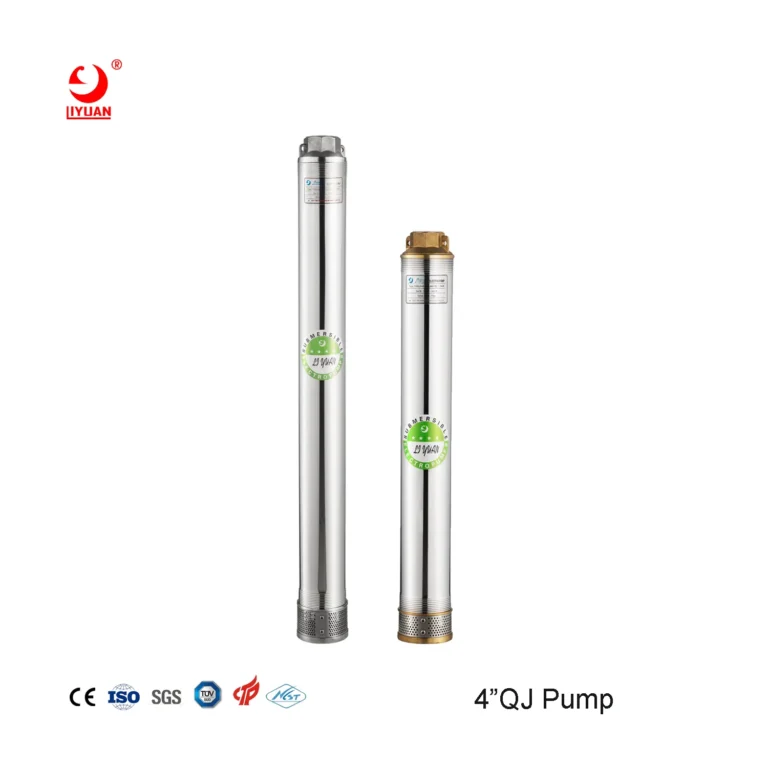
Submersible multi-purpose pumps differ from surface pumps reliant on suction. Deep well submersible pumps propel fluid by converting the impeller’s rotational energy into kinetic and pressure energy. Centrifugal force drives the liquid upward, while fully utilizing the positive inlet pressure generated by complete immersion in the liquid as one of its key advantages—the deeper the pump, the greater the pressure, and the less power required by the impeller. This is precisely why submersible pumps operate more stably in deep wells.
The deep well pump motor converts electrical energy into rotational mechanical energy within a fully sealed environment, delivering stable torque to the impeller via a direct-coupled shaft. The pump body converts this mechanical energy into fluid kinetic and pressure energy. The combination of coaxial direct drive, liquid cooling, and sealed isolation between the pump and deep well motor forms an efficient, long-term stable underwater system.
When submersible irrigation pumps are submerged underwater, the inlet is subjected to hydrostatic pressure
generated by the weight of the liquid column. This pressure is naturally greater than atmospheric pressure, keeping the submersible water pump inlet perpetually under positive pressure. This ensures continuous and stable water intake while preventing cavitation. Consequently, less energy is consumed in suctioning the fluid, allowing more energy to be converted into flow velocity and head. This significantly enhances the operational efficiency of the water pump.
Deep well pumps require no priming and no trapped air needs to be purged because the pump body and inlet passage remain completely filled with liquid after installation. Before startup, they are fully submerged in water, with the inlet operating under positive liquid pressure. When the impeller starts, it directly propels the liquid rather than relying on negative pressure to draw water. Therefore, there is no priming issue. Deep well submersible pumps also do not require vacuum creation. The submersible pump body is fully filled with liquid before startup, and the inlet is also under positive liquid pressure. The impeller simply pushes water rather than “sucking” it by creating a vacuum.
The fundamental reason for the reliability and efficiency of submersible well pumps lies in their operating environment and design approach. Since vapor bubbles rarely form at the pump inlet, the impeller is less susceptible to cavitation damage, resulting in extended service life and long-term stable performance. When submersible motors operate underwater, the surrounding liquid naturally dissipates heat, eliminating the need for additional cooling devices. This allows them to function continuously under high loads without overheating. Most stainless steel submersible pumps utilize sealed, oil-filled submersible motors. This design prioritizes not only waterproofing but also long-term reliable operation in challenging environments like deep wells where maintenance is difficult. Under extreme conditions, this philosophy evolved into electric submersible pump systems capable of efficiently conveying large volumes of fluid under high-temperature and high-pressure conditions—a feat beyond the capability of ground pumps. Consequently, submersible pumps are widely deployed in demanding applications requiring exceptional reliability, efficiency, and depth capabilities—including deep wells, boreholes, sewage, slurry handling, industrial pits, and large-scale irrigation. The true determinant of a submersible pump’s performance lies not solely in its power rating, but in its ability to efficiently convert submerged pressure, motor output, and hydraulic design into actual flow rate. This is precisely why a well-engineered low-power submersible pump often outperforms higher-powered units in real-world conditions.
Call for sales or Support
If you need assistance with pump selection, sales or engineering support, Whatsapp: +86 134 2250 1007 or call +86 181 2828 2767
The Liyuan Pump
Submersible Pump Specs
Model | |
3 Inch Submersible Pump | ; |
4 Inch Submersible Pump-100QJ | ; |
4 Inch Submersible Pump-MOTOR | ; |
4 Inch Submersible Pump-SG-SS impeller | ; |
5 & 6 Inch Submersible Pump | ; |
5 Inch Submersible Pump-SG-SS impeller | ; |
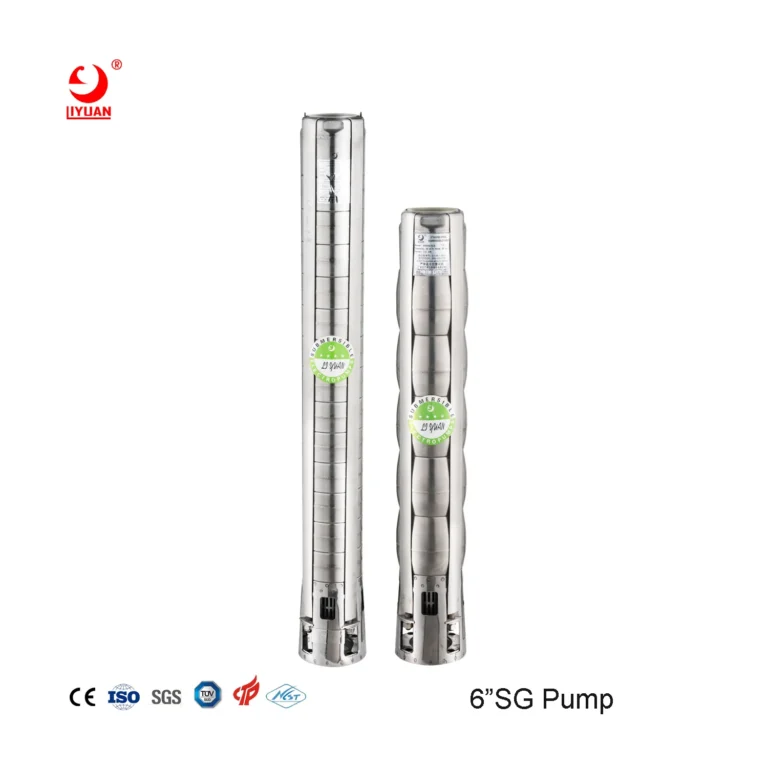
6 Inch Submersible Pump-SG-SS impeller | ; |
8 Inch Submersible Pump-SG-SS impeller | ; |
10 Inch Submersible Pump-SG-SS impeller | ; |
How Does a Submersible Pump Actually Work?
The core operating principle of submersible pumps involves converting electrical energy into hydraulic energy while immersed in a liquid environment, thereby conveying fluid upward with minimal inlet resistance. Unlike surface pumps or jet pumps that draw water into the pump body, submersible pumps operate under positive inlet pressure, utilizing ambient water pressure to naturally drive the impeller. Simultaneously, the surrounding liquid aids in dissipating heat from the pump body and stabilizing performance, enabling stainless steel submersible pumps to achieve efficient and stable operation over extended periods.
This submerged environment transforms all fundamental aspects:Energy utilization methods,Heat dissipation mechanisms.
In essence, submersible well pumps work in harmony with the fluid rather than against it.
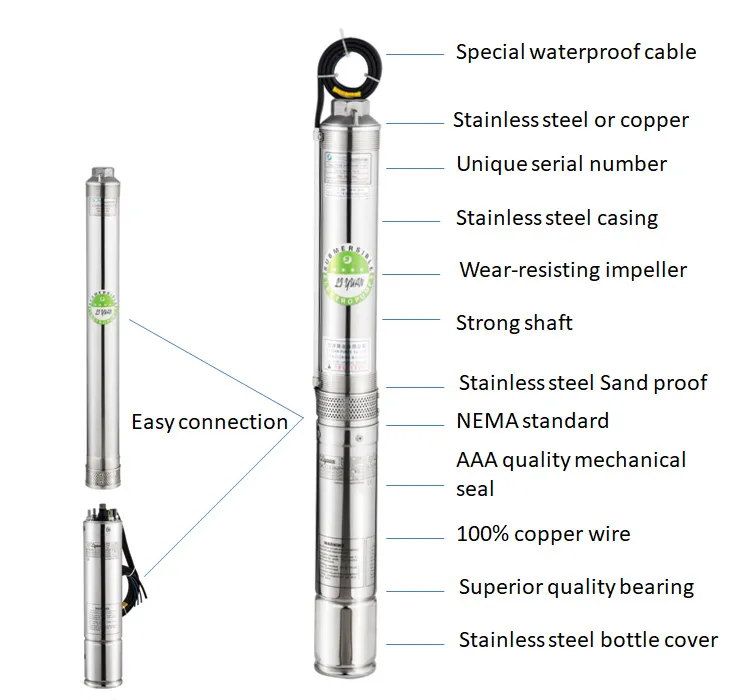
A Fully Sealed Assembly Creates a Closed Energy System
Submersible pumps feature a sealed, oil-filled design where the submersible motor and hydraulic components share a single sealed housing.
This design not only blocks moisture but also enables the sealed oil-filled submersible motor to perform three key engineering functions:
Provides electrical insulation under constant hydrostatic pressure. Internal lubrication for bearings and mechanical seals. Conducts heat from the submersible motor windings to the surrounding fluid.
The presence of oil serves more than a protective measure. It regulates temperature gradients, directly impacting deep well motor longevity. Consequently, oil-injected submersible pumps operate reliably under conditions that would damage surface-mounted submersible motors.
Positive Inlet Pressure Reduces Energy Loss Before the Impeller
When a submersible pump is submerged, liquid enters the pump inlet under the positive static pressure formed by the surrounding liquid column.This means:No suction lift is required,No vacuum forms at the inlet,No energy is consumed to overcome air resistance or self-priming losses.
In contrast, ground pumps and jet pumps must first create a pressure drop to drive water flow.
This difference occurs before the impeller begins to do work.
Therefore, when people say submersible water pumps are “more efficient,”they are actually referring to lower inlet losses, not just the efficiency of the submersible motor.
The submersible pump impeller works in tandem with the diffuser to convert velocity into usable pressure.
Most submersible water pumps are essentially centrifugal submersible pumps.
Their internal working principle operates as follows:The submersible motor drives the shaft to rotate.The submersible motor shaft drives the submersible pump impeller to rotate.
This accelerates the liquid outward, where energy primarily exists as velocity rather than pressure.The diffuser systematically reduces and slows the fluid velocity.This velocity reduction converts into pressure energy, enabling the water flow to rise through the discharge pipe. In multi-stage submersible pumps, this process repeats multiple times.
Each stage progressively increases the pressure, making such water pumps suitable for deep well operations. The pressure in deep well submersible pumps is not generated instantaneously but is gradually built through continuous, incremental energy conversion.
Continuous Liquid Cooling Enables Higher Load and Longer Duty Cycles
Since submersible motors are fully immersed in liquid, heat dissipates continuously during operation.
This enables:Higher power density in smaller footprints, Extended continuous operation, Reduced thermal stress on windings and seals.
In practical applications, submersible pumps can operate continuously for hours or even days in environments like deep wells or industrial wastewater tanks without overheating. Ground pumps of equivalent power ratings often require external cooling, ventilation systems, or frequent shutdowns to prevent overheating.
Electric Submersible Pump System Extends the Same Working Principle to Extreme Depths
Electric Submersible Pump systems used in the oil and gas sector operate on the same fundamental working principle, albeit in extreme environments.
Their core functionality relies on: achieving high lift through a multi-stage centrifugal pump structure, coupled with high-temperature insulated submersible motors and power cables specifically designed for deep wells, enabling stable operation under high-temperature and high-pressure conditions. Electric Submersible Pumps do not represent a novel pumping principle, but rather push the fundamental mechanisms of submersible pumps to their physical and engineering limits. This demonstrates the inherent scalability and engineering reliability of submerged pump principles.
Why Understanding the Working Principle Changes How You Choose Power
When you truly grasp the working principle of submersible pumps, one fact becomes clear:
Actual water pump performance depends not on power alone, but on inlet fluid efficiency, the match between impeller and diffuser, and stable thermal conditions during operation
Even with identical power ratings, submersible pumps can perform very differently in the same well due to variations in efficiency, impeller-diffuser match, and thermal stability.
This shows why low-power submersible pumps often outperform higher-power models in real-world installations.
Types of Submersible Pumps
There are different types of submersible pumps, each serving specific purposes. These are used in tanks, wells, and more. Here are the main classes of pumps.
Main Types of Submersible Pumps (By Real Use Case) Agricultural Irrigation
The challenge for submersible pumps in agricultural irrigation lies not in water quality complexity, but in the demanding conditions of long-term, high-load, stable operation. Systems often require continuous or seasonal extended operation, demanding stability in flow and pressure alongside overall energy efficiency that surpasses peak performance requirements. Consequently, agricultural irrigation systems do not rely on a single type of submersible pump. Instead, they have evolved to offer two pump types with similar design philosophies but fundamentally different performance priorities.
The Submersible Irrigation Pump is positioned for high flow rates, continuous operation, and system stability, primarily serving applications such as ponds, shallow to medium-depth wells, and open reservoirs. Its design emphasis lies not in high-pressure output, but in maintaining stable, uniform water delivery under prolonged constant loads. Through high-flow output, moderate head, impeller structures optimized for continuous operation, and durable submersible motor ratings, these pumps often prove more efficient and reliable in long-term service than models prioritizing high power or instantaneous performance.
Although drip irrigation and sprinkler irrigation can share the same type of submersible water pumps, their system control logic differs fundamentally.
The Submersible Drip Irrigation Pump System prioritizes pressure stability, where even minor fluctuations can impact emitter lifespan and irrigation uniformity. Conversely, the Submersible Pump System for Sprinkler Irrigation emphasizes flow control, ensuring consistent coverage distance and spray pattern integrity.
Therefore, despite potential macro-level classification similarities for submersible pumps, actual selection requires fine-tuning impeller geometry, cascade stages, and submersible motor parameters. This ensures the water pump’s performance curve precisely matches each system’s requirements—under identical application conditions, they follow entirely distinct hydraulic logics.
The Submersible Well Pump (Drilling Pump) is engineered specifically for the physical constraints of “depth + minimal diameter.”
Constrained by narrow or even extremely confined borehole spaces, its structure incorporates a multi-stage centrifugal impeller pump housing and a small-diameter submersible motor. It overcomes deep well head requirements through progressive pressure buildup rather than delivering high flow rates in a single pass.
Precisely because of this core operational logic of “pressure accumulation,” drilling pumps are particularly well-suited for deep agricultural wells, remote irrigation systems, and scenarios where ground pumps cannot be deployed.
In deep agricultural submersible pump wells, the depth itself dictates pump selection. Suction-type water pumps are constrained by self-priming capability and intake losses; as well depth increases, their efficiency and reliability rapidly decline. Deep well pumps, however, operate below the water level, eliminating suction lift limitations and intake losses at the source to achieve stable, efficient upward water delivery. Precisely because of this structural advantage, in agricultural practice, even when flow demands are not extreme, deep well submersible pumps often become the preferred choice for deep irrigation wells.
The widespread adoption of oil-immersed submersible pumps in agricultural irrigation is no coincidence, but rather a choice dictated by operating conditions. Oil provides more stable cooling performance for submersible motors during prolonged operation, offers superior freeze resistance compared to water in cold environments, and effectively controls thermal expansion under frequent start-stop cycles and load fluctuations. Agricultural irrigation pumps typically endure cyclic operation—starting at dawn, shutting down at noon, and restarting at night. The thermal stability of the submersible motor directly determines its lifespan and reliability. Consequently, oil immersion is not merely a structural detail but a core engineering decision within the overall design of agricultural submersible pumps.
The selection of irrigation pumps should be based on system curves rather than solely on water source type.
Classifying irrigation pumps merely as “deep well” or “pond” models overlooks critical variables in agricultural systems. In practical design, water pump selection must comprehensively consider total head, required field flow rate, pipe diameter and length, and irrigation method (submersible pump drip irrigation or submersible pump sprinkler irrigation). Even when sharing the same water source, different farms often require entirely distinct submersible water pump configurations due to varying system characteristics. Therefore, the truly effective selection logic stems from matching the system curve.
In the field of agricultural water pump irrigation, the nature of a submersible pump is not determined by its name or label, but rather by its operational duration, requirements for flow stability, and the depth of the water source.
Submersible irrigation pumps emphasize high flow rates and long-term operational reliability; submersible deep well pumps define performance boundaries around depth and pressure; while oil-immersed designs discreetly balance both.
True understanding of these distinctions often determines whether a pump is merely “functional” or capable of stable, long-term operation in agricultural settings.
Call for sales or Support
If you need assistance with pump selection, sales or engineering support, Whatsapp: +86 134 2250 1007 or call +86 181 2828 2767
How to Install a Submersible Well Pump
Installing a submersible well pump is not primarily a mechanical operation. At its core, it is a system-level engineering decision that begins long before the pump is lowered into the well. The success of the installation hinges on the installer’s understanding of three fundamental constraints: the actual location of the water, the pump’s performance under deep-water loading, and the system’s aging behavior under motion, torque, and vibra,Everything else is execution.
Before selecting or assembling the pump, installers must determine the static water level, total well depth, and the well’s sustainable yield. These three parameters define the system’s hydraulic boundary conditions. The static water level dictates the head the water pump must overcome before delivering water. Well depth limits how the pump is suspended and where it is positioned. Yield determines whether the pump could overdraw the aquifer and cause subsidence instability. Installing a pump without knowing these values is akin to designing a structure without understanding its load-bearing capacity.
Once these parameters are established, the submersible water pump is intentionally placed below the static water level but not necessarily near the well bottom. This placement decision is often misunderstood. The pump does not need to operate at maximum depth; it must remain submerged throughout all operating conditions. In low-yield wells, installing submersible pumps too deep increases sand suction and thermal stress without improving performance. Thus, depth selection balances hydraulic reliability against mechanical longevity.
Physical installation begins by assembling the pump as part of a suspended system, not as an isolated unit. The pump, drip tube, and cable form a dynamic structure upon installation. Drip tube material selection directly impacts system installation, maintenance, and replacement methods. Flexible polyethylene tubing permits one or two personnel to install or disassemble the water pump without hoisting equipment, proving highly practical at moderate depths. In deep installations, rigid PVC or galvanized pipe may be structurally necessary, but they transform the deep well pump into a crane-dependent system unsuitable for casual maintenance. This is not a matter of preference; it is dictated by constraints imposed by weight, depth, and tensile loads.
Cable management is one of the most critical yet overlooked aspects of submersible water pump installation. When a submersible water pump starts, it transitions almost instantaneously from zero to full rotational speed. The starting torque causes the water pump to twist slightly within the wellbore. Over thousands of cycles, this minute movement becomes destructive if the cable is allowed to move independently. Therefore, the cable must be tightly secured to the riser pipe, aligned with the pipe’s natural curvature, and frequently anchored near the water pumps. Most cable failures occur within the first few dozen feet above deep well water pumps, where torque and vibration are highest. Thus, proper cable restraint is not superficial; it is structural fatigue control.
The connection between Dell Well Submersible Pumps and the riser pipe must be treated as a load-bearing joint, not merely a pipe connection. This joint bears the entire suspended weight of the system. Heating flexible tubing for full installation over barbed fittings, using corrosion-resistant metal couplings, and securing with high-quality stainless steel clamps are not optional upgrades. They are fundamental to preventing catastrophic system loss. Joint failure does not cause leakage; it sends the submersible water pump to the bottom of the well.
Lowering submersible water pumps into a well is a controlled process governed by gravity, friction, and patience. The system must allow for smooth descent without kinking the pipe or scraping the cable. Ground obstacles—tree roots, debris, uneven terrain—are no minor issue, as bent pipe cannot be repaired in place. Once damaged, it must be cut out, shortening the system length and impacting depth placement. A successful installation anticipates these risks and manages them before the submersible pump enters the wellbore.
At the wellhead, the wellhead assembly serves as the structural termination point for the suspension system. It must bear the entire system load, seal against surface contamination, and permit controlled routing of electrical conductors. Improper wellhead handling—such as removing anchor bolts instead of loosening compression nuts—can cause component drops and irreparable damage. This component is not a cover; it is the load-bearing interface between the subsurface and surface systems.
The final installed state of a Submersible Well Pump System appears serene. Once installed, the Submersible Water Pump becomes invisible, inaccessible, and expected to operate reliably for years without intervention. This is why installation quality matters more than installation speed. A correctly installed system manages hydraulic demands, mechanical stresses, electrical fatigue, and environmental exposure simultaneously. When failures occur prematurely, they almost always stem from violations of these fundamentals, not pump defects.
In this sense, installing a submersible well pump is not merely following steps. The key lies in understanding why each step exists and what physical issues it aims to prevent. When these issues are understood, installation becomes not only repeatable but reliable.
Call for sales or Support
If you need assistance with pump selection, sales or engineering support, Whatsapp: +86 134 2250 1007 or call +86 181 2828 2767
Submersible Pumps Applications
Submersible pumps are widely used across various industries. Operating fully submerged, they deliver stable performance in complex environments such as water-filled wells, deep boreholes, and confined spaces. This eliminates suction restrictions and reduces system complexity. Featuring high-seal and liquid-cooled designs, they ensure long-term reliable operation under harsh conditions.
Submersible water pumps, with their diverse sizes, materials, and hydraulic designs, are not confined to a single industry. Their applications are determined by fundamental operational requirements: the depth of the fluid source, the cleanliness or abrasiveness of the medium, the pump’s operating duration, and the stability of the flow.
Water Pump Wells and Boreholes:
Submersible well pumps lift groundwater efficiently in residential and agricultural settings. Multi-stage pumps maintain stable water delivery and pressure, enabling continuous irrigation in deep wells or narrow boreholes.
Water Pump Agricultural Irrigation System:
Particularly in situations requiring prolonged continuous water supply. Irrigation applications often involve ponds, reservoirs, or deep wells, necessitating a Deep Well Pump capable of sustaining stable hydraulic operation over extended periods. Within these systems, Submersible Irrigation Pumps are selected not only for their maximum power ratings but also for their ability to match the system curve of sprinklers or drip irrigation lines. Drip irrigation offers greater pressure stability, while sprinkler systems demand higher flow rates—though both rely on similar pump structures.
Sewage Pumps and Wastewater Treatment:
Submersible pumps play a critical role due to their compact design and ability to operate directly within wet wells, pumping stations, and treatment facilities. Submersible sewage pumps are designed to efficiently convey wastewater while reducing installation complexity, typically eliminating the need for large pump houses or extensive suction piping. When handling high solids content or fibrous materials, grinding pumps or submersible pumps with slurry capabilities are employed to prevent clogging and ensure continuous operation. In these environments, reliability takes precedence over efficiency, as downtime can rapidly disrupt the entire treatment system.
Drainage Sump Pump and Drainage:
Utilizing a Submersible Water Pump to extract accumulated water from low-lying areas. This includes underground sumps, construction sites, mine pits, and flood-prone zones. In such scenarios, the pump’s ability to operate while fully submerged enables rapid deployment and stable performance even with fluctuating water levels. Dehydration pumps are typically selected for their high flow capacity and tolerance of debris, rather than precise pressure control.
In industrial and mining environments:
Submersible water pumps are frequently exposed to abrasive, corrosive, or high-temperature fluids. For instance, mining operations rely on specialized industrial submersible water pumps to handle acidic water containing suspended solids, where material selection and protective coatings are equally critical as hydraulic performance. Similarly, industrial facilities utilize Industrial Submersible Pumps for cooling water circulation, process transfer, and pit drainage, benefiting from the pumps’ ability to operate quietly and reliably in confined or submerged spaces.
Oil and Gas Industry:
Submersible pumps are implemented as part of Electric Submersible Pump Systems. These systems operate on the same fundamental principle—pushing fluids upward from below—but function at greater depths and under extremely high temperatures and pressures. Electric Submersible Pump Systems are designed for continuous lifting of large fluid volumes, engineered as complete systems incorporating submersible motors, seals, power cables, and control units, rather than as standalone pumps.
In diverse application scenarios, the suitability of submersible pumps is not determined by industry labels but stems from fundamental engineering principles: the relationship between fluid depth and pressure, medium characteristics, operational cycles, and failure risks. Once these core factors are understood, the widespread adoption of submersible pumps becomes a clear physical logic—place the pump within the fluid, and let the laws of physics handle the rest.
Call for sales or Support
If you need assistance with pump selection, sales or engineering support, Whatsapp: +86 134 2250 1007 or call +86 181 2828 2767
Submersible Water Pump
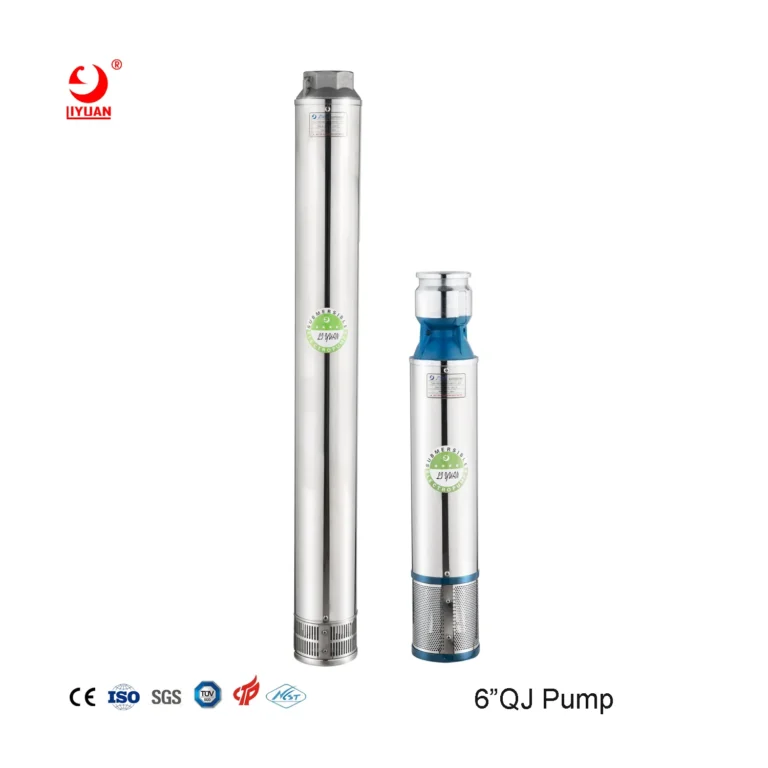
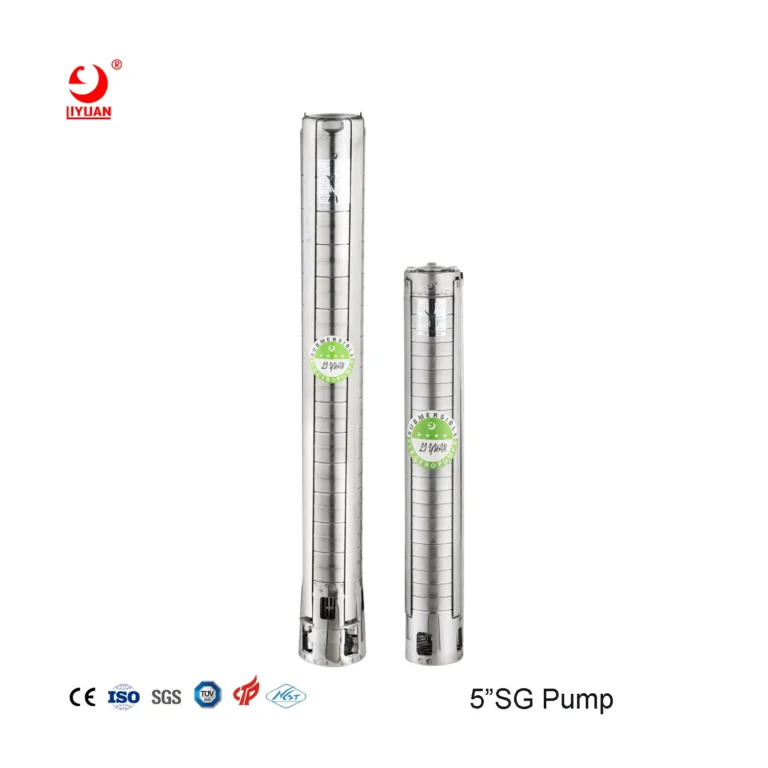
Why Liyuan Pumps Are Better – Highlights
Discover the story of China’s pioneering submersible pump manufacturer! Since 1992, Liyuan Pump has been leading the water pumping industry as the first factory in China to produce 4-inch submersible motors.
Submersible Pump FAQs
Why choose us
Lorem ipsum dolor sit amet, consectetur adipiscing elit. Ut elit tellus, luctus nec ullamcorper mattis, pulvinar dapibus leo.