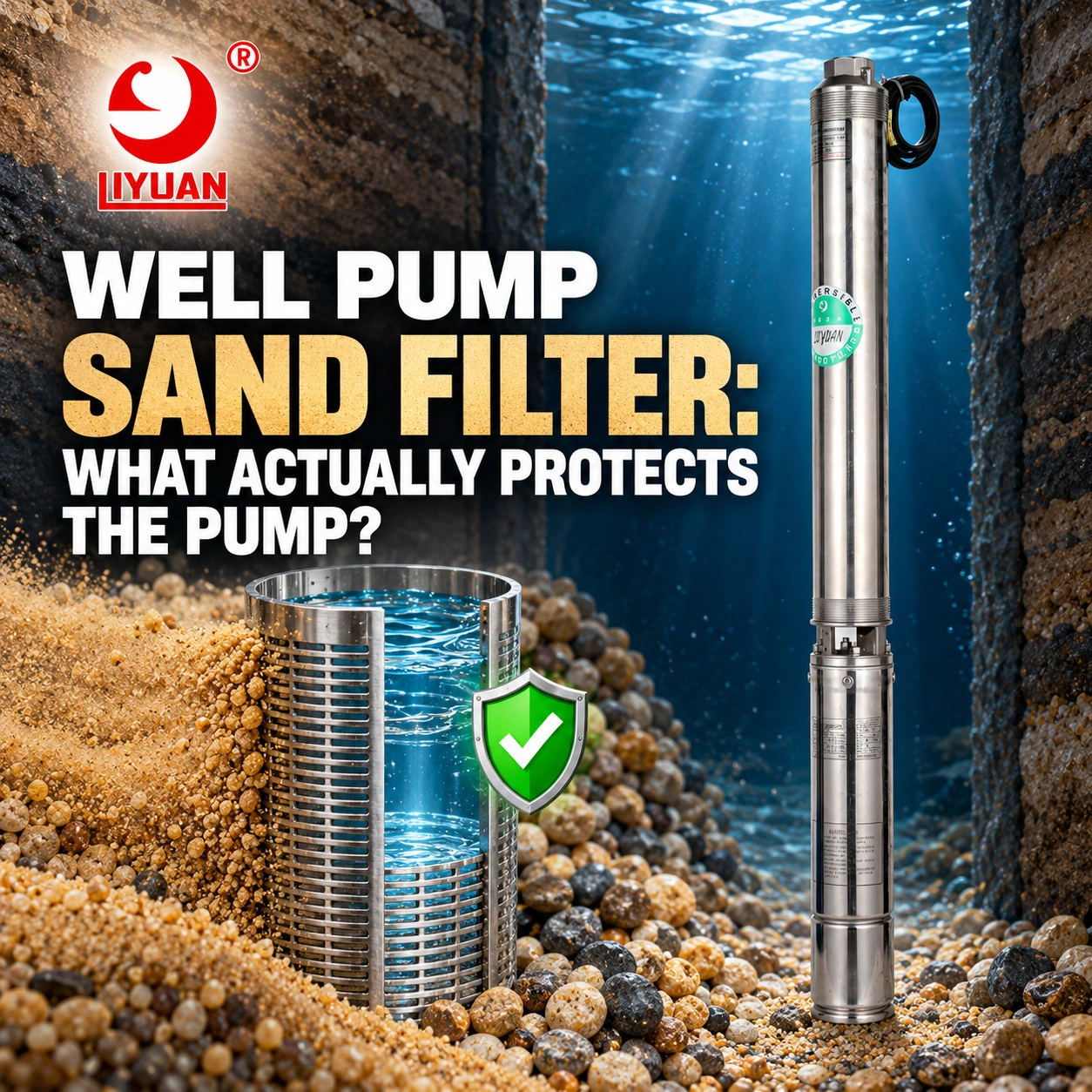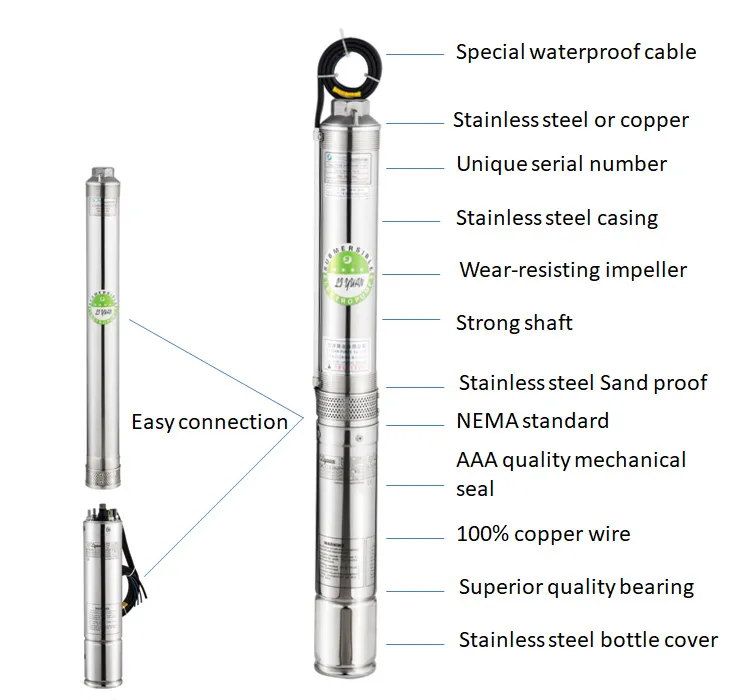
What Is a Submersible Pump Motor?
The submersible pump motor is available in a wide range of configurations to meet different operating environments and performance requirements. For groundwater extraction, users commonly select a deep well submersible pump motor, borehole water pump motors, Submerged well pump motor, or deep bore pump motor designed for narrow well casings and high head conditions. In heavy industrial environments, engineers often specify an industrial Submerge pump motors, heavy duty Submerge motor, or high horsepower submersible motors to ensure reliable continuous-duty operation. Where energy performance is critical, buyers tend to prioritize a high efficiency submersible motors, energy efficient submersible motor, or long life Submerged motor to reduce lifecycle costs.
From a structural and electrical standpoint, options such as a stainless steel submersible motors, vertical submersible pump motor, three phase submersible motor, AC submersible pump motor, and high voltage submersible motors allow the system to match specific installation and power supply conditions. Meanwhile, application-focused designs—including the submersible irrigation pump motor, submersible drainage pump motor, Submersed sewage pump motor, submersible dewatering motor, and submersible groundwater motors—enable optimized performance across agricultural, municipal, mining, and wastewater handling projects. By selecting the correct configuration, operators can ensure the submersible pumping system delivers maximum efficiency, durability, and long-term operational stability.
These related terms and synonyms often appear in Submersed pump motor manufacturing, deep well pumping systems, and industrial fluid transfer solutions.
How Does a Submersible Pump Motor Work?
Basic Operating Principle
Submersible Pump Motor converts electrical energy into mechanical torque to rotate the pump impellers. When powered on:
The stator windings generate a rotating magnetic field
The rotor begins to spin inside the sealed housing
Torque transfers through the motor shaft
The pump impellers build pressure stage by stage
Fluid is lifted efficiently to the surface
Because the underwater electric motor operates fully submerged, the surrounding liquid provides natural cooling.
Why Submerged Operation Matters
Compared with a dry motor or surface pump motor, a fully submersible electric motor offers:
Reduced cavitation risk
Higher pumping efficiency
Quieter operation
Better thermal stability
Longer service life
This is why deep well submersible motors dominate modern groundwater extraction systems.
Main Types of Submersible Pump Motors
Oil-Filled Submersible Motor
Oil-filled Submersible Pump Motor uses dielectric oil for insulation and lubrication.
Key Features
Excellent electrical insulation
Strong moisture protection
Stable long-term operation
Suitable for deep well installations
Also Known As
Oil-cooled submersible motor
Oil bath pump motor
Sealed oil submersible drive
Water-Filled Submersible Motor
Water-filled Submersible Motor uses clean water as the internal cooling medium.
Advantages
Environmentally friendly
Efficient heat dissipation
Lower maintenance cost
Widely used in municipal water systems
Related Keywords
Water-cooled submersible motor
Water-lubricated pump motor
Clean water submersible drive
High-Voltage Submersible Motor
High-capacity systems often require a high-voltage submersible pump motor.
Typical Applications
Mining dewatering
Offshore platforms
Large municipal pumping stations
Industrial fluid transfer
Synonym Variations
HV submersible motor
Industrial submersible drive
Heavy-duty underwater motor
Large horsepower submersible motor
Key Advantages of Submersible Pump Motors
Superior Hydraulic Efficiency
Because the submerged pump motor pushes fluid rather than pulling it, the system avoids suction losses and improves overall efficiency.
Excellent Cooling Performance
The water-immersed motor housing allows continuous heat dissipation, enabling:
Continuous duty operation
High load tolerance
Reduced overheating risk
Compact and Space-Saving Design
A deep well pump motor installs directly inside the well or tank, eliminating the need for a large pump house.
Low Noise and Vibration
The surrounding fluid naturally dampens vibration, making the underwater pump drive ideal for residential and commercial environments.
Major Applications of Submersible Pump Motors
Submersible pump motors are widely deployed across multiple industries.
Water Supply Systems
Common uses include:
Deep well water extraction
Borehole pumping systems
Municipal water supply
Rural groundwater projects
Domestic well pumps
Agricultural Irrigation
Farm operators rely on Borewell Submersible Motors for:
Farmland irrigation
Drip irrigation systems
Sprinkler systems
High-head water lifting
Industrial and Mining Dewatering
Heavy-duty industrial Submersible Motors support:
Mine dewatering
Tunnel drainage
Construction site pumping
Quarry water removal
Wastewater and Sewage Handling
Specialized Submersible Sewage Pump Motors handle:
Wastewater treatment plants
Sewage lift stations
Stormwater drainage
Industrial effluent transfer
How to Choose the Right Submersible Pump Motor
Selecting the proper Submerged pump motor system requires evaluating several engineering factors.
Well Diameter and Installation Space
Ensure the borehole motor diameter matches the casing size (e.g., 4 inch, 6 inch, 8 inch, 10 inch).
Required Flow and Head
Match the motor horsepower with the pump’s hydraulic load to avoid:
Motor overload
Low efficiency
Premature failure
Power Supply Conditions
Verify:
Voltage stability
Phase type (single/three phase)
Frequency compatibility
This step is critical for electric submersible motor reliability.
Water Quality and Environment
Consider whether the application involves:
Clean water
Sand content
Corrosive fluids
High temperature
Material selection for the stainless steel submersible motor may be necessary.
Maintenance Tips to Extend Motor Life
Proper maintenance significantly improves the lifespan of a submersible pump motors unit.
Best Practices
Monitor insulation resistance
Check voltage balance
Avoid dry running
Inspect cable sealing
Schedule periodic performance testing
Preventive care keeps the underwater electric pump motors operating efficiently for many years.
Conclusion
The Submersible Pump Motor remains the core power unit behind modern deep well, industrial, and wastewater pumping systems. Thanks to its fully sealed structure, efficient cooling, and high reliability, the underwater motor design continues to outperform traditional surface motors in demanding environments.
Whether you call it a deep well submersible motors, borehole pump motors, electric submersible drive, or underwater pump motors, choosing the correct specification and quality manufacturer is essential for long-term system performance.