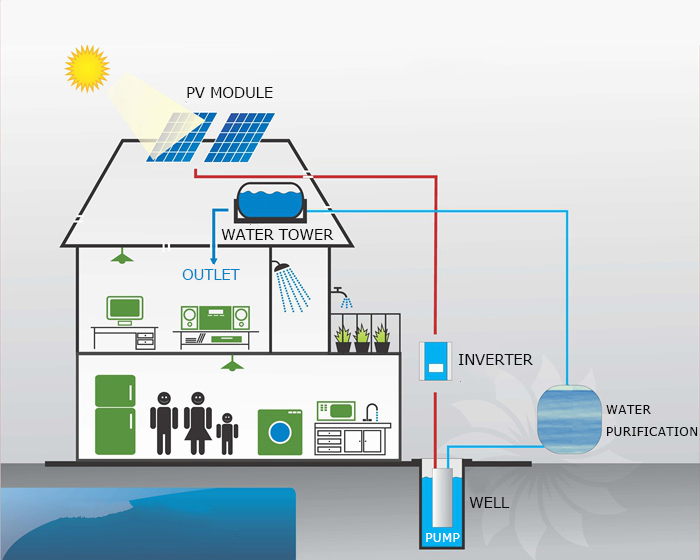
Installing a solar pump on a well is one of the most practical ways to create a reliable water supply without depending fully on grid electricity. A properly designed solar well pump system can provide water for homes, farms, livestock, irrigation, and remote off-grid properties. To set it up correctly, you usually need to assess water demand, well depth, solar exposure, panel placement, controller setup, plumbing connections, and startup testing before regular operation.
If you want to know how to hook up a solar pump to your well, this guide explains the basic system components, how to size the setup, how to connect the pump and solar power source, and what to check before turning the system on. Whether you are planning an off grid solar well pump, a solar powered water pump for a deep well, or a backup pumping system for a rural property, the right installation process helps improve efficiency, reliability, and pump life.
Why Use a Solar Pump for a Well
A solar water pump for well applications can reduce operating costs and provide dependable water access in places where utility power is expensive, unstable, or unavailable. Solar well pump systems are commonly chosen because they use renewable energy, work well in remote locations, and can be configured with storage tanks or controls to support daily water needs.
A well-designed solar pump system for a well can help with:
- Off-grid water supply
- Livestock watering
- Garden and farm irrigation
- Backup pumping during outages
- Lower long-term energy use
- Reduced dependence on fuel-powered pumps
These benefits are strongest when the pump is matched correctly to the well depth, water demand, and available sunlight.
What You Need Before You Hook Up a Solar Pump to Your Well
Before installing a solar well pump, you need to understand your site conditions and water requirements. Installation guides consistently emphasize checking daily water demand, required flow rate, pressure needs, well depth, water level changes, and solar exposure before choosing equipment.
The basic components of a solar powered well pump system usually include:
- Solar panels
- Mounting hardware
- Solar pump or submersible well pump
- Pump controller or control box
- Electrical wiring and connectors
- Drop pipe or delivery pipe
- Safety rope or support cable for submersible pumps
- Water storage tank or pressure tank, if required
- Optional batteries, depending on the design
Some systems are direct solar systems, while others include batteries or storage for more flexible operation.
Step 1: Calculate Your Water Needs
The first step in learning how to hook up a solar pump to your well is to determine how much water you need every day. This affects pump size, solar panel size, and storage needs. Installation guidance commonly recommends calculating daily gallons needed and converting that figure into flow rate, usually in gallons per minute, based on expected pump run time.
Ask these questions:
- How many gallons per day do you need?
- Is the water for home use, irrigation, livestock, or mixed use?
- Do you need continuous flow or tank filling?
- Will the system run mostly during peak sunlight hours?
If your water demand is underestimated, the solar water pump system may not deliver enough water. If it is oversized too much, the installation cost may increase unnecessarily.
Step 2: Check Well Depth and Water Level
A solar pump must be matched to the physical conditions of the well. Well depth, static water level, drawdown, and delivery height all influence the type of pump you should use. Deep wells often require a submersible solar well pump, while shallow setups may use a surface configuration in some cases.
When evaluating the well, check:
- Total well depth
- Static water level
- Pumping water level
- Vertical lift to the tank or outlet
- Distance from the well to the storage point
These measurements help determine the total dynamic head, which is one of the most important factors in solar pump sizing for wells.
Step 3: Assess Solar Exposure
To install a solar powered well pump successfully, you also need strong and consistent sunlight. Good installation practice includes reviewing how much direct sun the site gets during the day and across seasons so the solar panels can produce enough energy for pumping.
Look for:
- Full sun during the strongest daylight hours
- Minimal shading from trees, buildings, or hills
- A mounting location with the correct angle and orientation
- Enough space for panel expansion if future upgrades are planned
Poor solar exposure can reduce pumping performance even if the pump itself is correctly sized.
Step 4: Choose the Right Solar Pump for Your Well
Not every solar pump fits every well. The best solar well water pump depends on depth, flow rate, pressure, pipe run, and intended use. Industry installation guides note that submersible pumps are commonly used for deeper wells, while system choice should align with voltage and application needs.
When choosing a solar pump for a well, consider:
- Deep well or shallow well design
- Required gallons per minute
- Total lift and pressure
- DC pump or AC pump with inverter
- Compatibility with your solar controller
- Water quality and sediment conditions
For most deeper residential or agricultural wells, a submersible solar pump is usually the preferred option because it is efficient for lifting water from below ground.
Step 5: Gather Tools and Installation Materials
Before you start the hookup process, gather all required tools and hardware. Solar well pump installation guides commonly mention basic hand tools, measuring tools, mounting materials, and safety gear to support a smoother setup.
Typical tools and supplies include:
- Wrench set
- Pliers
- Screwdrivers
- Drill
- Measuring tape
- Pipe fittings
- Wire connectors
- Waterproof cable protection
- Mounting brackets
- Gloves and eye protection
- Level for panel installation
Having everything ready before installation saves time and reduces wiring or plumbing mistakes.
Step 6: Install the Pump in the Well
If you are using a submersible solar pump for a well, the pump must be lowered to the correct depth and secured properly. In practical installation sequences, pump and plumbing installation typically come before panel mounting, controller setup, and startup testing.
The basic process usually includes:
- Attach the drop pipe or delivery pipe to the pump
- Connect the pump cable securely
- Attach a safety rope or support line if required
- Lower the pump carefully into the well
- Position it at the correct depth above the bottom
- Seal the well cap and route the pipe and cable safely
Do not place the pump too close to the bottom of the well, because sediment and debris can reduce performance and shorten pump life.
Step 7: Install the Solar Panels
After the pump and basic plumbing are in place, install the solar panels. Installation references emphasize securing the mounting structure, placing panels for maximum sunlight, and anchoring them properly against weather. In the Northern Hemisphere, panels are often oriented to capture strong southern exposure.
For the best solar pump hookup results:
- Mount panels in an unshaded location
- Use strong, weather-resistant hardware
- Set the panel angle for good solar gain
- Keep cable runs neat and protected
- Leave room for maintenance access
Correct panel placement improves daily pumping output and overall system efficiency.
Step 8: Connect the Controller and Wiring
One of the most important parts of how to hook up a solar pump to your well is connecting the electrical system correctly. Solar well pump installation guidance commonly includes setting up the control box or controller in a protected location, making proper connections to the pump and solar array, and following the manufacturer’s wiring diagram to avoid faults.
At this stage, you generally need to:
- Connect the solar panels to the controller
- Connect the controller to the pump
- Verify polarity and voltage
- Protect wiring from moisture and abrasion
- Use insulated tools and safe electrical practices
- Install disconnects or breakers if required by the system design
If the system includes batteries, the battery bank and charge control arrangement must also match the controller specifications. Always follow the pump manufacturer’s electrical instructions.
Step 9: Connect the Plumbing to the Tank or Delivery Line
Once the pump and power system are connected, route the water line to the point of use. This might be a storage tank, livestock trough, irrigation line, or household supply system. Some solar well pump systems are designed to fill a storage tank during sunny hours instead of trying to maintain household pressure directly all day.
Your plumbing setup may include:
- Delivery pipe from the wellhead
- Check valves
- Pressure switch or float switch
- Storage tank
- Pressure tank
- Filtration components
- Shutoff valves
A good solar well pump installation should make future maintenance and inspection easy.
Step 10: Test and Start the System
After installation, test the entire system before regular use. Published installation workflows include a final testing and startup stage to verify smooth operation and expected water flow. Testing should also include checking for unusual noise, poor pressure, or irregular power behavior.
During startup, check:
- Whether the controller powers on correctly
- Whether the pump starts smoothly
- Whether water flow matches expectations
- Whether there are leaks in the piping
- Whether voltage and wiring are stable
- Whether the system shuts down and restarts properly
This final step confirms whether the solar pump connected to the well is ready for normal operation.
Common Mistakes to Avoid
When people search how to install a solar pump on a well, they often focus only on wiring or panel placement. In reality, poor results usually come from sizing errors, bad site assessment, or weak installation details.
Avoid these common mistakes:
- Choosing the wrong pump for the well depth
- Ignoring daily water demand calculations
- Installing panels in partial shade
- Using undersized wiring
- Skipping controller compatibility checks
- Setting the pump too low in the well
- Failing to test for leaks and electrical faults
- Ignoring seasonal water level changes
A reliable solar well pump setup depends on the whole system, not just one component.
Do You Need Batteries for a Solar Well Pump?
Not always. Some solar powered water pumps for wells are direct-drive systems that pump when sunlight is available. Others use batteries so the system can operate outside peak sun hours or maintain more flexible performance. Many installations instead use a storage tank so water is stored when the sun is strong and used later as needed.
The best option depends on:
- Your daily water schedule
- Whether you need water at night
- Budget and maintenance preferences
- System complexity
- Backup requirements
For many rural and agricultural systems, water storage is simpler than adding a large battery bank.
Maintenance Tips After Installation
A solar well pump system needs regular inspection to stay efficient. Installation and service guidance commonly recommends routine cleaning and checks for panels, filters, wiring, and pump performance, along with ongoing monitoring for low flow, electrical faults, and noise.
Basic maintenance includes:
- Cleaning dust and debris off solar panels
- Inspecting wires and connectors
- Checking for pipe leaks
- Monitoring water flow and pressure
- Inspecting filters and replacing them when needed
- Reviewing pump operation during different seasons
Regular maintenance helps protect your investment and reduce future repair costs.
Is a Solar Pump Good for Deep Wells?
Yes, it can be, but only when the pump is selected correctly for the well depth and required lift. Installation guidance specifically notes that deeper wells generally need submersible pump designs capable of drawing water efficiently from greater depths.
For deep well applications, focus on:
- Pump head rating
- Flow rate at depth
- Solar array size
- Controller compatibility
- Pipe friction loss
- Water demand pattern
A poorly matched pump may work for a short time but fail to provide stable output.
FAQ About How to Hook Up a Solar Pump to Your Well
Can you connect a solar pump directly to a well?
Yes, many systems are designed specifically for direct connection to a well, especially with a submersible pump, solar panels, and a compatible controller.
Do I need a controller for a solar well pump?
In most systems, yes. The controller helps manage power flow between the solar array and the pump and supports stable operation.
What size solar pump do I need for my well?
That depends on daily water demand, required flow rate, well depth, and total lift. Proper sizing starts with those measurements.
Can a solar pump run without batteries?
Yes. Many solar well pump systems run directly from solar input during daylight, while some use tanks instead of batteries for storage.
What is the best pump type for a deep well?
A submersible pump is commonly used for deeper wells because it is designed to lift water from significant depth more efficiently.
Conclusion
If you want to understand how to hook up a solar pump to your well, the most important steps are to calculate water demand, measure the well correctly, assess solar exposure, choose the right pump, install the plumbing carefully, connect the controller and panels safely, and test the system before regular use. Those are the core stages reflected in practical solar well pump installation guides.
A well-planned solar well pump installation can provide dependable off-grid water, lower energy dependence, and support long-term use for homes, farms, and remote sites. When the pump, solar array, controller, and plumbing are matched properly, a solar powered pump for your well
 Request Finish Swatches & Project Pricing
 Request Finish Swatches & Project Pricing
 For export quotations, bulk orders, or project cooperation, Get in Touch with our sales team.
Email:Liyuan@liyuan-pump.com
WhatsApp:+86 181-2828-2767