Applications, Working Principles, Benefits, and Types Explained
Submersible Pumps play a critical role in residential, commercial, agricultural, and industrial water management systems. Designed to operate while fully submerged in liquid, these pumps offer superior efficiency, reliability, and versatility compared to surface-mounted pump solutions.
Whether used for groundwater extraction, wastewater handling, flood control, or industrial fluid transfer, submersible pumps provide dependable performance in demanding environments.
What Is a Submerged Pumps?
Submersible Pump is a sealed pumping unit engineered to function entirely underwater. Unlike surface pumps that rely on suction, Submerged Pumps push fluid upward, taking advantage of surrounding water pressure to improve efficiency and reduce energy loss.
The motor is enclosed in a watertight, corrosion-resistant housing, preventing moisture ingress and ensuring long-term operational stability—even in harsh or contaminated liquids.
This design makes submersible pumps ideal for deep installations, confined spaces, and applications where continuous operation is required.
How Does a Submerged Pumps Work?
Submersible Pump operates through a combination of hydraulic and mechanical components:
Electric Motor – Provides rotational power
Impeller – Draws fluid into the pump and accelerates flow
Pump Casing – Directs pressurized fluid toward the discharge outlet
When submerged, the motor drives the impeller, creating centrifugal force that moves water (and in some designs, solids) through the pump and up the discharge pipe.
Because the pump is already submerged:
No priming is required
Cavitation risk is minimized
Cooling is naturally provided by the surrounding liquid
This results in higher efficiency, lower wear, and longer service life.
Common Applications of Electric Submerged Pumps
1. Sump & Flood Control Systems
Submersible sump pumps are widely used in basements, underground structures, and flood-prone areas to remove excess water and prevent structural damage.
Their compact size allows installation in narrow pits while maintaining high pumping capacity.
2. Sewage & Wastewater Treatment
In municipal and industrial wastewater systems, submersible sewage pump handle:
Raw sewage
Sludge
Solids-laden wastewater
Specialized impeller designs allow solids to pass without clogging, improving system reliability and reducing maintenance downtime.
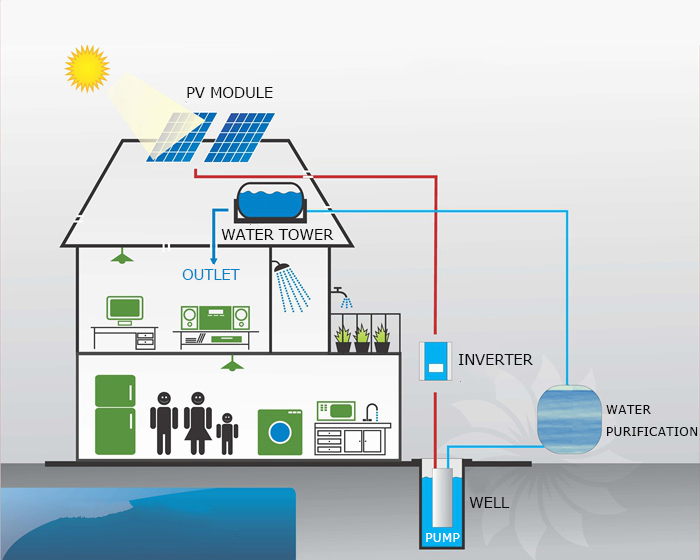
3. Deep Well & Groundwater Extraction
Submersible well pumps are essential for:
Residential water supply
Agricultural irrigation
Industrial water systems
Installed deep below the water table, these pumps efficiently deliver clean water to the surface with minimal energy loss.
4. Agricultural & Irrigation Systems
Farmers rely on Submersible Pumps for:
Irrigation canals
Drainage of waterlogged fields
Livestock water supply
Their ability to operate continuously makes them ideal for seasonal and high-demand agricultural use.
5. Industrial & Construction Dewatering
Construction sites and industrial facilities use submersible dewatering pumps to remove groundwater, slurry, or process liquids—keeping operations safe and uninterrupted.
Key Benefits of Submerged Pumps
✔ High Energy Efficiency
Operating underwater eliminates suction losses, allowing submersible pumps to move fluid with less power consumption.
✔ No Priming Required
Unlike surface pumps, submersible pumps are instantly operational once installed.
✔ Reduced Cavitation
Constant positive pressure prevents vapor bubble formation, protecting internal components.
✔ Quiet Operation
Water absorbs motor noise, making them suitable for residential and noise-sensitive environments.
✔ Long Service Life
Sealed construction and stable thermal conditions reduce wear and extend operational lifespan.
Types of Submerged Well Pumps
Different applications require different pump designs:
Submersible Water Pumps – Clean water transfer and wells
Deep Well Submersible Pumps – High-head groundwater extraction
Sump Pumps – Flood prevention and drainage
Dewatering Pumps – Construction and industrial water removal
Submersible Sewage Pumps – Wastewater and solids handling
Choosing the correct type depends on:
Fluid characteristics
Required flow rate and head
Installation depth
Duty cycle
Choosing a Reliable Submerged Water Pumps Manufacturer
For long-term performance, selecting a proven manufacturer is essential.
Liyuan Pump specializes in durable, high-performance submersible pumps engineered for demanding applications such as dredging systems, aeration equipment, and digester packages.
With robust construction, minimal maintenance requirements, and application-specific designs, professionally manufactured submersible pumps ensure reliable operation and lower total cost of ownership.
Conclusion
Submersible pumps are indispensable tools across modern water management systems. From residential flood control to industrial wastewater treatment and agricultural irrigation, their efficiency, durability, and versatility make them the preferred solution in countless applications.
When properly selected and installed, a submersible pump delivers consistent performance, reduced operating costs, and dependable service in environments where surface pumps cannot perform.
Contact Liyuan Pump today to speak with an expert about our Submersible Pumps