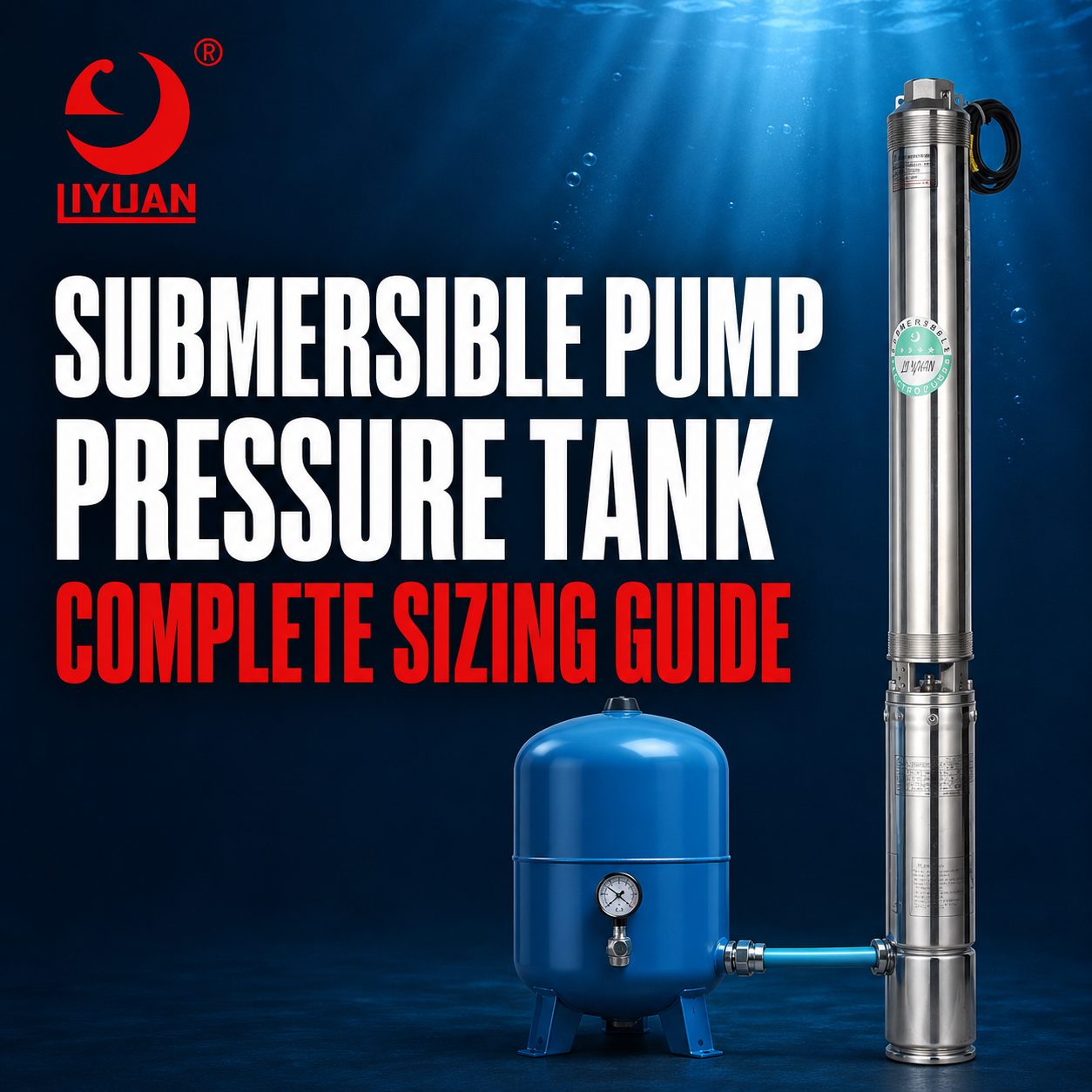
Submersible Pump Pressure Tank: Complete Sizing Guide
A Submersible Pump Pressure Tank Stores Water Under Pressure, Reduces Pump Cycling, Stabilizes Water Pressure, And Protects The Pump Motor From Excessive Starts.
Correct Selection Depends On Pump Flow, Pressure-Switch Settings, Required Motor Run Time, System Demand, Tank Drawdown, And Control Method.
The Tank’s Total Volume Is Not The Same As Its Usable Water Volume. Therefore, Buyers Should Select A Tank By Its Available Drawdown At The Required Cut-In And Cut-Out Pressures.
A Fixed-Speed Pump Usually Needs More Drawdown Capacity Than A Variable-Speed System. However, Even A VFD-Controlled Pump May Require A Small Pressure Tank To Stabilize Pressure And Provide Water During Very Low Demand.
What Is A Submersible Pump Pressure Tank?
A Submersible Pump Pressure Tank Is A Sealed Vessel That Stores Water And Compressed Air.
The Submersible Pump pushes Water Into The Tank. As Water Enters, It Compresses The Air Inside The Vessel.
When A Faucet Or Valve Opens, The Compressed Air pushes Stored Water Into The Pipeline.
This Allows The System To Supply A Limited Amount Of Water Without Starting The Pump Immediately.
The Tank Works With Components Such As:
- Submersible Pump
- Pressure Switch
- Pressure Gauge
- Check Valve
- Tank Tee
- Pressure-Relief Valve
- Isolation Valve
- Drain Valve
- Electrical Control Box
A Pressure Tank Does Not Create Water Pressure By Itself. The Pump Adds Energy To The System, While The Tank Stores Part Of That Energy.
Why Does A Submersible Pump Need A Pressure Tank?
Reducing Pump Cycling
Without A Pressure Tank, The Pump May Start Every Time A Small Amount Of Water Leaves The System.
For Example, Washing Hands Or Filling A Small Container Could Start The Motor.
Frequent Starting Creates Additional:
- Starting Current
- Winding Heat
- Contactor Wear
- Bearing Stress
- Shaft Stress
- Check-Valve Movement
- Pressure Fluctuation
A Correctly Sized Tank Supplies Water Between Pump Cycles And Reduces The Number Of Starts.
Providing Minimum Motor Run Time
A Pump Motor Should Normally Run Long Enough To Dissipate Starting Heat And Establish Stable Operation.
An Undersized Tank Can Make The Pump Start And Stop Before It Reaches A Suitable Running Time.
The Required Minimum Run Time Depends On:
- Motor Power
- Motor Design
- Starting Method
- Number Of Phases
- Manufacturer Requirements
- Starts Per Hour
- Water Temperature
- Cooling Conditions
Always Use The Pump And Motor Manufacturer’s Requirements.
Stabilizing Water Pressure
A Pressure Tank reduces Sudden Pressure Changes Between Pump Starts And Stops.
It Also Provides A Cushion When Water Demand Changes Quickly.
Correct Tank Sizing Can Improve Pressure Stability In Homes, Farms, Commercial Buildings, And Industrial Water Systems.
Protecting Control Components
Frequent Pump Cycling Increases The Number Of Operations Performed By:
- Pressure Switches
- Contactors
- Relays
- Capacitors
- Circuit Breakers
- Check Valves
Reducing The Number Of Cycles Can Extend The Service Life Of These Components.
Providing Short-Term Water Storage
The Tank Can Supply A Small Amount Of Pressurized Water When The Pump Is Not Running.
However, A Pressure Tank Is Not A Large Water-Storage Tank. Its Available Drawdown Is Only A Portion Of Its Total Volume.
How Does A Pressure Tank Work?
A Traditional Fixed-Speed Well System Uses A Pressure Switch With Two Main Settings:
- Cut-In Pressure
- Cut-Out Pressure
The Cut-In Pressure Is The Point Where The Pressure Switch Starts The Pump.
The Cut-Out Pressure Is The Point Where The Pressure Switch Stops The Pump.
For Example, A 40/60 PSI Pressure Switch:
- Starts The Pump At 40 PSI
- Stops The Pump At 60 PSI
The Operating Sequence Is:
- The Tank Holds Water At Cut-Out Pressure.
- A Faucet Opens.
- Compressed Air Pushes Water Out Of The Tank.
- System Pressure Falls.
- Pressure Reaches The Cut-In Setting.
- The Pressure Switch Starts The Pump.
- The Pump Supplies Water And Refills The Tank.
- Pressure Reaches The Cut-Out Setting.
- The Pressure Switch Stops The Pump.
Understanding How A Submersible Well Water Pump Works Helps Explain The Relationship Between The Pump, Tank, Check Valve, And Pressure Switch.
Pressure Tank Volume Vs. Drawdown
1.Tank Volume And Drawdown Are Different measurements.
Tank Volume
Tank Volume Is The Total Internal Capacity Of The Pressure Vessel.
It Includes Both Air And Water.
Drawdown
Drawdown Is The Usable Amount Of Water Released Between The Cut-Out And Cut-In Pressures.
For Example, A Tank With A Nominal Capacity Of 80 Gallons Does Not Normally Provide 80 Gallons Of Drawdown.
The Actual Drawdown Depends On:
- Total Tank Volume
- Precharge Pressure
- Cut-In Pressure
- Cut-Out Pressure
- Tank Design
- Manufacturer Specifications
Always Compare Tank Models By Their Published Drawdown At The Intended Pressure-Switch Settings.
How To Size A Submersible Pump Pressure Tank
The Basic Sizing Method Uses Pump Flow And Required Minimum Run Time.
Required Drawdown = Pump Flow Rate × Minimum Pump Run Time
For Example:
- Pump Flow: 10 Gallons Per Minute
- Required Run Time: 1 Minute
- Required Drawdown: 10 Gallons
The Selected Tank Should Provide At Least 10 Gallons Of Drawdown At The Chosen Pressure-Switch Settings.
However, The Final Tank Selection Should Also Consider:
- Maximum Pump Flow
- Normal Household Demand
- Irrigation Zones
- Motor Starting Limits
- Available Installation Space
- Pressure Range
- Future Water Demand
- Pump Control Method
- Tank Manufacturer Data
Pressure Tank Sizing Example
Assume A Well System Has:
- Pump Capacity: 15 GPM
- Pressure-Switch Setting: 40/60 PSI
- Required Motor Run Time: 1 Minute
The Required Drawdown Is:
15 GPM × 1 Minute = 15 Gallons
The Buyer Should Select A Tank That Provides At Least 15 Gallons Of Drawdown At 40/60 PSI.
A Tank Advertised As 40 Gallons May Not Provide 15 Gallons Of Usable Drawdown At That Pressure Range.
Therefore, The Buyer Must Check The Manufacturer’s Drawdown Table.
If The Motor Requires A Longer Run Time, The Required Drawdown Increases.
For Example:
15 GPM × 2 Minutes = 30 Gallons Of Required Drawdown
Why Pump Flow Matters During Tank Sizing
Tank Sizing Should Use The Pump’s Actual Flow Near The Pressure-Switch Operating Range.
The Pump May Not Produce Its Maximum Published Flow Under Actual Well Conditions.
Actual Flow Depends On:
- Pump Curve
- Pumping Water Level
- Vertical Lift
- Pipeline Friction
- Pressure-Switch Setting
- Valve Losses
- Filter Losses
- Pump Wear
- Supply Frequency
A High Flow Deep Well Pump Generally Requires More Drawdown Capacity To Maintain The Same Minimum Run Time.
What Is Pressure Tank Precharge?
Precharge Is The Air Pressure Inside The Tank Before Water Enters.
The Precharge creates The Air Cushion That Pushes Water Out Of The Tank.
For Many Traditional Residential Well Systems, Manufacturers Recommend Setting Precharge Approximately 2 PSI Below The Pressure-Switch Cut-In Setting.
For Example:
| Pressure-Switch Setting | Typical Precharge |
|---|---|
| 20/40 PSI | 18 PSI |
| 30/50 PSI | 28 PSI |
| 40/60 PSI | 38 PSI |
| 50/70 PSI | 48 PSI |
Amtrol’s Well Tank Support Guide Provides The Same Two-PSI-Below-Cut-In Recommendation For Its Well Tanks.
However, Always Follow The Tank And Pump-Control Manufacturer’s Instructions. Some Variable-Speed Or Specialized Systems Require Different Settings.
How To Check Pressure Tank Precharge
Follow These General Steps:
- Disconnect Electrical Power To The Pump.
- Open A Faucet Or Drain Valve.
- Drain All Water Pressure From The System.
- Confirm The Pressure Gauge Reads Zero.
- Measure Air Pressure At The Tank Air Valve.
- Add Or Remove Air As Required.
- Close The Drain Valve.
- Restore Pump Power.
- Observe The Complete Pump Cycle.
- Check For Leaks And Abnormal Cycling.
The Tank Must Be Empty Of Water When Measuring Precharge.
Measuring Air Pressure While The Water System Remains Pressurized Produces An Incorrect Result.
What Happens If Precharge Is Too High?
If Precharge Is Too Close To Or Above The Cut-In Pressure, The Tank May Release Nearly All Its Water Before The Pump Starts.
Possible Symptoms Include:
- Sudden Pressure Drop
- Brief Loss Of Water
- Pressure Switch Chatter
- Reduced Drawdown
- Rapid Pump Cycling
- Unstable Flow
An Excessively High Precharge Can Prevent The Tank From Accepting Enough Water.
What Happens If Precharge Is Too Low?
Low Precharge Allows Too Much Water To Enter The Tank And Reduces The Useful Air Cushion.
Possible Results Include:
- Reduced Drawdown
- Rapid Pump Cycling
- Diaphragm Stress
- Bladder Damage
- Unstable Pressure
- Poor Tank Performance
If Air Pressure Continues To Fall After Adjustment, The Tank May Have A Leaking Air Valve Or Damaged Bladder.
Main Types Of Well Pressure Tanks
Air-Over-Water Tank
An Air-Over-Water Tank Stores Water And Air In The Same Chamber.
Because Water Can Absorb Air, These Tanks may lose Their air cushion over time.
They May Require:
- Air-Volume Controls
- Air Chargers
- Periodic Air Adjustment
- Additional Maintenance
These Systems Are Common In Some Older Well Installations.
Diaphragm Pressure Tank
A Diaphragm Tank Uses A Flexible Membrane To Separate Water From Compressed Air.
The Diaphragm Reduces Air Absorption Into The Water.
Benefits Include:
- Stable Precharge
- Reduced Maintenance
- Controlled Drawdown
- Compact Size
- Reduced Waterlogging Risk
Bladder Pressure Tank
A Bladder Tank Uses A Flexible Bladder To Hold Water Separately From The Air Chamber.
Some Large Commercial Models Use Replaceable Bladders.
Bladder Tanks Can Provide:
- Reliable Air-Water Separation
- Predictable Drawdown
- Reduced Corrosion Exposure
- Easier Bladder Replacement On Certain Models
The Best Design Depends On System Pressure, Water Quality, Capacity, Maintenance Requirements, And Local Certification.
Vertical Vs. Horizontal Pressure Tank
Vertical Pressure Tank
A Vertical Tank Uses Less Floor Space And Is Common In Residential Pump Rooms.
It Usually Provides Easy Access To:
- Air Valve
- Tank Connection
- Pressure Gauge
- Pressure Switch
- Drain Valve
Horizontal Pressure Tank
A Horizontal Tank May Be Suitable When Height Is Limited.
Some Horizontal Tanks Include A Pump-Mounting Platform, Although Surface-Pump Arrangements Differ From Deep Well Submersible Systems.
Tank Orientation Must Match The Manufacturer’s Design.
Do Not Install A Vertical-Only Tank Horizontally Unless The Manufacturer Approves It.
Fixed-Speed Pump Vs. VFD Pressure Tank
Fixed-Speed Pump System
A Fixed-Speed Pump Starts At Cut-In Pressure And Stops At Cut-Out Pressure.
The Tank Must Provide Enough Drawdown To Control Pump Cycling And Meet Minimum Motor Run-Time Requirements.
This System Usually Requires A Larger Tank.
Variable-Speed Pump System
A VFD Changes Pump Speed To Match Water Demand And Maintain Nearly Constant Pressure.
Many VFD Systems Use A Smaller Tank Because The Pump Can operate Continuously At Reduced Speed.
However, The Tank Still Helps:
- Supply Very Small Water Demands
- Stabilize Pressure
- Reduce Rapid Speed Changes
- Provide Water During Controller Response
- Reduce Low-Flow Cycling
- Absorb Small Pressure Changes
Amtrol Confirms That Pressure Tanks Can Work With VFD Pump Systems, But It Recommends Selecting The Tank According To The Specific Application And Sizing Method.
Never Assume Every VFD System Needs The Same Tank Size.
Can A Pressure Tank Be Too Large?
A Larger Tank Generally Reduces Pump Cycling And Extends The Time Between Starts.
However, An Excessively Large Tank Can Create:
- Higher Purchase Cost
- Larger Installation Space
- Longer Fill Time
- Additional Structural Load
- More Stored Water
- Slower Pressure Recovery
Long Water Retention May also matter In Applications With Strict Water-Quality Requirements.
A Larger Tank Is Not Automatically Harmful, But It Should Match The System’s Hydraulic, Sanitary, And Installation Requirements.
Can A Pressure Tank Be Too Small?
Yes. An Undersized Tank Is A Common Cause Of Rapid Pump Cycling.
Possible Consequences Include:
- Excessive Motor Starts
- Motor Winding Heat
- Pressure-Switch Wear
- Contactor Failure
- Capacitor Failure
- Check-Valve Wear
- Unstable Pressure
- Higher Maintenance Costs
- Reduced Pump Service Life
A Tank Should Never Be Selected Only By Its Physical Size Or Purchase Price.
Where Should The Pressure Tank Be Installed?
The Pressure Tank Is Usually Installed On The Discharge Side Of The Pump.
The Pressure Switch Should Sense The Same Hydraulic pressure seen by The Tank.
Important Installation Considerations Include:
- Accessible Indoor Location
- Stable Supporting Floor
- Protection From Freezing
- Protection From Flooding
- Adequate Drainage
- Service Clearance
- Correct Pipe Size
- Pressure-Relief Protection
- Accessible Isolation Valve
- Accurate Pressure Gauge
Long Or Restricted Piping Between The Tank And Pressure Switch Can Cause Unstable Control.
What Components Are Installed Near The Pressure Tank?
Tank Tee
A Tank Tee Connects The Pressure Tank With The Main Water Line And Other Control Components.
Pressure Switch
The Pressure Switch Starts And Stops A Fixed-Speed Pump According To System Pressure.
The Switch’s Electrical Rating Must Match The Control Method.
Large Motors May Require The Pressure Switch To Control A Contactor Instead Of Carrying Full Motor Current.
Pressure Gauge
A Pressure Gauge Shows System Pressure During Operation.
It Helps Technicians Diagnose:
- Incorrect Switch Settings
- Pressure Drop
- Rapid Cycling
- Blocked Filters
- Pump Wear
- Check-Valve Leakage
Pressure-Relief Valve
A Pressure-Relief Valve Protects The Tank And Pipeline From Excessive Pressure.
Its Rating Must Match The Tank, Pump, And Local Code Requirements.
Never Install A Pump System Without Appropriate Overpressure Protection.
Drain Valve
A Drain Valve Allows The Tank And Nearby Pipeline To Be emptied for maintenance, winterization, And Precharge Testing.
Check Valve
A Submersible Pump Check Valve Prevents Water From Flowing Back Into The Well When The Pump Stops.
A Leaking Check Valve Can Cause Pressure Loss And Repeated Pump Cycling.
Additional Check Valves Should Only Be Installed According To Pump Manufacturer And Local Code Requirements.
Common Pressure Tank Problems
Rapid Pump Cycling
Rapid Cycling Means The Pump Starts And Stops More Frequently Than Expected.
Possible Causes Include:
- Undersized Tank
- Incorrect Precharge
- Damaged Bladder
- Waterlogged Tank
- Leaking Check Valve
- Pipeline Leakage
- Pressure-Switch Problem
- High Water Demand
- Blocked Tank Connection
- Incorrect VFD Settings
Waterlogged Tank
A Waterlogged Tank Has Lost Its Effective Air Cushion.
Possible Symptoms Include:
- Rapid Cycling
- Heavy Tank
- Very Small Drawdown
- Water At The Air Valve
- Unstable Pressure
- Repeated Motor Starts
If Water Comes From The Air Valve Of A Bladder Or Diaphragm Tank, The Internal Membrane May Have Failed.
Pressure Drops Quickly
A Rapid Pressure Drop Can Indicate:
- Water Leakage
- Check-Valve Leakage
- Failed Tank Bladder
- Incorrect Precharge
- Small Tank Capacity
- High System Demand
- Pressure Gauge Error
Close All Water Outlets And Observe The Gauge. Continuing Pressure Loss May Indicate Leakage.
Pump Will Not Stop
Possible Causes Include:
- Pump Cannot Reach Cut-Out Pressure
- Pump Is Undersized
- Water Level Is Too Low
- Impellers Are Worn
- Pipeline Is Leaking
- Pressure-Switch Setting Is Too High
- Pressure-Switch Tube Is Blocked
- Pressure Gauge Is Incorrect
Running A Pump Continuously Outside Its Safe Range Can Overheat The Motor.
Pump Will Not Start
Possible Causes Include:
- Pressure Switch Has Failed
- Control Box Has A Fault
- Power Supply Is Disconnected
- Motor Overload Has Tripped
- Cable Is Damaged
- Pump Is Jammed
- Pressure Remains Above Cut-In
The Electric Control Box For Submersible Pump Guide Explains Important Control Components.
Air Comes From Faucets
Air At Faucets May Result From:
- Well Water Level Problems
- Suction Of Air Into The Pump
- Air-Charging Equipment
- Incorrect Air-Over-Water Tank Operation
- Pipeline Leakage
- Recent Maintenance
A Diaphragm Or Bladder Tank Normally Separates Tank Air From The Water.
How To Test A Pressure Tank
Step 1: Observe The Pump Cycle
Open A Faucet And Watch The Pressure Gauge.
Record:
- Pump Cut-In Pressure
- Pump Cut-Out Pressure
- Pump Running Time
- Time Between Starts
- Pressure Stability
Step 2: Measure Drawdown
Start With The Tank At Cut-Out Pressure.
Collect Water Until The Pump Starts.
Measure The Released Water Volume.
Compare The Result With The Tank Manufacturer’s Expected Drawdown.
Step 3: Check Precharge
Disconnect Pump Power And Drain The System Completely.
Measure The Tank’s Air Pressure.
Adjust It According To The Tank And Control Manufacturer’s requirements.
Step 4: Inspect The Air Valve
Press The Air-Valve Core Briefly After Safely Depressurizing The System.
Water At The Air Valve Often Indicates A Failed Bladder Or Diaphragm.
Step 5: Inspect The Tank Exterior
Check For:
- Rust
- Corrosion
- Dents
- Leakage
- Damaged Base
- Loose Connections
- Condensation Damage
- Unstable Mounting
Do Not Repair A Corroded Or Structurally Damaged Pressure Vessel Without Manufacturer Approval.
How To Prevent Pressure Tank Problems
A Preventive Maintenance Program Should Include:
- Checking Precharge Regularly
- Recording Cut-In Pressure
- Recording Cut-Out Pressure
- Monitoring Pump Run Time
- Inspecting The Pressure Switch
- Testing The Pressure Gauge
- Inspecting The Check Valve
- Checking For Water Leaks
- Inspecting The Relief Valve
- Cleaning The Tank Area
- Protecting The Tank From Freezing
- Inspecting Electrical Connections
The Electric Submersible Pump Maintenance Guide Provides Additional Recommendations For Pump And Motor Maintenance.
How Pressure Tank Sizing Affects Energy Efficiency
An Undersized Tank Can Increase Starting Frequency.
Every Start Produces Electrical And Thermal Stress. Frequent Cycling Can also reduce the reliability of the Complete system.
A Properly Sized Tank Helps The Pump Operate In Longer, More Stable Cycles.
However, A Larger Pressure Tank Does Not Directly Improve Hydraulic Pump Efficiency.
System Efficiency Still Depends On:
- Pump Selection
- Motor Efficiency
- Operating Point
- Pipe Friction
- Pressure Setting
- Cable Loss
- Water Demand
- Control Method
Selecting An Energy Efficient Submersible Pump And Matching It To The Correct Duty Point Remains Essential.
How To Select A Pressure Tank For Potable Water
A Potable Water Tank Should Use Materials Approved For Drinking-Water Applications In The Target Market.
Check:
- Tank Certification
- Internal Liner Material
- Bladder Material
- Connection Material
- Maximum Working Pressure
- Maximum Water Temperature
- Corrosion Resistance
- Local Plumbing Requirements
The Tank’s Maximum Working Pressure Must Exceed The Highest Possible System Pressure.
Do Not Use A Heating-System Expansion Tank As A Well-Water Pressure Tank Unless The Manufacturer Specifically Approves The Application.
How To Select A Commercial Pressure Tank
Commercial And Municipal Systems May Require:
- Larger Drawdown Volume
- Replaceable Bladder
- ASME-Code Construction
- Higher Pressure Rating
- Flanged Connections
- Seismic Restraints
- Multiple Tanks
- Pressure Monitoring
- Redundant Controls
- Drainage Provision
Multiple Tanks Can Be Connected In Parallel When The System Requires More Drawdown.
All Tanks Should Use Compatible Precharge And Pressure Ratings.
Information Required For Pressure Tank Selection
Provide The Following Information To The Pump Or Tank Supplier:
- Pump Model
- Pump Flow Rate
- Motor Power
- Motor Starting Method
- Required Minimum Run Time
- Maximum Starts Per Hour
- Cut-In Pressure
- Cut-Out Pressure
- Maximum System Pressure
- Normal Water Demand
- Peak Water Demand
- Tank Installation Location
- Available Space
- Water Temperature
- Potable Water Requirements
- VFD Or Fixed-Speed Control
- Local Pressure-Vessel Requirements
Complete Information Helps The Supplier Match The Pump, Tank, Pressure Switch, Check Valve, And Protection Components.
Frequently Asked Questions
What Size Pressure Tank Does A Submersible Pump Need?
The Required Size Depends On Pump Flow, Minimum Motor Run Time, And Pressure-Switch Settings. Calculate Required Drawdown And Then Use The Tank Manufacturer’s Drawdown Table.
Is Tank Capacity The Same As Drawdown?
No. Tank Capacity Is The Total Internal Volume. Drawdown Is The Usable Water Released Between Cut-Out And Cut-In Pressure.
What Pressure Should A Well Tank Have?
Many Traditional Systems Set Precharge Approximately 2 PSI Below Pressure-Switch Cut-In. Always Confirm The Tank Manufacturer’s Instructions.
Should I Check Precharge With Water In The Tank?
No. Disconnect Pump Power And Drain Water Pressure Completely Before Measuring Precharge.
Why Does My Pump Start Every Few Seconds?
The Tank May Be Undersized, Waterlogged, Incorrectly Precharged, Or Damaged. A Leaking Check Valve Or Pipeline Can also cause rapid cycling.
Does A VFD Pump Need A Pressure Tank?
Most Constant-Pressure VFD Systems Use A Pressure Tank, Although It May Be Smaller Than A Fixed-Speed System Tank. Follow The Drive Manufacturer’s Sizing Requirements.
Can I Install A Larger Pressure Tank?
Generally, A Larger Tank Provides More Drawdown And Reduces Pump Cycling. However, Consider Space, Cost, Water Retention, Structural Support, And System Requirements.
Can A Bad Pressure Tank Damage A Well Pump?
Yes. A Failed Or Undersized Tank Can Cause Excessive Pump Cycling, Which Increases Motor Heat And Component Wear.
Why Is Water Coming From The Tank Air Valve?
Water At The Air Valve Usually Indicates A Failed Bladder Or Diaphragm. The Tank May Require Replacement Or Approved Bladder Service.
How Often Should I Check Tank Precharge?
Check It During Regular Well-System Maintenance And Whenever Pump Cycling Or Pressure Changes. Follow The Tank Manufacturer’s Recommended Inspection Interval.
Choose A Reliable Deep Well Pump System From Liyuan
Liyuan Manufactures Submersible Pumps, Deep Well Motors, Solar Pump Systems, And Control Solutions For Residential, Agricultural, Commercial, Municipal, And Industrial Applications.
A Complete Water System Should Match:
- Pump Flow
- Total Dynamic Head
- Motor Power
- Pressure Tank
- Pressure Switch
- Check Valve
- Power Cable
- Control Method
- Protection Requirements
Providing Complete Operating Data Helps Liyuan Recommend A Reliable Pump And Control Solution For The Application.
Conclusion
A Submersible Pump Pressure Tank Stores Pressurized Water, Stabilizes Pressure, Reduces Pump Cycling, And Protects The Motor From Excessive Starts.
Correct Tank Selection Should Use Required Drawdown, Not Only Nominal Tank Volume.
Calculate Drawdown From Pump Flow And Required Minimum Motor Run Time. Then Select A Tank That Provides That Drawdown At The Intended Cut-In And Cut-Out Pressures.
Check Precharge Only When The Tank Is Completely Empty Of Water. Follow The Tank Manufacturer’s Instructions And Never Exceed The Vessel’s Pressure Rating.
A Correctly Sized And Maintained Pressure Tank Improves Water-System Reliability, Extends Pump Life, And Provides More Stable Pressure Throughout The Complete Deep Well System.
Email:Liyuan@liyuan-pump.com
WhatsApp:+86 181-2828-2767