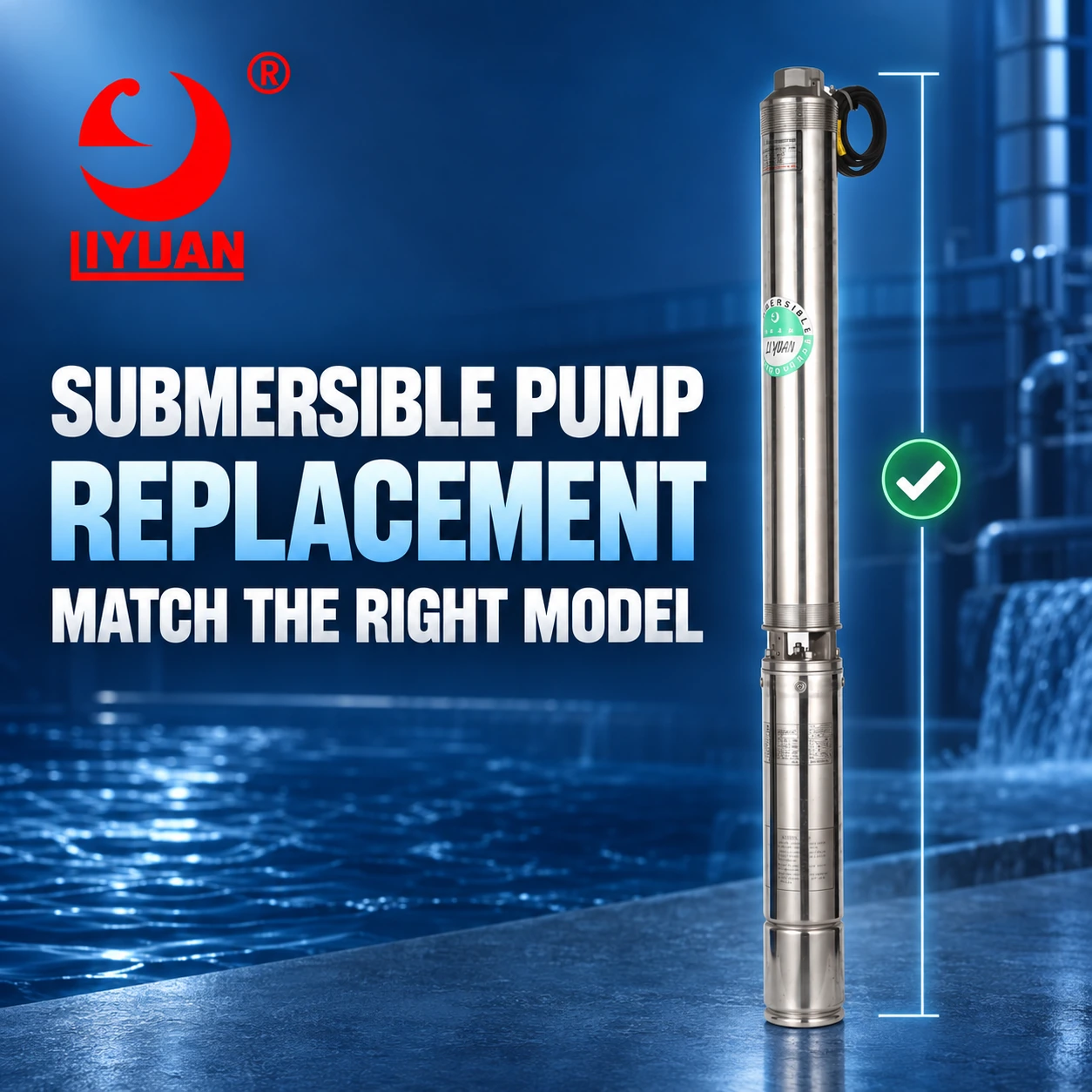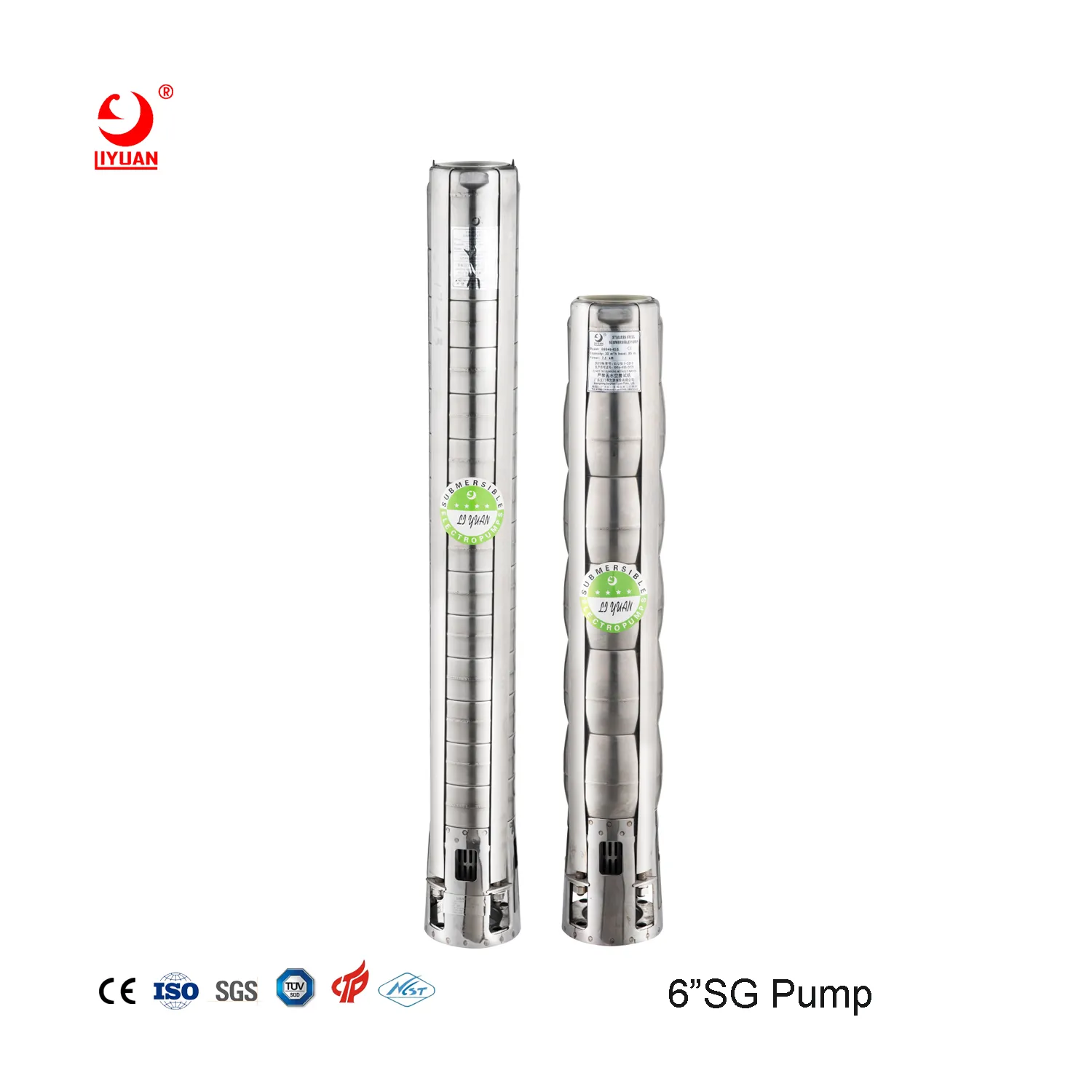
A 6 Inch Submersible Pump Is Worth Considering When Its Hydraulic Range Meets Your Required Flow And Head More Effectively Than Smaller Alternatives, And The Complete Assembly Fits The Well. However, Diameter Alone Does Not Prove Higher Efficiency, Greater Usable Flow, Or Lower Running Cost.
For Irrigation, Commercial Water Supply, And Other Long-Running Applications, Compare Suitable Models At The Same Duty Point. Then Check Energy Per Cubic Meter, Seasonal Operation, Motor Cooling, And The Cost Of The Complete Installation.
What Does 6 Inch Submersible Pump Mean?
In Borehole Applications, Six Inches Usually Describes A Nominal Pump Size Class. It Does Not Automatically Specify An Exact 152.4 mm Outside Diameter, A Six-Inch Outlet, Or A Six-Inch Motor.
In Contrast, Some Drainage Or Slurry Pump Suppliers Describe Equipment By Discharge Size. Therefore, Confirm That The Offer Covers A Clean-Water Borehole Pump And Ask Which Dimension The Size Refers To.
Also Distinguish The Pump End From The Motor. The Pump End Establishes The Hydraulic Performance; The Motor Supplies The Required Shaft Power. Their Sizes May Differ In A Manufacturer-Approved Assembly.
When Should You Choose A Six-Inch Borehole Pump?
Start With The Required Duty, Then Compare Available Hydraulic Families.
| Project Condition | Selection Implication |
|---|---|
| Smaller Pump Meets Duty Efficiently | Compare Installed Cost Before Increasing Diameter |
| Smaller Pump Would Operate Beyond Its Recommended Flow Range | Evaluate A Larger Hydraulic Family |
| Well Yield Is Below Required Flow | Resolve Water Availability Before Selecting More Capacity |
| Daily Operating Hours Are High | Give Energy Consumption Greater Weight |
| Seasonal Demand Varies Widely | Check Every Significant Duty Point And Control Method |
| Bore Clearance Is Restricted | Verify The Complete Assembly Drawing Before Shortlisting |
For Example, A Six-Inch Casing Does Not Require A Six-Inch Pump. A Smaller Assembly May Meet The Demand, Subject To Cooling And Installation Checks.
For Restricted Wells Or Smaller Duties, Review The Smaller Models In The Liyuan Submersible Pump Range. Then Request The Exact Model’s Dimensions And Curve Before Deciding Whether A Larger Pump Is Necessary.
How Much Flow Can A 6 Inch Submersible Pump Deliver?
There Is No Universal Flow Or Horsepower Rating For This Size. Instead, Manufacturers Offer Several Hydraulic Families And Stage Configurations.
For Example, Franklin Electric’s Six-Inch TRI-SEAL Series Lists Nominal Flow Families Of 50, 75, 100, And 125 GPM. Those Are Series-Specific Ratings, Not Universal Limits Or A Promise Of Those Flows At Every Head.
Adding Stages Primarily Increases Available Head At A Given Flow. Therefore, Request A Curve For The Exact Model, Stage Count, And Frequency. Do Not Combine A Catalog’s Maximum Flow And Maximum Head Into One Duty Point.
Define The Duty Before Comparing Models
Consider This Hypothetical Irrigation Installation:
- Required Flow: 25 Cubic Meters Per Hour
- Verified Sustainable Well Yield: 30 Cubic Meters Per Hour
- Dynamic Water Level At Required Flow: 48 Meters Below Ground
- Delivery Elevation: 7 Meters Above Ground
- Required Outlet Pressure: 3 Bar
- Pipe And Fitting Loss At Required Flow: 9.4 Meters
First, Convert Pressure Into Head:
Pressure Head ≈ 3 × 10.2 = 30.6 Meters
Then Calculate Total Dynamic Head:
TDH = 48 + 7 + 30.6 + 9.4 = 95 Meters
The Required Duty Is 25 Cubic Meters Per Hour At 95 Meters TDH. The Pump’s Installation Depth Does Not Replace The Dynamic Water Level In This Calculation.
Next, Compare Candidate Curves At That Point. The Submersible Pump Performance Curve Explains How Flow, Head, Efficiency, And Power Relate.
For Multiple Irrigation Zones, Calculate Each Zone Separately. The Irrigation Well Pump Method Helps Avoid Combining Maximum Flow From One Zone With Maximum Head From Another.
Compare 6 Inch Submersible Pump Energy Per Cubic Meter
When Two Offers Meet The Same Duty, Compare Electrical Input At That Duty. Motor Nameplate Power Alone Does Not Establish Actual Consumption.
At A Stable Operating Point:
Specific Energy In kWh Per Cubic Meter = Electrical Input In kW ÷ Flow In Cubic Meters Per Hour
For A Variable Operating Schedule, Use Total Measured Or Predicted Energy Divided By Total Delivered Volume Over The Same Period.
However, Compare Equivalent Delivery Conditions. A Pump Delivering Water At Less Pressure May Show Lower Energy Per Cubic Meter Simply Because It Performs Less Hydraulic Work.
Example: Two Pumps At The Same Duty
Assume Both Candidates Deliver 25 Cubic Meters Per Hour At 95 Meters TDH. The Following Values Are Hypothetical And Do Not Describe Liyuan Models Or Factory Test Results.
| Comparison | Candidate A | Candidate B |
|---|---|---|
| Flow | 25 Cubic Meters Per Hour | 25 Cubic Meters Per Hour |
| TDH | 95 Meters | 95 Meters |
| Electrical Input At Agreed Supply Boundary | 10.8 kW | 9.7 kW |
| Specific Energy | 0.432 kWh Per Cubic Meter | 0.388 kWh Per Cubic Meter |
| Annual Operation | 3,000 Hours | 3,000 Hours |
| Annual Delivered Volume | 75,000 Cubic Meters | 75,000 Cubic Meters |
| Annual Electricity Use | 32,400 kWh | 29,100 kWh |
Therefore, Candidate B Uses 3,300 kWh Less Per Year Under These Assumptions.
At An Illustrative Electricity Tariff Of USD 0.12 Per kWh:
Annual Energy-Cost Difference = 3,300 × 0.12 = USD 396
If Candidate B Costs USD 900 More Installed, Its Simple Energy-Only Payback Is Approximately 2.3 Years. However, This Estimate Excludes Financing, Maintenance Differences, Downtime, And Changes In Operating Conditions.
The U.S. Department Of Energy Pump Systems Resources Support Evaluating Pumping Energy At System Level. For Additional Calculations, See Submersible Pump Energy Consumption.
What Makes The Comparison Valid?
Use The Same Water Level, Delivery Pressure, Flow, And Measurement Boundary For Both Offers. For Example, Do Not Compare One Supplier’s Motor Input With Another Supplier’s Pump Shaft Power.
Also Include Drive Losses Consistently Where A VFD Is Part Of The Supply. Request Test Or Selection Data That States The Assumed Frequency And Operating Conditions.
Check The Full Operating Range
A Six-Inch Borehole Pump May Experience Different Water Levels, Valve Positions, And Pressure Requirements Over A Year.
At Lower TDH, A Fixed-Speed Pump May Deliver More Flow. Consequently, Check Well Yield, Motor Loading, And The Permitted Maximum Flow.
At Higher TDH, Flow May Fall Below Demand. Therefore, Verify Performance At The Lowest Expected Pumping Water Level, Not Only At The Normal Level.
If You Use A VFD, Check Minimum Speed, Motor Cooling, Thrust Limits, And Drive Compatibility. A High Static Lift Can Limit Useful Speed Reduction Because The Pump Must Still Produce Enough Head To Move Water.
For A Variable Schedule, Calculate Annual Energy By Operating Condition:
Annual Energy In kWh = Sum Of (Electrical Input In kW At Each Duty × Hours At That Duty)
This Gives A More Useful Comparison Than Applying One Efficiency Figure To Every Hour Of Operation.
Check Installation Cost Before Increasing Capacity
A Larger Pump Can Change Costs Beyond The Pump-And-Motor Price. Review The Riser, Cable, Controls, Wellhead Support, And Equipment Needed For Installation And Retrieval.
| Item | Check Before Ordering |
|---|---|
| Bore Passage | Minimum Clear Diameter, Deviation, Liners, And Assembly Length |
| Riser Pipe | Friction Loss, Pressure Rating, Connections, And Supported Load |
| Electrical Cable | Current Capacity, Voltage Drop, Length, And Installation Conditions |
| Starting Equipment | Supply Capacity And Motor Starting Requirements |
| Wellhead And Lifting Equipment | Loads Defined By The Installation Design |
| Service Access | Ability To Retrieve The Complete Assembly For Maintenance |
In Particular, Reusing A Small Existing Pipe Can Consume Much Of The Benefit Of A New Pump Through Added Friction. The DOE Pipe-Sizing Tip Sheet Explains Why Pipe Diameter And Friction Affect Pumping Cost.
Therefore, Compare A Pump-Only Replacement With A Pump-And-Pipe Upgrade When The Existing Line Restricts Flow. Use Actual Pipe Dimensions And Project Costs For That Comparison.
Motor Cooling And Water Quality Still Limit Selection
The Motor Must Have Adequate Cooling At The Lowest Expected Operating Flow. A Large Casing Or Water Entering Above The Motor May Require A Manufacturer-Specified Flow Sleeve To Direct Water Along The Motor Surface.
Also Check Water Temperature, Sand Content, And Chemistry Against The Offered Model’s Limits. A Larger Pump Does Not Automatically Tolerate More Sand, And A Stainless Shell Does Not Identify Every Wetted Component.
For A Separate Motor Purchase, Request Model-Specific Power, Thrust, Interface, And Cooling Data. Liyuan’s Six-Inch Submersible Motor Product Page Provides A Starting Point For A Motor Enquiry; The Complete Pump Assembly Still Needs Its Own Drawing And Performance Confirmation.
What Should A 6 Inch Submersible Pump Quote Prove?
Ask Each Supplier To Return The Same Evidence:
- Exact Pump And Motor Models, Stage Count, And Operating Frequency.
- Marked Pump Curves At Normal, Minimum, And Maximum Expected TDH.
- Electrical Input At Each Important Duty, With A Defined Measurement Boundary.
- Maximum Assembly Dimensions And Required Bore Clearance.
- Motor Cooling, Water Temperature, And Sand Limits.
- Included Cable, Controls, Accessories, And Test Documents.
- Installed-Cost Assumptions And Spare-Part Availability.
Finally, Compare Energy And Price Only Among Offers That Meet The Technical Requirements. A Lower-Cost Pump That Misses The Required Flow Cannot Serve As An Equivalent Alternative.
Frequently Asked Questions
Does A 6 Inch Submersible Pump Need A Six-Inch Well?
Use The Model’s Minimum Bore Requirement And Actual Assembly Dimensions. A Nominal Six-Inch Casing Label Alone Does Not Confirm Adequate Clearance; A Larger Well May Also Require A Cooling Review.
Is A Six-Inch Pump Always More Efficient Than A Four-Inch Pump?
No. Efficiency Depends On The Hydraulic Design And Operating Point. Compare Electrical Input At The Same Flow And TDH, Then Include Installation And Maintenance Costs.
Does A Six-Inch Pump Need A Six-Inch Motor?
Not Necessarily. Some Manufacturer-Approved Assemblies Use Different Pump And Motor Size Classes. However, Interface Compatibility, Power, Thrust, And Cooling Must All Match.
Can I Increase Flow By Adding More Stages?
Adding Identical Stages Primarily Increases Head At A Given Flow. It Can Shift The Operating Point In A Particular System, But It Does Not Replace Selecting The Correct Hydraulic Flow Family.
Can A Six-Inch Pump Solve Low Well Yield?
No. A Pump Cannot Increase Sustainable Aquifer Supply. Instead, Review Pumping Duration, Storage, Demand, And The Well Test Before Increasing Pump Capacity.
Select By Delivered Water And Total Cost
Choose A 6 Inch Submersible Pump When Its Verified Performance, Operating Range, And Installed Cost Suit The Project. Request Comparable Flow, Head, And Electrical Input Data Before Deciding That More Diameter Or Horsepower Provides Better Value.
Send Liyuan Pump Your Required Duty, Well Test, Bore Dimensions, Annual Operating Schedule, Water Quality, Pipe Details, And Electrical Supply. Ask For A Selection That Shows Both Hydraulic Compliance And Expected Energy Use Under Those Conditions.
Email:Liyuan@liyuan-pump.com
WhatsApp:+86 181-2828-2767