A Borehole Pump Must Match The Required Flow Rate, Total Dynamic Head, Borehole Diameter, Water Quality, And Available Power Supply.
However, Buyers Often Select A Pump Based Only On Motor Power. As A Result, The Pump May Produce Insufficient Pressure, Consume Too Much Electricity, Or Fail Prematurely.
This Guide Explains The Main Borehole Pump Types, Applications, Materials, Performance Parameters, And Selection Methods.
What Is A Borehole Pump?
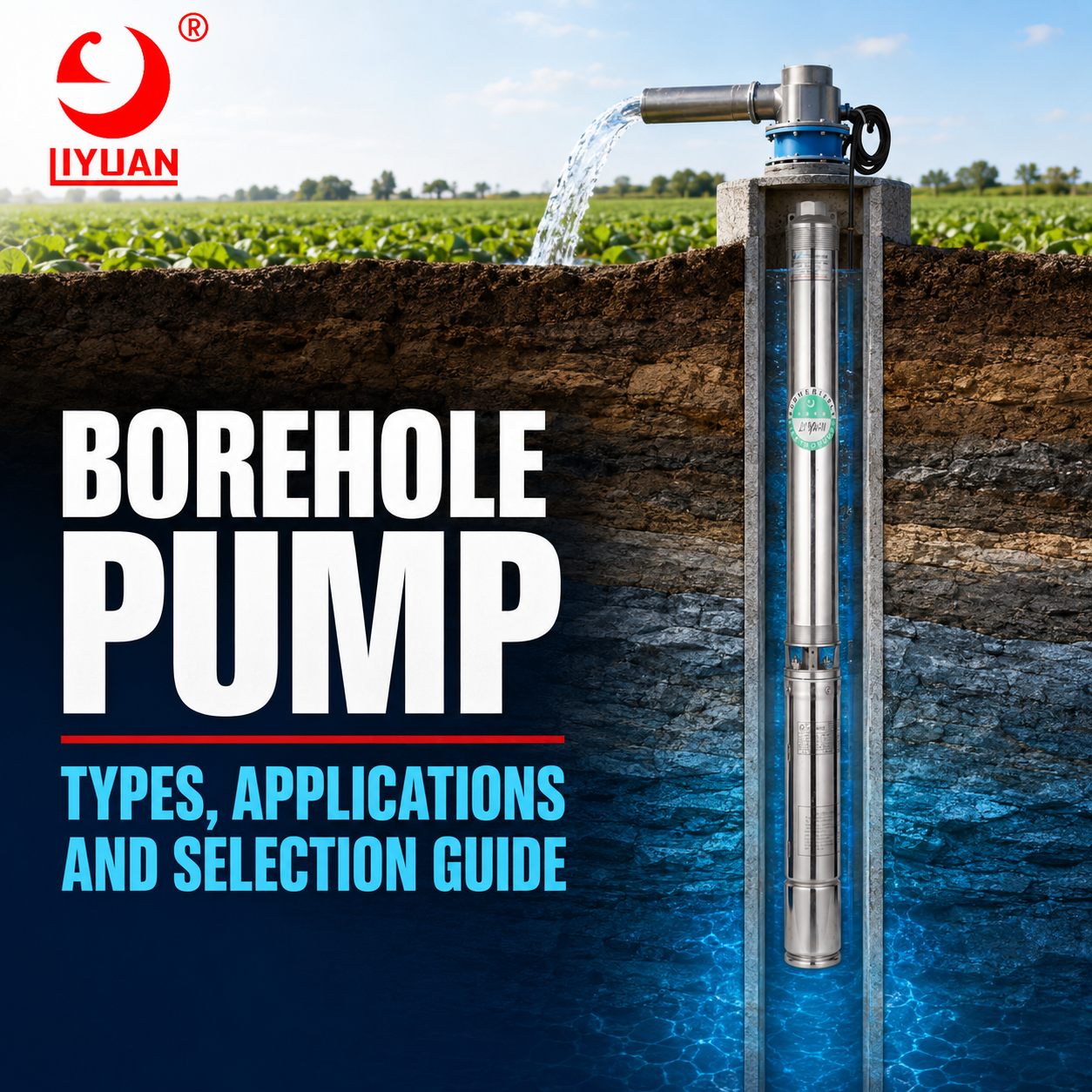
A Borehole Pump Is A Long, Narrow Water Pump Designed To Operate Inside A Drilled Well.
Most Borehole Pumps Use A Multistage Centrifugal Structure. Each Stage Contains An Impeller And Diffuser. Together, These Components Increase Water Pressure As Water Moves Through The Pump.
The Pump Usually Connects Directly To A Sealed Submersible Motor. Therefore, The Complete Unit Can Operate Below The Water Level.
Borehole Pumps Commonly Supply Water For Homes, Farms, Factories, Municipal Systems, And Mining Projects.
How Does A Borehole Pump Work?
A Borehole Pump Pushes Groundwater Upward Instead Of Pulling It From The Surface.
First, The Electric Motor Rotates The Pump Shaft. Next, The Impellers Transfer Mechanical Energy To The Water. The Diffusers Then Convert Water Velocity Into Pressure.
Each Additional Pump Stage Increases The Available Head. Therefore, A Pump With More Stages Can Usually Move Water To A Greater Height.
Finally, The Pump Sends Water Through A Check Valve And Vertical Drop Pipe. The Water Then Enters A Pressure Tank, Storage Tank, Irrigation System, Or Distribution Network.
Main Parts Of A Borehole Pump System
A Complete Borehole Pump System Usually Includes:
- Multistage Submersible Pump
- Water-Filled Or Oil-Filled Motor
- Pump Shaft
- Impellers And Diffusers
- Pump Intake
- Non-Return Valve
- Drop Pipe
- Submersible Power Cable
- Control Box Or Control Panel
- Level Sensor
- Pressure Tank
- Dry-Run Protection Device
Every Component Must Match The Pump’s Voltage, Current, Flow, Pressure, And Installation Depth.
Main Types Of Borehole Pumps
Submersible Borehole Pump
A Submersible Borehole Pump Operates Fully Underwater. It Directly Connects To A Sealed Electric Motor.
This Design Delivers High Pressure Without Requiring Suction Priming. In Addition, The Surrounding Water Helps Cool The Motor.
Submersible Models Suit Medium And Deep Wells. They Also Produce Less Surface Noise Than Above-Ground Pumps.
Multistage Borehole Pump
A Multistage Pump Uses Several Impellers In Series. Each Impeller Adds Pressure To The Water.
Therefore, This Design Works Well For Deep Wells, High Buildings, Long Pipelines, And High-Pressure Irrigation.
However, More Stages Do Not Always Mean Better Performance. The Selected Pump Must Still Match The Required Duty Point.
Solar Borehole Pump
A Solar Borehole Pump Uses Electricity From Photovoltaic Panels. A Dedicated Controller regulates Motor Speed And Protects The System.
Solar Pumps Work Well In Remote Farms, Villages, And Livestock Projects. They Can Reduce Dependence On Diesel Generators Or Unstable Electrical Grids.
However, Solar Radiation Changes Throughout The Day. Therefore, Designers Often Add A Storage Tank Instead Of Relying Only On Battery Storage.
AC Borehole Pump
An AC Borehole Pump Uses Single-Phase Or Three-Phase Electricity.
Single-Phase Models Suit Homes, Small Farms, And Light-Duty Systems. Three-Phase Models Support Higher Power, Longer Operating Hours, And Larger Water Projects.
DC Borehole Pump
A DC Borehole Pump Commonly Works With Solar Panels, Batteries, Or Low-Voltage Power Systems.
DC Models Offer Simple Control And Good Efficiency in Small Applications. However, Cable Size Becomes Important Because Low-Voltage Systems Can Experience Significant Voltage Drop.
Line-Shaft Turbine Pump
A Line-Shaft Turbine Pump Places The Pumping Elements Inside The Well While The Motor Remains Above Ground.
This Structure Can Handle High Flow Rates. It also allows easier motor maintenance. However, Installation Requires Accurate Shaft Alignment And More Surface Equipment.
Borehole Pump Vs Deep Well Pump
The Terms Borehole Pump And Deep Well Pump Often Describe Similar Products. However, Their Use Can Vary By Market.
| Feature | Borehole Pump | Deep Well Pump |
|---|---|---|
| Typical Installation | Drilled Borehole | Deep Well Or Borehole |
| Shape | Long And Narrow | Long And Narrow |
| Common Design | Multistage Submersible | Multistage Submersible |
| Main Function | Groundwater Extraction | Groundwater Extraction |
| Common Markets | Europe, Africa, Asia, Australia | North America And Global Markets |
In Most Commercial Applications, Both Terms Refer To A Submersible Multistage Pump Installed Below The Water Level.
Therefore, Buyers Should Compare Technical Specifications Instead Of Relying Only On Product Names.
Common Borehole Pump Sizes
The Borehole Diameter Limits The Pump’s Outside Diameter.
Common Pump Sizes Include:
| Pump Size | Common Applications |
|---|---|
| 3 Inch | Narrow Wells And Small Water Systems |
| 4 Inch | Homes, Farms, And Light Commercial Use |
| 5 Inch | Medium-Flow Water Supply |
| 6 Inch | Agriculture, Industry, And Municipal Projects |
| 8 Inch | High-Flow Water Supply Systems |
| 10 Inch | Large Industrial And Municipal Wells |
| 12 Inch | Major Water Infrastructure Projects |
The Pump Must Fit Inside The Casing With Enough Clearance For Installation And Cooling.
Moreover, The Borehole Should Remain Straight. A Bent Or Damaged Casing Can Prevent Safe Pump Installation And Removal.
Where Are Borehole Pumps Used?
Residential Water Supply
A Residential Borehole Pump Supplies Groundwater For Drinking, Cooking, Washing, Bathrooms, And Garden Irrigation.
A Pressure Tank Stores Water And Reduces Frequent Pump Starts. Meanwhile, A Pressure Switch Automatically Controls The Pump.
Agricultural Irrigation
Farmers Use Borehole Pumps For Sprinklers, Drip Irrigation, Greenhouses, And Crop Production.
Agricultural Systems Often Require High Flow Over Long Operating Periods. Therefore, Buyers Should Prioritize Hydraulic Efficiency And Reliable Motor Cooling.
Livestock Watering
Borehole Pumps Can Fill Water Tanks For Cattle, Sheep, Poultry, And Other Livestock.
Remote Livestock Projects Often Combine Solar Pumps With Elevated Storage Tanks. This Design Provides Water When Solar Output Falls.
Municipal Water Supply
Municipal Systems Use Large Borehole Pumps To Transfer Groundwater Into Treatment Plants, Storage Reservoirs, And Public Pipelines.
These Applications Require Reliable Materials, Control Systems, And Continuous-Duty Motors.
Industrial Water Systems
Factories Use Borehole Pumps For Process Water, Equipment Cooling, Cleaning, And General Water Supply.
Before Selection, Engineers Should Analyze Water Chemistry, Daily Operating Hours, And Required Discharge Pressure.
Mining And Dewatering
Mining Projects Use Borehole Pumps For Groundwater Control, Pit Dewatering, And Water Transfer.
However, Abrasive Water May Contain Sand And Fine Solids. Therefore, These Applications Require Wear-Resistant Pump Components.
How To Select A Borehole Pump
1. Measure The Borehole Diameter
Measure The Internal Casing Diameter At Several Points.
The Pump Must Enter And Exit The Borehole Without Becoming Stuck. At The Same Time, Water Must Flow Around The Motor For Cooling.
Always Compare The Actual Pump Diameter With The Minimum Casing Diameter.
2. Determine The Required Flow Rate
Flow Rate Describes The Volume Of Water Delivered During A Specific Period.
Common Units Include:
- Cubic Meters Per Hour
- Liters Per Minute
- Liters Per Second
- Gallons Per Minute
Calculate The Maximum Expected Water Demand. However, Do Not Select A Flow Rate Higher Than The Well’s Sustainable Yield.
Excessive Pumping Can Lower The Water Level And Cause Dry Running.
3. Measure Static And Dynamic Water Levels
The Static Water Level Represents The Water Depth Before Pumping Begins.
The Dynamic Water Level Represents The Water Depth While The Pump Operates At The Required Flow.
The Dynamic Level Usually Sits Lower Because Pumping Creates Drawdown. Consequently, Pump Selection Must Use The Dynamic Water Level.
Seasonal groundwater changes can also affect performance. The U.S. Geological Survey explains how wells and groundwater pumping systems operate.
4. Calculate Total Dynamic Head
Total Dynamic Head Determines How Much Pressure The Pump Must Produce.
Use This Basic Formula:
Total Dynamic Head = Vertical Lift + Required Outlet Pressure + Pipe Friction Loss
For Example:
- Dynamic Water Level: 65 Meters
- Tank Elevation: 20 Meters
- Required Outlet Pressure: 25 Meters
- Friction Loss: 10 Meters
Therefore:
TDH = 65 + 20 + 25 + 10 = 120 Meters
The Pump Must Deliver The Required Flow At Approximately 120 Meters Of Head.
5. Review The Pump Performance Curve
A Pump Curve Shows How Flow Changes As Head Changes.
First, Find The Required Flow On The Horizontal Axis. Next, Find The Required Head On The Vertical Axis. The Point Where These Values Meet Represents The Duty Point.
Choose A Pump That Places This Point Near Its Best Efficiency Range.
A Poorly Matched Pump May Cause:
- Excessive Power Consumption
- Low Water Output
- Unstable Pressure
- Motor Overload
- Vibration
- Rapid Component Wear
- Shorter Service Life
6. Select The Motor Power
Motor Power Must Support The Pump At The Selected Duty Point.
Common Ratings Range From Less Than 1 HP To Several Hundred Horsepower. Nevertheless, More Power Does Not Automatically Produce Better Results.
Select Motor Power According To:
- Required Flow
- Total Head
- Pump Efficiency
- Number Of Stages
- Operating Hours
- Voltage
- Frequency
- Starting Method
7. Confirm Voltage And Frequency
Voltage And Frequency Vary Across Global Markets.
Common Electrical Options Include:
- 110V Single Phase
- 220V Single Phase
- 230V Single Phase
- 380V Three Phase
- 400V Three Phase
- 415V Three Phase
- 440V Three Phase
- 480V Three Phase
- 50Hz Or 60Hz
Incorrect Voltage Or Frequency Can Reduce Performance And Damage The Motor. Therefore, Confirm The Local Electrical Standard Before Production.
Single-Phase Vs Three-Phase Borehole Pump
| Feature | Single-Phase Pump | Three-Phase Pump |
|---|---|---|
| Typical Application | Residential And Small Farms | Commercial And Industrial |
| Common Voltage | 110V–240V | 380V–480V |
| Power Capacity | Lower | Higher |
| Starting System | Capacitor Or Control Box | Contactor, Soft Starter, Or VFD |
| Efficiency | Suitable For Small Loads | Usually Higher |
| Operation | Light To Medium Duty | Medium To Continuous Duty |
Three-Phase Motors Usually Provide Smoother Starting And Better Efficiency. However, Single-Phase Models Remain Practical Where Three-Phase Power Is Unavailable.
Borehole Pump Material Selection
AISI 304 Stainless Steel
AISI 304 Stainless Steel Offers Good Strength And Corrosion Resistance In Clean Freshwater.
It Suits Residential, Agricultural, And General Industrial Applications.
AISI 316 Stainless Steel
AISI 316 Stainless Steel Provides Better Resistance To Chlorides And Corrosive Water.
Therefore, Buyers Often Select It For Coastal Regions, Mildly Saline Water, And Demanding Industrial Conditions.
Cast Iron
Cast Iron Provides Strong Mechanical Performance At A Competitive Cost.
However, Manufacturers Must Apply Suitable Corrosion Protection When Water Conditions Require It.
Bronze
Bronze Offers Good Corrosion Resistance And Durability. It Can Support Special Water Conditions And Marine-Related Applications.
However, Bronze Components Usually Increase The Purchase Cost.
Engineering Plastic
Engineering Plastics Reduce Weight And Resist Several Forms Of Corrosion.
They Commonly Appear In Small Pumps. Nevertheless, Buyers Should Verify Temperature And Pressure Limits.
How Water Quality Affects Pump Selection
Water Quality Can Change Pump Performance And Service Life.
Before Ordering, Test:
- Sand Content
- pH Value
- Chloride Level
- Mineral Concentration
- Water Temperature
- Maximum Particle Size
- Chemical Composition
Sand Can Wear Impellers, Bearings, And Diffusers. Meanwhile, Chlorides And Chemicals Can Corrode Metal Components.
Choose Sand-Resistant Bearings, Suitable Impeller Materials, And Strong Mechanical Seals For Difficult Water Conditions.
Can A VFD Control A Borehole Pump?
A Variable Frequency Drive Can Adjust Motor Speed According To Water Demand.
This Control Method Can Provide:
- Stable System Pressure
- Lower Starting Current
- Soft Starting
- Reduced Water Hammer
- Adjustable Flow
- Overload Protection
- Phase-Loss Protection
- Potential Energy Savings
However, The Motor Must Support VFD Operation. Installers Must Also Configure Minimum Speed, Acceleration Time, And Motor Protection Correctly.
The U.S. Department Of Energy Explains That Adjustable-Speed Drives Can Improve Flow Control In Suitable Centrifugal Pump Applications.
Common Borehole Pump Problems
Pump Runs But Delivers No Water
Possible Causes Include A Low Water Level, Blocked Intake, Damaged Impellers, Incorrect Rotation, Or Broken Drop Pipe.
Water Pressure Is Too Low
Low Pressure May Result From Pump Wear, Pipe Leakage, Incorrect Selection, Low Voltage, Or Excessive Drawdown.
Pump Starts And Stops Frequently
A Faulty Pressure Tank, Incorrect Pressure Switch, Pipeline Leak, Or Oversized Pump Can Cause Frequent Cycling.
Motor Draws Excessive Current
Low Voltage, Phase Imbalance, Mechanical Binding, Sand Blockage, Or Incorrect Duty Conditions May Increase Current.
Pump Trips The Circuit Breaker
Damaged Cables, Water Ingress, Motor Overload, Poor Insulation, Or Electrical Short Circuits Can Trip Protection Devices.
Borehole Pump Maintenance Tips
A Borehole Pump Requires Less Routine Access Than A Surface Pump. However, Regular Monitoring Remains Important.
Use These Maintenance Practices:
- Record Flow And Pressure
- Check Voltage And Current
- Inspect Control Panel Alarms
- Test Motor Insulation
- Monitor Starting Frequency
- Check Pressure Tank Operation
- Prevent Dry Running
- Control Sand And Sediment
- Inspect Exposed Cables
- Compare Performance With Commissioning Data
A Gradual Drop In Flow Often Indicates Wear, Blockage, Or Falling Groundwater Levels.
Information To Send A Borehole Pump Manufacturer
Provide The Following Details Before Requesting A Quotation:
- Borehole Diameter
- Total Well Depth
- Static Water Level
- Dynamic Water Level
- Required Flow Rate
- Required Outlet Pressure
- Delivery Pipe Length
- Pipe Diameter
- Voltage And Frequency
- Single-Phase Or Three-Phase Power
- Water Temperature
- Sand Content
- Water Chemistry
- Daily Operating Hours
- Required Pump Material
Complete Project Data Helps The Manufacturer Select A More Accurate And Efficient Model.
Why Choose Liyuan Pump?
Liyuan Pump Manufactures Borehole Pumps And Submersible Motors For Residential, Agricultural, Commercial, Municipal, And Industrial Water Projects.
Available Solutions Can Include:
- Different Pump Diameters
- Multiple Flow And Head Ranges
- Single-Phase And Three-Phase Motors
- 50Hz And 60Hz Models
- Customized Voltage
- Stainless Steel Construction
- High-Head Pump Designs
- OEM And ODM Services
- Pump And Motor Matching
- Technical Selection Support
For An Accurate Recommendation, Send Your Borehole Size, Required Flow, Total Head, Voltage, And Water Quality To www.liyuan-pump.com.
Frequently Asked Questions
What Is The Difference Between A Borehole Pump And A Submersible Pump?
A Borehole Pump Is A Type Of Submersible Pump Designed For Narrow, Deep Wells. However, The General Submersible Pump Category Also Includes Drainage, Sewage, Fountain, And Sump Pumps.
How Deep Can A Borehole Pump Work?
Operating Depth Depends On Pump Head, Motor Power, Cable Length, And Pressure Rating. Some Models Serve Shallow Boreholes, While Multistage Units Can Work In Wells Several Hundred Meters Deep.
How Do I Calculate Borehole Pump Size?
Calculate The Required Flow And Total Dynamic Head. Then Match Those Values With The Manufacturer’s Pump Curve And Borehole Diameter.
Can A Borehole Pump Be Installed Horizontally?
Some Models Can Operate Horizontally When The Manufacturer Approves The Installation. However, The Motor May Require A Cooling Sleeve To Maintain Adequate Water Flow.
How Far Should The Pump Sit Above The Borehole Bottom?
The Pump Should Remain High Enough To Avoid Sand And Sediment. At The Same Time, It Must Stay Below The Lowest Expected Dynamic Water Level.
Is Stainless Steel Suitable For Borehole Pumps?
Yes. Stainless Steel Offers Good Corrosion Resistance, Strength, And Clean-Water Compatibility. Choose The Stainless Steel Grade According To The Water Chemistry.
How Long Can A Borehole Pump Run Continuously?
A Continuous-Duty Borehole Pump Can Run For Long Periods When It Receives Adequate Cooling, Stable Voltage, And Sufficient Water Flow.
What Causes A Borehole Pump To Fail?
Common Causes Include Dry Running, Sand Abrasion, Voltage Problems, Frequent Starting, Incorrect Sizing, Cable Damage, Overheating, And Corrosion.
Conclusion
The Best Borehole Pump Delivers The Required Flow At The Correct Total Dynamic Head While Operating Near Its Efficient Range.
Therefore, Buyers Should Evaluate Borehole Diameter, Dynamic Water Level, Water Demand, Pipe Losses, Voltage, Materials, And Water Quality Before Ordering.
For Professional Pump Selection And OEM Support, Contact Liyuan Pump Through
Email:Liyuan@liyuan-pump.com
WhatsApp:+86 181-2828-2767