Why Does A Submersible Pump Have Low Pressure?
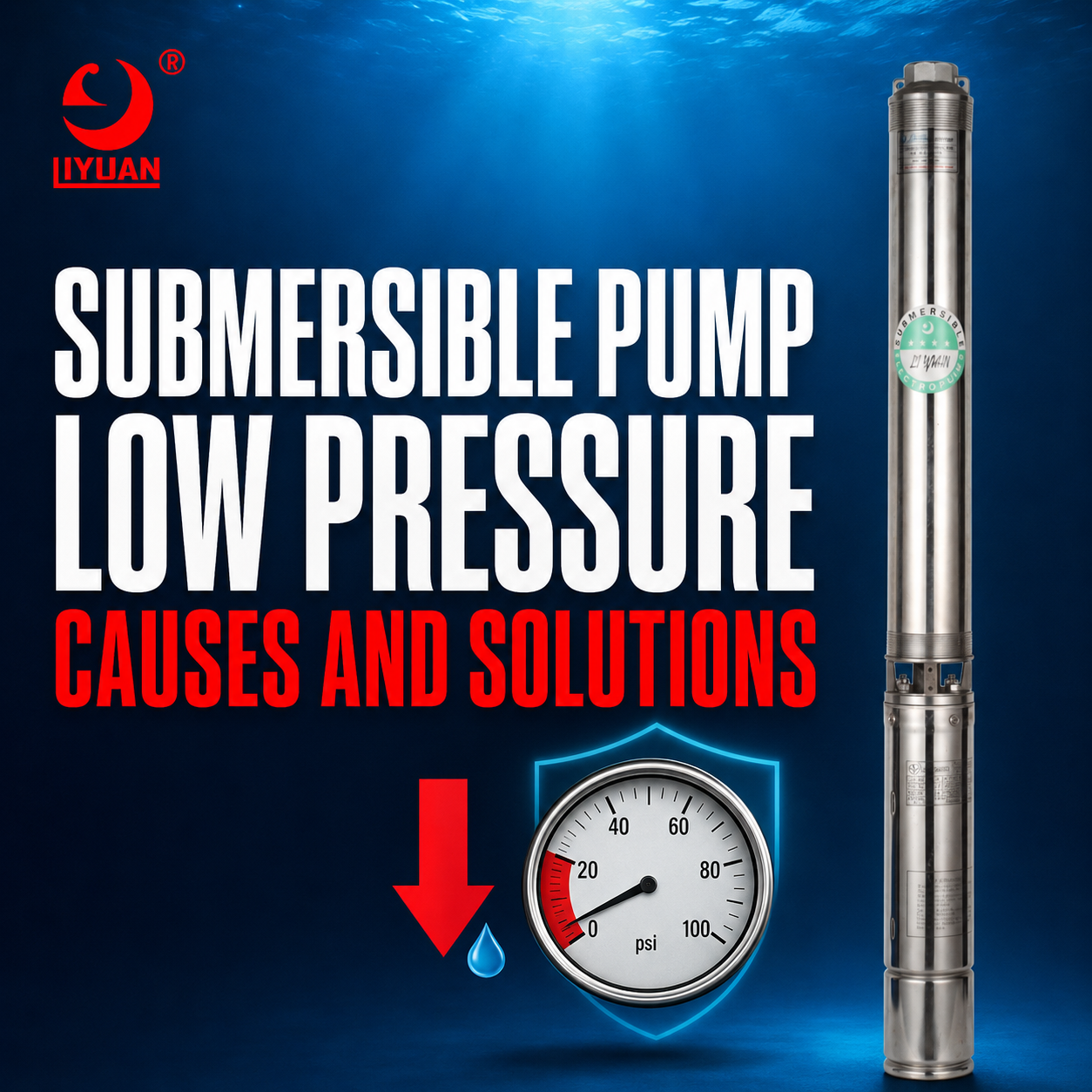
Submersible Pump Low Pressure Usually Results From Excessive Total Dynamic Head, Falling Water Levels, Insufficient Pump Capacity, Worn Impellers, Blocked Pipes, Leakage, Incorrect Voltage, Or Faulty Pressure Controls.
The First Step Is Separating A Pressure Problem From A Flow Problem.
Pressure Describes The Force Available To Move Water. Flow Describes The Volume Of Water Delivered During A Specific Time.
A Pump Can Produce High Pressure With Low Flow. It Can Also Produce High Flow At Low Pressure.
Therefore, Operators Should Measure Both Values Before Replacing The Pump.
The Most Reliable Diagnostic Process Includes Water-Level Measurement, Flow Testing, Pressure Testing, Electrical Measurement, And Comparison With The Pump Performance Curve.
Pressure Versus Head
Pump Manufacturers Usually Express Pump Performance As Head Instead Of Pressure.
Head Describes The Vertical Height Of A Water Column That The Pump Can support.
For Clean Water:
Pressure (PSI) = Head (Feet) ÷ 2.31
Pressure (Bar) = Head (Meters) ÷ 10.2
For Example, 100 Feet Of Water Head Equals Approximately:
100 ÷ 2.31 = 43.3 PSI
Likewise, 50 Meters Of Water Head Equals Approximately:
50 ÷ 10.2 = 4.9 Bar
The Pump Does Not Deliver All This Pressure To The Final outlet. Elevation, Pipe Friction, Valves, Filters, And Fittings Consume Part Of The Pump’s Available head.
How Elevation Reduces Water Pressure
Every Meter Of Vertical Lift Requires Approximately 0.098 Bar For Clean water.
Every Foot Of Vertical Lift Requires Approximately 0.433 PSI.
Consider A Pump That Produces 80 Meters Of Head. The Outlet Sits 50 Meters Above The Pumping Water level.
The Elevation Alone Consumes:
50 × 0.098 = 4.9 Bar
The Remaining 30 Meters Of Head Must Cover Pipe friction And Required outlet pressure.
If The System Loses Another 10 Meters Through friction, Only 20 Meters Remain At The outlet.
This Equals Approximately:
20 ÷ 10.2 = 1.96 Bar
A Pump Can Operate Correctly While The Final Outlet Still Receives Insufficient pressure.
Use The Total Dynamic Head For Submersible Pump: Calculation Guide To Calculate The Complete System Head.
Main Causes Of Low Submersible Pump Pressure
Pump Produces Insufficient Head
Every Submersible Pump Has A Maximum Head And A Defined Performance curve.
If The Required System Head Exceeds The Pump’s capacity, The Pump Cannot Reach The Desired pressure.
Common Selection Errors Include:
- Too Few Pump Stages
- Incorrect Impeller Diameter
- Undersized Motor
- Incorrect Pump Series
- Inaccurate Water-Level Data
- Missing Pipe-Friction Calculations
- Unexpected Outlet Pressure Requirements
A High Head Submersible Pump Uses Multiple Hydraulic Stages To Generate Pressure For Deep Wells And Long-Distance Delivery.
However, Higher Maximum Head Does Not Automatically Make A Pump Suitable. Flow, Motor Power, Well Diameter, And Operating Range Must Also Match The application.
Dynamic Water Level Has Fallen
The Static Water Level Shows The Water Position Before Pumping.
The Dynamic Water Level Shows The Water Position While The Pump operates.
When The Dynamic Level Falls, The Pump Must Lift Water Through A Greater vertical distance. This Increase Raises Total Dynamic Head.
A Pump That Produced Enough Pressure During Initial installation May Become Insufficient During A Drought Or Heavy Irrigation season.
Measure The Dynamic Water Level Under Normal Flow Before Changing The Pump.
Pump Flow Exceeds Well Yield
A Pump That Removes Water Faster Than The Well recovers Can Create Severe drawdown.
As The Water Level Falls, Available pressure decreases.
Eventually, The Pump May Experience Cavitation, Air entrainment, underload trips, Or Dry running.
The Correct Solution May involve Reducing Pump Flow Instead Of Installing A Larger pump.
Excessive Water Demand
The Pump May Produce Normal Pressure At Low demand But Lose Pressure When Multiple outlets Open.
This Condition Indicates That System demand Exceeds The Available Pump flow At The Required head.
Typical Causes Include:
- Additional Irrigation Zones
- New Buildings
- Larger Sprinklers
- Open Hydrants
- Industrial Equipment
- Livestock Watering
- Pipe Leakage
- Uncontrolled Bypass Flow
Measure Peak demand And Compare It With The Pump Curve.
The Submersible Pump Flow Rate: Complete Sizing Guide Explains How To Determine Required Capacity.
Worn Impellers
Sand, Corrosion, Cavitation, And Long Operating Hours Can Wear The impellers.
Worn Blades Transfer Less Energy To The water. Therefore, Both Flow And Head Can decrease.
Impeller Wear Often Develops gradually. Operators May Notice Longer Tank-filling times Or Lower pressure During Peak demand.
Inspect The Submersible Pump Impeller: Complete Guide For Common Damage Patterns.
Worn Diffusers
A Multistage Pump Uses Diffusers To Convert Velocity Into Pressure And Guide Water Into The Next impeller.
Worn, cracked, or eroded Diffusers Reduce Stage efficiency.
A Small Loss In One Stage Can Multiply Across A Pump With Many stages.
Inspect Impellers And Diffusers Together Because They Operate As A Matched Hydraulic assembly.
Excessive Internal Clearances
Wear Between Impellers, diffusers, wear rings, And Other Hydraulic surfaces Allows Internal recirculation.
Some Water Moves Backward Instead Of Continuing Toward The discharge.
Internal Leakage Reduces Flow, head, And efficiency.
Damaged Pump Coupling
The Motor Transfers Torque To The Pump Through A coupling.
A Worn Spline, damaged key, loose connection, Or Partially stripped coupling May Prevent Full Power transfer.
A Completely Failed Coupling Usually Produces Zero Water. A Partially Damaged connection Can Produce Intermittent Or Reduced output.
Clogged Pump Inlet
Sand, scale, debris, vegetation, Or Mineral deposits Can Block The Pump intake screen.
A Restricted inlet Reduces The Water Available To The First-stage impeller.
The Pump May Develop Low flow, unstable pressure, cavitation, And increased vibration.
Blocked Well Screen
The Well Screen Allows Groundwater To Enter The casing.
Mineral buildup, corrosion, biological growth, clay, And fine sediment Can Reduce Well inflow.
A Blocked Well Screen Often Causes Increasing drawdown At The Same Pump flow.
Compare Current Well data With Original Well testing records.
Dirty Filters
Sediment Filters, cartridge filters, softeners, ultraviolet systems, And Treatment equipment Can Create Significant pressure loss.
Measure Pressure Before And After Each component.
A Large Pressure difference Identifies The restriction.
Replace Or Clean Filters According To Manufacturer recommendations.
Partially Closed Valve
A Gate Valve, ball valve, check valve, Or control valve May Remain Partially closed.
Damaged Valve components Can Also Restrict flow Even When The Handle Appears Open.
Inspect Every Valve Between The Pump And The Final outlet.
Undersized Delivery Pipe
A Small Pipe Creates High Water velocity And Friction loss.
Pressure loss Increases With Flow rate, pipe length, internal roughness, fittings, And valve restrictions.
An Existing Pipe May Become Undersized After Users Add New Irrigation zones Or Increase Water demand.
Long Delivery Distance
Long Pipelines Create Additional friction.
A Pump That Works Well Near The wellhead May Provide Insufficient pressure At A Distant field, building, Or storage tank.
Calculate Friction Over The Complete Pipe length. Include Elevation changes And Every fitting.
Leaking Riser Pipe
A Hole Or Loose connection In The Well riser pipe Allows Water To Escape Before Reaching The surface.
The Pump May Continue operating While Returning Part Of Its Output To The well.
Symptoms Can Include:
- Low Flow
- Low Pressure
- Continuous Pump Operation
- Air In The Water
- Unusual Wellhead Noise
- Slow Pressure-Tank Filling
A Downhole inspection Or Pressure test May Be Required.
Leaking Check Valve
A Check Valve Should Prevent Reverse flow After The Pump stops.
A Leaking Valve Allows Pressure To fall And Water To Return Toward The well.
During Operation, A Damaged Or Partially blocked valve Can Also Restrict forward flow.
Read The Submersible Pump Check Valve: Complete Guide Before Replacing Or Adding Valves.
Plumbing Leakage
A Broken Underground pipe, leaking irrigation valve, open bypass, damaged toilet valve, Or Hidden fixture leak Reduces Available pressure.
Close All Known outlets And Observe The Pressure gauge.
If Pressure Falls After The Pump stops, The System Has A Leak, Reverse-flow Problem, Or Tank issue.
Incorrect Pressure-Switch Setting
The Pressure Switch Starts And Stops A Conventional fixed-speed pump.
If Cut-In And Cut-Out settings Are Too Low, Users Will Receive Lower System pressure.
However, Increasing The Settings Does Not Increase Pump capacity.
The Pump Must Produce Enough Head To Reach The New Cut-out pressure.
If It Cannot, The Motor May Run continuously And overheat.
Use The Submersible Pump Pressure Switch: Complete Guide Before Adjusting The Switch.
Blocked Pressure-Switch Port
Rust, sediment, scale, Or debris Can Block The Small Connection Leading To The Pressure switch.
The Switch May Then Respond slowly Or Read Incorrect pressure.
The Gauge And Switch Can Display Different behavior if Their Ports Have Different restrictions.
Incorrect Pressure-Tank Precharge
A Pressure Tank Stores Water And Reduces Pump cycling. It Does Not Create Additional pump pressure.
Incorrect Precharge Can Cause:
- Rapid Pressure Fluctuation
- Short Cycling
- Delayed Water Delivery
- Reduced Drawdown
- Unstable Pressure
A Failed Tank Can Make Users Feel A Pressure problem Even When The Pump Produces Normal head.
Review The Submersible Pump Pressure Tank: Complete Sizing Guide For Testing And Adjustment.
Low Supply Voltage
Low Voltage Can Reduce Motor torque And Increase Current.
The Motor May Fail To Reach Normal operating performance Under Severe voltage drop.
Common Causes Include:
- Undersized Cable
- Excessive Cable Length
- Weak Utility Supply
- Loose Connections
- Damaged Contactors
- Overloaded Transformer
- Incorrect Generator Size
Measure Voltage At The Control panel During Operation, Not Only Before Startup.
Voltage Imbalance
Three-Phase Voltage Imbalance Produces Unequal currents And Additional heat.
The Motor May Trip, run inefficiently, Or Fail prematurely.
Measure All Three Line-to-line voltages And Motor currents.
Incorrect Motor Rotation
A Three-Phase Motor Can Rotate Backward When Installers interchange Two Power leads.
Some Multistage Pump designs Produce Reduced flow And pressure With Reverse rotation.
If Rotation Is Incorrect, Qualified Personnel Can Exchange Any Two Motor phase conductors After Disconnecting And Isolating power.
Never Change Wiring Without Confirming The Motor And Control system.
Incorrect Frequency
A Pump Designed For 60 Hz Will Run At A Lower speed On 50 Hz Unless The Manufacturer Approves A Different configuration.
Lower Speed Reduces Flow And head.
For Centrifugal Pumps Under Similar Conditions:
Flow Changes Approximately With Speed
Head Changes Approximately With Speed Squared
Therefore, A Moderate Speed reduction Can Cause A Significant Head reduction.
Variable Frequency Drive Speed Limit
A Variable Frequency Drive May Limit Maximum frequency Or motor speed.
Incorrect pressure feedback, sensor calibration, current limits, Or sleep settings Can Prevent The Pump From reaching The Required pressure.
The Variable Frequency Drive For Submersible Pump: Complete Guide Explains Common Setup Parameters.
Air Entrainment Or Cavitation
Air Or Vapor Bubbles Reduce The Pump’s Effective Hydraulic capacity.
The Pump May Produce fluctuating pressure, noise, vibration, And reduced flow.
Causes Include Low submergence, excessive drawdown, inlet restrictions, And high Water temperature.
Pump Operates Outside Its Recommended Range
A Pump Should Operate Within The Manufacturer’s Approved flow range.
Operation Far To The Right Can Produce excessive flow, insufficient pressure, upthrust, And increased NPSH requirements.
Operation Far To The Left Can Produce low flow, high internal temperature, excessive downthrust, And vibration.
Grundfos Recommends Operating Submersible Pumps Within Their Specified Flow range To Protect Motor cooling And axial bearings.
Low-Pressure Symptom And Likely Cause
| Observed Symptom | Likely Cause |
|---|---|
| Pressure Is Low At Every Flow Rate | Undersized Pump, Low Speed, Worn Stages, Or Excessive Head |
| Pressure Is Normal At Low Demand | Excessive Demand, Small Pipe, Filter Restriction, Or Low Pump Flow |
| Pressure Falls After Shutdown | Check-Valve Leak, Pipe Leak, Or Fixture Leak |
| Pressure Fluctuates Rapidly | Pressure Tank, Switch, Air, Cavitation, Or VFD Sensor Problem |
| Pressure Declined Gradually | Impeller Wear, Well-Screen Restriction, Or Falling Water Level |
| Pressure Dropped Suddenly | Broken Pipe, Coupling Damage, Reverse Rotation, Or Electrical Fault |
| Pump Cannot Reach Cut-Out Pressure | Excessive Head, Leakage, Wear, Low Voltage, Or Wrong Pump |
| Pressure Is Good At Wellhead But Low At Outlet | Pipe Friction, Elevation, Filter, Valve, Or Distribution Problem |
| Pump Trips Before Pressure Builds | Overload, Low Voltage, Dry Running, Or Motor Fault |
How To Diagnose Low Pressure
Step 1: Confirm The Pressure Gauge
Compare The Installed Gauge With A Calibrated test gauge.
A Damaged Gauge Can Create A False diagnosis.
Install Gauges Before And After Filters Or Treatment equipment When Possible.
Step 2: Measure Static Pressure
Close All Water outlets And Allow The Pump To Reach Its Normal stopping pressure.
Record The Highest pressure.
If The Pump Cannot Reach The Pressure-switch cut-out setting, Do Not Immediately Adjust The switch.
Step 3: Measure Dynamic Pressure
Open A Known outlet And Record Pressure While Water flows.
Dynamic Pressure Shows How The System performs Under demand.
A Large Difference Between Static And Dynamic pressure Usually Indicates Insufficient flow capacity Or High friction loss.
Step 4: Measure Flow Rate
Use A Flow meter, calibrated container, Or Tank-filling test.
Record Flow At The Same Time As pressure.
A Pressure reading Without A Corresponding flow value Provides Limited diagnostic information.
Step 5: Measure Static And Dynamic Water Levels
Record The Well level Before Starting The Pump.
Then Measure The Level During Stable operation.
A Large drawdown Increases Total Dynamic Head And May Reveal Insufficient well yield.
Step 6: Calculate Actual Total Dynamic Head
Include:
- Dynamic Water Level
- Discharge Elevation
- Required Outlet Pressure
- Pipe Friction
- Fittings
- Valves
- Filters
- Treatment Equipment
Compare The Calculated duty point With The Pump curve.
Step 7: Check Valves And Filters
Confirm That Every isolation valve Is Fully open.
Measure Pressure Across Filters, valves, And treatment units.
A Large Pressure drop Identifies A restriction.
Step 8: Test For Leakage
Close All outlets And Observe Pressure after shutdown.
If Pressure falls, isolate Different parts Of The distribution system.
This Process Helps Separate A Downhole leak From A Building Or irrigation leak.
Step 9: Measure Voltage And Current
Record Motor voltage And Current Under Normal load.
For Three-Phase Motors, Measure All Three voltage And current values.
Compare Results With Motor nameplate data And Manufacturer limits.
Step 10: Verify Rotation
Check Rotation When A Three-Phase Pump produces Poor performance Immediately After Installation Or Electrical work.
Use A Safe Manufacturer-approved procedure.
Step 11: Check VFD Data
Review Motor frequency, output current, pressure feedback, speed limit, alarms, And fault history.
Confirm That The Drive reaches The Commanded speed.
Step 12: Inspect The Pump
If External Tests Show No System problem, Pull And Inspect The Pump.
Check:
- Inlet Screen
- Impellers
- Diffusers
- Bearings
- Shaft
- Coupling
- Check Valve
- Sand Damage
- Corrosion
- Internal Clearances
Record Each Component’s condition Before Reassembly.
How To Fix Low Submersible Pump Pressure
Select A Pump With Adequate Head
Choose A Pump That Produces Required flow At The Calculated Total Dynamic Head.
Do Not Select From Maximum head Or Maximum flow Alone.
The Required duty point Must fall Inside The Recommended operating range.
Reduce Avoidable Friction Loss
Use A Suitable pipe diameter.
Clean Or Replace restricted filters.
Open Required valves Fully.
Reduce unnecessary fittings, sharp bends, And long small-diameter pipes.
Repair Leaks
Repair Riser pipes, underground lines, irrigation valves, fixtures, And bypass connections.
Confirm That Pressure remains stable After shutdown.
Replace Worn Hydraulic Components
Replace Damaged impellers, diffusers, wear rings, bearings, And couplings.
If Wear affects Many Stages, Replacing The Complete pump assembly May Cost Less Than Rebuilding It.
Rehabilitate The Well
A Restricted well screen May Require Professional cleaning, chemical treatment, brushing, surging, Or redevelopment.
Well rehabilitation Must Match The Well construction And Deposit type.
Correct Electrical Supply
Install The Correct cable size.
Repair loose terminals And damaged contactors.
Correct voltage imbalance, transformer problems, generator sizing, And phase faults.
Adjust The Pressure Controls
Set Cut-In And Cut-Out pressures Within Pump, tank, pipe, And switch limits.
Never Raise Cut-Out pressure Beyond The Pump’s ability To Reach It.
A Low-Pressure cutoff Can Protect A Well System When pressure falls Abnormally. For Example, A Pentair Low-Pressure Cutoff Switch Stops The Pump Below Its Defined Low-Pressure limit And Requires Inspection Before restart.
Reprogram The Variable Frequency Drive
Correct Pressure setpoint, sensor range, minimum speed, maximum speed, acceleration, sleep, wake, And current limits.
Confirm That Motor cooling Remains Adequate At Reduced speed.
Match Demand To Available Capacity
Separate Large irrigation zones.
Use A Storage tank For High peak demand.
Schedule Large Water loads At Different times.
A Storage system Can Allow A Smaller well pump To Operate steadily While A Separate booster pump handles Peak demand.
When Should The Pump Be Replaced?
Consider Pump Replacement When:
- Required Head Exceeds Pump Capacity
- Several Hydraulic Stages Show Severe Wear
- Pump Efficiency Has Declined Significantly
- Repair Cost Approaches Replacement Cost
- System Demand Has Permanently Increased
- The Pump Operates Outside Its Recommended Range
- Suitable Replacement Parts Are Unavailable
- Corrosion Has Weakened Structural Components
Do Not Replace The Pump Until Tests Confirm That The Well, pipe, valves, filters, electrical supply, And Controls Work correctly.
Frequently Asked Questions
Why Does My Submersible Pump Run But Produce Low Pressure?
The Pump May Have Worn impellers, low speed, reverse rotation, excessive head, blocked flow, Or A Downhole leak.
Measure Flow, pressure, water level, voltage, And Current Before Pulling The Pump.
Why Is Water Pressure Low Only When Several Taps Open?
Total demand Exceeds Available pump flow, Or Pipe friction becomes excessive At Higher flow.
A Larger pipe, different pump, storage tank, Or demand management May Help.
Can A Pressure Tank Increase Pump Pressure?
No. A Pressure Tank stores pressurized water And Reduces Cycling.
The Pump Must Generate The Pressure.
Can I Increase The Pressure-Switch Setting?
Only If The Pump Can Reach The New cut-out pressure And Every component Has A Suitable pressure rating.
Increasing The Setting Cannot Correct An Undersized Or Worn pump.
Can Low Voltage Cause Low Water Pressure?
Yes. Severe voltage drop Can Reduce motor performance, increase current, And cause trips.
Measure Voltage While The Pump runs.
Can A Bad Check Valve Cause Low Pressure?
Yes. A Leaking Valve Can Allow reverse flow And pressure loss After shutdown.
A Restricted Valve Can Also Reduce flow During operation.
Why Does Pressure Drop As The Well Runs Longer?
The Dynamic Water level May Be Falling.
Greater drawdown Increases Total Dynamic Head And Can Reduce Pump flow And pressure.
Does A Larger Motor Always Increase Pressure?
No. Hydraulic stages And impeller design Create pump head.
A Larger Motor supplies More power But Does Not Automatically Increase Pressure If The Pump hydraulics Remain unchanged.
Can Sand Cause Low Pressure?
Yes. Sand Can Wear impellers And diffusers, increase internal clearances, And Block The inlet.
Why Can The Pump Not Reach Cut-Out Pressure?
The Pump May Lack Enough head. The System May Also Have leakage, worn stages, low voltage, incorrect rotation, Or Excessive demand.
Conclusion
Submersible Pump Low Pressure Can Result From The Pump, well, pipework, pressure controls, electrical supply, Or Water demand.
Operators Should First Measure static pressure, dynamic pressure, flow rate, dynamic water level, voltage, And Current.
Then, Calculate Total Dynamic Head And Compare The Operating Point With The Pump curve.
A Pressure Tank Or Switch Adjustment Cannot Correct An Undersized pump, worn impellers, falling water level, Or Excessive friction loss.
Liyuan Pump Can Evaluate Well depth, dynamic water level, required flow, outlet pressure, pipe length, voltage, motor power, And Control requirements To Develop A Reliable Deep Well Pumping Solution.
Email:Liyuan@liyuan-pump.com
WhatsApp:+86 181-2828-2767