Variable Frequency Drive For Submersible Pump: Complete Guide
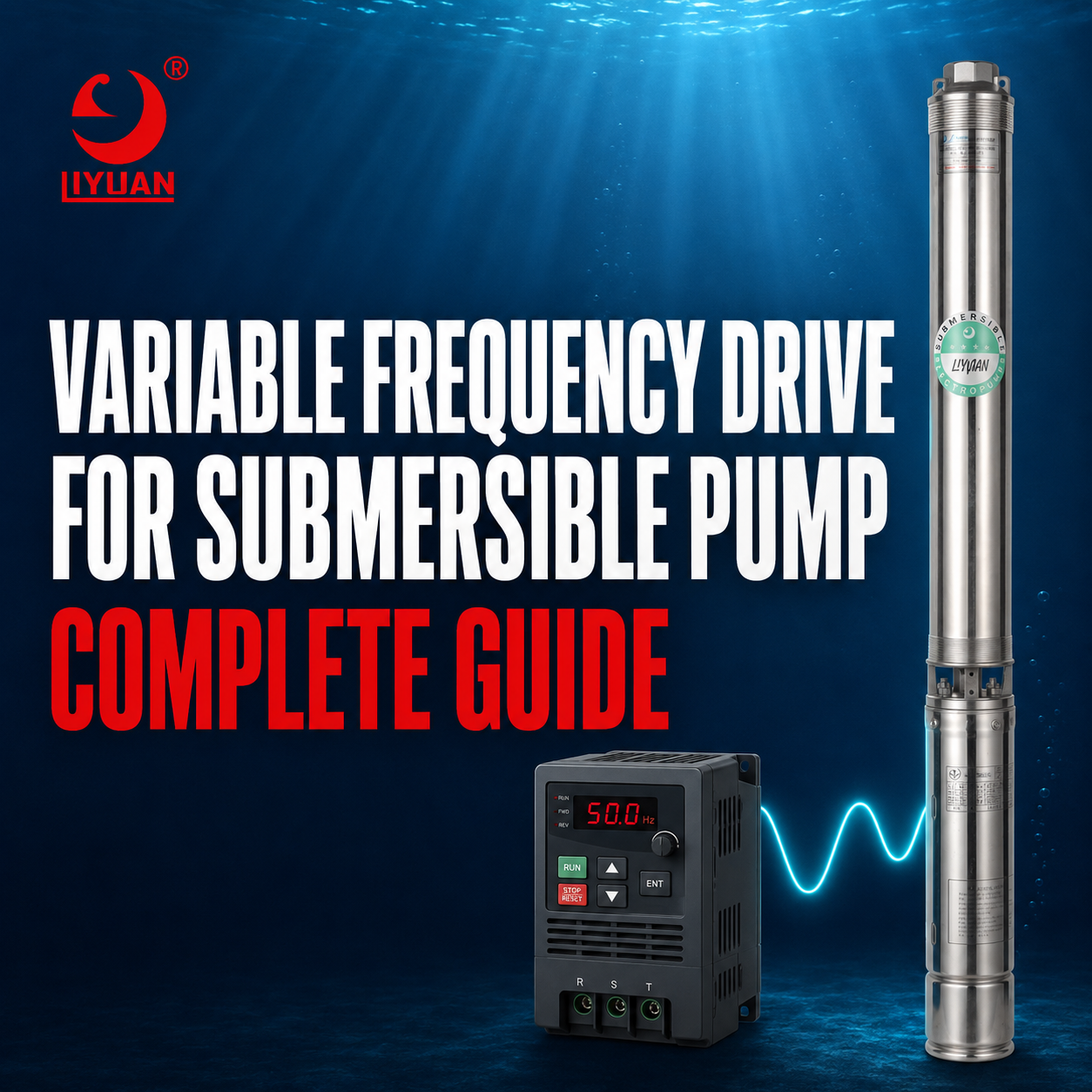
A Variable Frequency Drive For Submersible Pump Systems Adjusts Motor Speed To Match Water Demand, Maintain Constant Pressure, Reduce Starting Current, And Potentially Lower Energy Consumption.
A VFD Is Most Valuable When Flow Or Pressure Requirements Change During Operation. If A Pump Always Runs At Full Speed, A Soft Starter May Offer A Simpler And More Economical Starting Solution.
Correct VFD Selection Requires More Than Matching Motor Power. Engineers Must Consider Motor Current, Input Voltage, Output Phase, Pump Curve, Cable Length, Cooling Flow, Pressure Sensors, Harmonics, And Required Protection Functions.
Incorrect VFD Settings Can Damage Motor Windings, Overheat Bearings, Create Excessive Pressure, Or Allow The Pump To Operate Outside Its Safe Range.
What Is A Variable Frequency Drive?
A Variable Frequency Drive Is An Electronic Controller That Changes The Frequency And Voltage Supplied To An Electric Motor.
Motor Speed Closely Follows The Output Frequency. Therefore, Reducing The Frequency lowers Motor And Pump Speed.
A VFD Generally Contains Three Main Sections:
- Rectifier
- DC Bus
- Inverter
The Rectifier Converts Incoming Alternating Current Into Direct Current.
The DC Bus Stores And Stabilizes This Electrical Energy.
The Inverter Uses Electronic Switching Devices To Create An Adjustable-Frequency Output For The Motor.
This Process Allows The Controller To accelerate, Run, And Decelerate The Motor At Selected Speeds.
How Does A VFD Control A Submersible Pump?
The VFD Receives A Signal From A Pressure Transducer, Flow Sensor, Level Sensor, Or External Controller.
It Compares The Measured Value With The Selected Setpoint.
If Water Pressure Falls, The Drive Increases Motor Frequency. The Pump Then Runs Faster And Produces More Flow Or Head.
If Water Demand Falls, The Drive Reduces Motor Frequency. The Pump Slows Down And Uses Less Power.
This Closed-Loop Process Can Continue Automatically As System Demand Changes.
Franklin Electric Describes Its SubDrive Constant-Pressure Controllers As Variable-Speed Solutions Designed To Maintain Consistent Water Pressure.
Why Use A VFD With A Submersible Pump?
Constant Water Pressure
Traditional Pump Systems Start And Stop Between Two Pressure-Switch Settings.
Water Pressure Therefore Rises And Falls During Each Operating Cycle.
A VFD Can Adjust Pump Speed Continuously To Maintain A Narrower Pressure Range.
This Provides More Stable Pressure For:
- Residential Water Supply
- Hotel Water Systems
- Agricultural Irrigation
- Commercial Buildings
- Industrial Processes
- Municipal Distribution
- Livestock Watering
- Greenhouse Irrigation
Reduced Starting Current
A VFD Starts The Motor By Increasing Frequency And Voltage Gradually.
This Usually Produces Lower Starting Current Than A Direct-On-Line Starter.
Reduced Starting Current Can decrease Stress On:
- Transformers
- Generators
- Power Cables
- Circuit Breakers
- Contactors
- Distribution Networks
However, The Power Source Must Still Support The VFD Input Current And System Load.
Potential Energy Savings
A VFD Can Reduce Energy Consumption When The System Frequently Requires Less Than Full Pump Output.
Instead Of Running At Full Speed And Restricting Flow With A Valve, The Drive Reduces Motor Speed.
The U.S. Department Of Energy Pump Systems Program Identifies Adjustable-Speed Pumping And Variable-Flow Control As Important Pump-System Efficiency Strategies.
Actual Savings Depend On:
- Pump Operating Profile
- Static Head
- Friction Head
- Required Pressure
- Minimum Flow
- Pump Efficiency
- Motor Efficiency
- VFD Efficiency
- Time Spent At Reduced Speed
A VFD Will Not Automatically Save Energy In Every Application.
Reduced Mechanical Stress
Controlled Acceleration Reduces Sudden Torque Applied To:
- Pump Shafts
- Motor Shafts
- Couplings
- Bearings
- Impellers
- Check Valves
- Pipeline Components
This Can Extend Component Life When The System Starts Frequently.
Reduced Water Hammer
A VFD Can Control Pump Deceleration And Reduce Sudden Flow Changes.
This May Reduce Pressure Surges, Check-Valve Shock, Pipeline Movement, And Water Hammer.
However, The VFD Cannot Correct Every Hydraulic Problem. Long Pipelines Or High-Pressure Systems May Still Require Surge Tanks, Air Chambers, Special Check Valves, Or Other Hydraulic Protection.
Improved Pump Protection
Modern Pump Drives May Include:
- Overload Protection
- Undervoltage Protection
- Overvoltage Protection
- Phase-Loss Protection
- Dry-Run Protection
- Ground-Fault Protection
- Locked-Rotor Protection
- Sensor-Failure Protection
- Excessive-Cycle Protection
- Motor-Overtemperature Protection
- Broken-Pipe Detection
- High-Pressure Protection
Available Functions Vary Between Models. Always Review The Drive Manual Before Assuming A Protection Function Is Included.
How Pump Speed Affects Flow, Head, And Power
The Pump Affinity Laws Help Estimate How Speed Changes Affect Centrifugal Pump Performance.
Under Similar Hydraulic Conditions:
- Flow Changes Approximately In Proportion To Speed
- Head Changes Approximately With The Square Of Speed
- Power Changes Approximately With The Cube Of Speed
The Relationships Can Be Expressed As:
Q₂ ÷ Q₁ = N₂ ÷ N₁
H₂ ÷ H₁ = (N₂ ÷ N₁)²
P₂ ÷ P₁ = (N₂ ÷ N₁)³
Where:
- Q Represents Flow
- H Represents Head
- P Represents Power
- N Represents Rotational Speed
For Example, Reducing Speed To 80% May Reduce Theoretical Pump Power Significantly.
However, Real Systems Do Not Always Follow These Relationships Exactly. Static Head, Changing Pump Efficiency, Motor Losses, VFD Losses, And Minimum Pressure Requirements Affect Actual Results.
Engineers Should Use The Pump Curve And System Curve To Predict Performance.
VFD Vs. Soft Starter For Submersible Pumps
A VFD And Soft Starter Can Both Reduce Starting Stress, But They Serve Different Purposes.
| Feature | VFD | Soft Starter |
|---|---|---|
| Controlled Starting | Yes | Yes |
| Controlled Stopping | Yes | Yes |
| Continuous Speed Control | Yes | No |
| Constant-Pressure Control | Yes | Limited |
| Variable-Flow Control | Yes | No |
| Potential Energy Savings | High In Variable-Demand Systems | Limited |
| Electrical Complexity | Higher | Lower |
| Harmonic Generation | Continuous | Mainly During Starting |
| Output Filtering | Often Required For Long Cables | Usually Less Complex |
| Cost | Higher | Lower |
| Normal Operating Speed | Adjustable | Full Speed |
Choose A VFD When The System Needs Constant Pressure, Variable Flow, Process Control, Or Energy Optimization.
Choose A Soft Starter When The Pump Normally Runs At Full Speed And Only Requires Smoother Starting And Stopping.
VFD Vs. Control Valve
A Control Valve Adjusts Flow By Adding Resistance To The System.
The Pump Continues Running At Full Speed, While The Valve Converts Part Of The Pump’s Energy Into Pressure Loss.
A VFD Reduces Pump Speed To Match Demand.
Variable-Speed Control Can therefore use Less Energy In Systems With Significant Friction Head And Variable Flow.
However, A Valve May Still Be Required For:
- Isolation
- Maintenance
- Emergency Control
- Minimum-Flow Management
- Backflow Prevention
- Process Safety
A VFD Does Not Replace Every Valve In A Pumping System.
Which Submersible Pump Applications Benefit From A VFD?
Constant-Pressure Water Supply
A Pressure Transducer Sends Continuous Pressure Data To The Drive.
The VFD Adjusts Motor Speed To Maintain The Selected pressure.
This Application Is Common In:
- Homes
- Apartment Buildings
- Hotels
- Farms
- Factories
- Public Water Systems
Variable Irrigation Demand
Irrigation Zones May Require Different Flow Rates.
A VFD Can Reduce Pump Speed When Fewer Zones Operate. This Controls Pressure And May Reduce Energy Use.
The Agricultural Applications Of Deep Well Submersible Pumps Guide Explains Additional Irrigation Uses.
Tank-Level Control
A VFD Can Receive A Signal From A Level Transmitter.
It Can Increase Or decrease Pump Speed To Maintain A Selected Tank Level.
This Method Reduces Frequent Starting And Can Stabilize Downstream Processes.
Industrial Process Water
Industrial Facilities May Require Different Flow Or Pressure At Different Production Stages.
A VFD Allows Automatic Adjustment Through:
- Analog Signals
- Digital Inputs
- PLC Communication
- Remote Sensors
- Industrial Networks
Municipal Water Supply
Municipal Pump Stations Can Use Multiple VFD-Controlled Pumps.
The Control System Can Stage Pumps According To Demand, Maintaining Pressure While reducing unnecessary operation.
Solar Water Pumping
Solar Pump Controllers Use Variable-Frequency Technology To Match Motor Operation With Available Solar Power.
The Controller Changes Pump Speed As Solar Irradiance Changes.
Correct Design Must Match:
- Solar Array Voltage
- Controller Input Range
- Motor Voltage
- Motor Current
- Pump Curve
- Total Dynamic Head
- Daily Water Requirement
Can A VFD Operate A Single-Phase Submersible Pump?
Compatibility Depends On The Motor And Drive Design.
Most General-Purpose VFDs Produce A Three-Phase Output. They Are Designed For Three-Phase Induction Motors.
A Standard Three-Phase VFD Should Not Be Connected Directly To A Conventional Single-Phase Pump Motor With Capacitors.
Some Specialized Pump Controllers Can Operate Certain Single-Phase Two-Wire Or Three-Wire Motors. However, The Manufacturer Must Confirm Compatibility.
A Common Solution Uses:
- Single-Phase Power Input
- A Compatible VFD
- Three-Phase Power Output
- A Three-Phase Submersible Motor
The Drive May Require Derating When It Uses Single-Phase Input Power.
Review The Single Phase Submersible Pump Vs. Three Phase Pump Guide Before Selecting The Electrical System.
How To Select A VFD For A Submersible Pump
Match The Motor Rated Current
Select The VFD According To Motor Rated Current, Not Only Kilowatts Or Horsepower.
The Drive’s Continuous Output Current Must Meet The Motor Requirement Under Actual Operating Conditions.
Consider Derating For:
- High Ambient Temperature
- High Installation Altitude
- Single-Phase Input
- High Carrier Frequency
- Enclosed Panels
- Frequent Acceleration
- High Starting Torque
- Multiple Motors
Confirm Input Voltage And Phase
Check:
- Available Supply Voltage
- Input Phase
- Output Voltage
- Output Phase
- Supply Frequency
- Grounding System
- Transformer Capacity
A VFD Cannot Normally Produce An Output Voltage Higher Than Its Available Input And Design Range.
Confirm Motor Compatibility
The Motor Manufacturer Should Approve Variable-Frequency Operation.
Confirm:
- Minimum Frequency
- Maximum Frequency
- Required Cooling Flow
- Motor Insulation Capability
- Cable-Length Limit
- Bearing Requirements
- Maximum Starts
- Service Factor
- Permitted Speed Range
The What Is A Submersible Motor? Guide Explains The Main Construction And Operating Features Of Deep Well Motors.
Check The Pump Curve
The Pump Must Remain Within A Safe Hydraulic Range At Every Programmed Speed.
Review:
- Minimum Flow
- Maximum Flow
- Required Head
- Shutoff Head
- Best Efficiency Range
- Motor Power
- Downthrust
- Upthrust
- Net Positive Suction Conditions
- Well Water Level
A High Head Submersible Pump Can Produce Dangerous Pressure If The Maximum Frequency Is Set Too High.
Calculate Total Dynamic Head
Total Dynamic Head Includes:
- Static Water Level
- Drawdown
- Vertical Lift
- Required Outlet Pressure
- Pipe Friction
- Valve Losses
- Filter Losses
- Elevation Changes
The VFD Cannot Compensate For Incorrect Pump Selection.
If The Pump Cannot Produce The Required Head At Rated Speed, Increasing Frequency Beyond The Approved Limit May Overload The Motor And Pump.
Evaluate Cable Length
Submersible Pumps Often Use Long Motor Cables.
VFD Output Uses Fast Electrical Pulses. Long Cables Can Increase Reflected-Wave Voltage At The Motor Terminals.
Possible Results Include:
- Motor Insulation Stress
- Cable Insulation Stress
- Bearing Current
- Electromagnetic Interference
- Drive Faults
- Premature Motor Failure
The Drive Manufacturer May Require A:
- Load Reactor
- dV/dt Filter
- Sine-Wave Filter
- Shielded Motor Cable
- Lower Carrier Frequency
- Special Motor Insulation System
Franklin Electric Offers Pump Drives With An Integrated dV/dt Output Filter For Certain Submersible Applications.
Evaluate Cooling At Reduced Speed
A Submersible Motor Usually Depends On Water Moving Across Its Housing.
When Pump Speed Falls, Water Velocity Around The Motor May also fall.
Insufficient Cooling Can cause Motor Overheating Even When Current Remains Within Its Rated Value.
A Cooling Sleeve May Be Required When:
- The Well Diameter Is Large
- The Pump Operates In A Tank
- Water Enters Above The Pump
- The Pump Runs At Low Speed
- Water Temperature Is High
- Natural Flow Past The Motor Is Insufficient
Never Set The Minimum Frequency Below The Motor Manufacturer’s Approved Limit.
Select The Correct Enclosure
The VFD Enclosure Must Match The Installation Environment.
Consider:
- Rain
- Dust
- Direct Sunlight
- Humidity
- Condensation
- Corrosive Chemicals
- Insects
- Flooding
- Ambient Temperature
- Ventilation
Outdoor Panels May Require Sunshades, Cooling Fans, Air Conditioning, Anti-Condensation Heaters, Or Weather-Resistant Enclosures.
Important VFD Parameters For Submersible Pumps
Motor Rated Voltage
Enter The Exact Motor Nameplate Voltage.
An Incorrect Setting Can Affect Motor Flux, Current, Torque, And Protection.
Motor Rated Current
Enter The Motor’s Rated Current Accurately.
The Drive Uses This Value For Thermal Modeling And Overload Protection.
Motor Rated Frequency
Set The Motor’s Rated Frequency, Such As 50 Hz Or 60 Hz.
Do Not Assume The Motor Can Operate At A Higher Frequency Without Manufacturer Approval.
Motor Rated Speed
Enter The Nameplate Speed When The Drive Requires It.
This Helps The Controller Estimate Slip, Load, And Motor Performance.
Minimum Frequency
The Minimum Frequency Must Protect:
- Motor Cooling
- Pump Bearings
- Hydraulic Stability
- Minimum Flow
- Thrust Conditions
- Water Quality
- Process Requirements
A Frequency That Is Too Low Can cause Poor Cooling, unstable flow, Or Internal Pump Wear.
Maximum Frequency
The Maximum Frequency Limits Motor And Pump Speed.
Excessive Frequency Can Increase:
- Pump Flow
- Discharge Head
- Motor Power
- Bearing Load
- Shaft Stress
- Pipeline Pressure
Do Not Increase Maximum Frequency Simply To Achieve More Flow.
Acceleration Time
The Acceleration Time Determines How Quickly The Motor Reaches The Required Speed.
A Time That Is Too Short Can cause:
- High Current
- Overcurrent Trips
- Generator Voltage Drop
- Mechanical Shock
A Time That Is Too Long Can cause:
- Excessive Low-Speed Operation
- Poor Motor Cooling
- Delayed Pressure Response
- Motor Heating
Deceleration Time
A Controlled Deceleration Can Reduce Water Hammer.
However, A Very Fast Deceleration May cause A DC-Bus Overvoltage Fault. A Very Slow Deceleration May Not Suit The Hydraulic Process.
Pressure Setpoint
The Pressure Setpoint Should Meet Actual System Requirements.
An Unnecessarily High Setting Increases:
- Pump Speed
- Motor Power
- Pipeline Stress
- Leakage
- Energy Consumption
Use The Lowest Pressure That Reliably Meets The Application.
PID Settings
The PID Controller Adjusts Motor Speed According To Pressure Error.
Poor Settings Can cause:
- Pressure Oscillation
- Rapid Speed Changes
- Overshoot
- Slow Response
- Frequent Pump Cycling
Start With Manufacturer-Recommended Pump Settings And Fine-Tune Them Under Actual Demand.
Sleep And Wake Settings
Sleep Mode Stops The Pump When Demand Falls Below A Selected Level.
Wake Mode Restarts It When Pressure Drops.
Correct Settings Prevent The Motor From Running Continuously At Very Low Speed.
Dry-Run Protection
Dry-Run Protection May Monitor:
- Motor Power
- Motor Current
- Pressure
- Flow
- Water Level
- Power Factor
Set A Suitable Detection Delay And Well-Recovery Time.
Automatic Restart
Automatic Restart Can Restore Operation After A Temporary Fault.
However, Unlimited Restarts Can Damage The Motor Or Create A Safety Hazard.
Set:
- Restart Delay
- Maximum Attempts
- Well-Recovery Time
- Lockout Conditions
- Alarm Outputs
What Protection Should A Pump VFD Include?
A Complete Pump Drive Should Consider:
- Motor Overload
- Short Circuit
- Ground Fault
- Undervoltage
- Overvoltage
- Input Phase Loss
- Output Phase Loss
- Motor Overtemperature
- VFD Overtemperature
- Dry Running
- Locked Rotor
- Broken Pipe
- High Pressure
- Sensor Failure
- Excessive Starts
- Minimum Flow
- Surge Protection
The VFD Does Not Replace Every Protective Device.
The System May Still Require:
- Input Circuit Breaker
- Fuses
- Disconnect Switch
- Surge Protective Device
- Line Reactor
- Output Filter
- Grounding
- Motor Temperature Sensors
- Water-Level Sensors
- Mechanical Pressure-Relief Protection
Does A VFD Always Save Energy?
No. Energy Savings Depend On The System.
A VFD Usually Offers The Greatest Savings When:
- Flow Demand Changes Frequently
- Friction Head Forms A Large Part Of Total Head
- The Existing System Uses Throttling
- The Pump Runs Many Hours
- The Pump Often Operates Below Full Capacity
- The Pressure Setpoint Can Be Reduced
Savings May Be Limited When:
- Static Head Dominates
- The Pump Always Runs At Full Speed
- Flow Demand Remains Constant
- The Pump Is Poorly Selected
- Minimum Speed Remains High
- The Drive Is Oversized
- System Losses Remain Excessive
Measure Flow, Pressure, Power, And Operating Hours Before Estimating Savings.
Can A VFD Damage A Submersible Motor?
A Correctly Selected And Configured VFD Can Improve Motor Control.
However, Incorrect Application Can cause:
- Insulation Damage
- Excessive Terminal Voltage
- Bearing Currents
- Poor Motor Cooling
- Winding Overheating
- Excessive Speed
- Shaft Stress
- Electrical Noise
- Motor-Cable Failure
The Risk Increases With Long Motor Cables, High Carrier Frequencies, Poor Grounding, And Inadequate Output Filtering.
Always follow Both The Motor And VFD Manufacturer’s Instructions.
Common VFD Problems In Submersible Pump Systems
Overcurrent Fault
Possible Causes Include:
- Acceleration Time Is Too Short
- Pump Is Jammed
- Cable Has A Short Circuit
- Motor Windings Are Damaged
- VFD Is Undersized
- Motor Data Is Incorrect
- Maximum Frequency Is Too High
- Pump Operates At Excessive Flow
Undervoltage Fault
Possible Causes Include:
- Weak Utility Supply
- Undersized Generator
- Long Input Cable
- Loose Connections
- Undersized Transformer
- Excessive Simultaneous Loads
Overvoltage Fault
Possible Causes Include:
- Supply Voltage Is Too High
- Deceleration Is Too Fast
- Generator Regulation Is Unstable
- Transformer Taps Are Incorrect
- A Regenerative Condition Exists
Dry-Run Fault
Possible Causes Include:
- Well Water Level Is Too Low
- Pump Intake Is Blocked
- Dry-Run Threshold Is Incorrect
- Pressure Sensor Has Failed
- Motor Power Setting Is Incorrect
- Check Valve Is Leaking
Motor Overtemperature
Possible Causes Include:
- Minimum Frequency Is Too Low
- Cooling Flow Is Insufficient
- Water Temperature Is Too High
- Motor Is Overloaded
- Starts Are Too Frequent
- Motor Parameters Are Incorrect
Pressure Oscillation
Possible Causes Include:
- PID Settings Are Too Aggressive
- Pressure Sensor Location Is Poor
- Pressure Tank Is Incorrect
- Check Valve Is Unstable
- Minimum Speed Is Too High
- System Demand Changes Rapidly
Ground-Fault Trip
Possible Causes Include:
- Damaged Motor Cable
- Wet Cable Splice
- Winding Insulation Failure
- Incorrect Grounding
- Excessive Leakage From A Long Cable
- Incompatible Output Filter
How To Troubleshoot A VFD-Controlled Pump
Record The Fault Data
Record The Following Before Resetting The Drive:
- Fault Code
- Input Voltage
- Output Current
- Output Frequency
- DC-Bus Voltage
- Pressure
- Flow
- Water Level
- Motor Temperature
- Running Time
Confirm Motor Parameters
Compare Every Motor Parameter With The Nameplate.
Never Copy Settings From A Different Motor Without Verification.
Measure Input Voltage
Measure All Incoming Phases Before Starting And Under Load.
Do Not Use An Ordinary Meter To Interpret PWM Output Unless The Instrument Is Suitable For VFD Measurements.
Check Motor Current
Review Current On All Motor Phases.
High Or Unequal Current May Indicate:
- Hydraulic Overload
- Mechanical Resistance
- Cable Damage
- Winding Problems
- Incorrect Drive Settings
Inspect The Motor Cable
Check Cable Length, Conductor Size, Insulation, Splices, Shielding, And Grounding.
Confirm Whether The Installation Requires An Output Reactor Or Filter.
Inspect The Pump System
Measure Flow And Pressure.
Compare The Operating Point With The Pump Curve.
Check For:
- Sand Accumulation
- Blocked Impellers
- Closed Valves
- Worn Bearings
- Damaged Couplings
- Incorrect Rotation
- Insufficient Water Level
The How To Check A Submersible Pump Motor Guide Provides Additional Motor-Testing Information.
Test The Pressure Sensor
Confirm:
- Correct Supply Voltage
- Correct Signal Type
- Correct Pressure Range
- Correct Wiring Polarity
- Stable Output Signal
- Suitable Installation Location
A Faulty Pressure Signal Can cause Unstable Speed Or Excessive Pressure.
How To Maintain A VFD Pump System
Regular Maintenance Should Include:
- Cleaning Air Filters
- Inspecting Cooling Fans
- Tightening Terminals
- Checking For Condensation
- Recording Fault History
- Measuring Motor Current
- Testing Pressure Sensors
- Inspecting Surge Devices
- Checking Cable Insulation
- Verifying Ground Connections
- Reviewing PID Performance
- Comparing Flow And Pressure
- Backing Up Drive Parameters
The Electric Submersible Pump Maintenance Guide Provides Additional Recommendations For Pump And Motor Maintenance.
Information Required For VFD Selection
Provide The Following Information To The Pump Or Drive Supplier:
- Pump Model
- Pump Curve
- Motor Model
- Motor Power
- Motor Rated Current
- Motor Voltage
- Motor Frequency
- Number Of Motor Phases
- Available Input Power
- Cable Length
- Cable Size
- Well Diameter
- Static Water Level
- Pumping Water Level
- Required Flow
- Total Dynamic Head
- Required Pressure
- Water Temperature
- Starts Per Hour
- Minimum Flow
- Maximum Flow
- Pressure-Sensor Range
- Control Method
- Installation Environment
- Communication Requirements
Complete Information Helps The Supplier Select The Pump, Motor, VFD, Sensor, Filter, Cable, And Control Panel Correctly.
Frequently Asked Questions
What Does A VFD Do For A Submersible Pump?
A VFD Changes Motor Speed By Adjusting Output Frequency And Voltage. This Allows The Pump To Match Flow Or Pressure Demand.
Can A VFD Maintain Constant Water Pressure?
Yes. A Pressure Transducer Sends Feedback To The VFD, Which Adjusts Motor Speed To Maintain The Selected Pressure.
Does A VFD Reduce Pump Electricity Consumption?
It Can Reduce Consumption When The Pump Frequently Operates Below Full Capacity. Savings Depend On The System Curve, Static Head, Duty Profile, And Control Settings.
Can Any Submersible Pump Use A VFD?
No. The Motor Must Be Compatible With Variable-Frequency Operation. The Pump Must Also Remain Within Its Approved Speed, Flow, Head, Cooling, And Thrust Limits.
Can A VFD Convert Single-Phase Power To Three-Phase Power?
Some Drives Accept Single-Phase Input And Produce Three-Phase Output. The Drive May Require Derating, And Its Output Must Match The Motor.
Can A Standard VFD Operate A Single-Phase Pump Motor?
Usually Not. Most Standard VFDs Are Designed For Three-Phase Motors. Use Only A Controller Specifically Approved For The Motor Type.
Why Does A VFD Need An Output Filter?
Long Motor Cables Can Produce Reflected-Wave Voltage And High dV/dt At The Motor. A Suitable Filter Can Reduce Insulation Stress And Electrical Interference.
What Is The Minimum Frequency For A Submersible Pump?
There Is No Universal Minimum. Follow The Pump And Motor Manufacturer’s Requirements For Cooling, Lubrication, Thrust, And Hydraulic stability.
Can A VFD Eliminate A Pressure Tank?
Many Constant-Pressure Systems Use A Smaller Tank, But A Tank May Still Help Provide Low-Flow Demand, Reduce Cycling, And Stabilize Pressure.
Should I Select A VFD By Motor Power Or Current?
Use Motor Rated Current As A Primary Selection Value. Also Consider Voltage, duty, temperature, altitude, input phase, cable length, And Required Overload Capacity.
Choose A Reliable Variable-Speed Pump Solution From Liyuan
Liyuan Manufactures Submersible Pumps, Deep Well Motors, Solar Pump Systems, And Control Solutions For Residential, Agricultural, Commercial, Municipal, And Industrial Applications.
Liyuan Can Match A Complete System According To:
- Required Flow
- Total Dynamic Head
- Well Diameter
- Motor Power
- Supply Voltage
- Cable Length
- Pressure Requirements
- Water Temperature
- Control Method
- Protection Requirements
Correctly Matching The Pump, Motor, VFD, Sensor, Cable, And Output Filter Improves System Reliability And Reduces Installation Risk.
Conclusion
A Variable Frequency Drive For Submersible Pump Systems Provides Adjustable Speed, Constant Pressure, Controlled Starting, Improved Monitoring, And Potential Energy Savings.
A VFD Is Most Suitable When Water Demand Changes And The Pump Does Not Need To Operate At Full Speed Continuously.
Successful Application Requires Correct Motor Current, Pump Selection, Speed Limits, Cooling Flow, Cable Design, Output Filtering, Sensor Selection, And Protection Settings.
Never Increase Frequency Beyond The Pump And Motor Manufacturer’s Approved Limits To Obtain Additional Flow Or Pressure.
When Engineers Select And Configure The System Correctly, A VFD Can Improve Pressure Stability, Reduce Electrical Stress, Lower Operating Costs, And Extend The Service Life Of The Complete Pumping System.
Email:Liyuan@liyuan-pump.com
WhatsApp:+86 181-2828-2767