Sand Resistant Submersible Pump: Complete Guide
A Sand Resistant Submersible Pump Uses Wear-Resistant Hydraulics, Protected Bearings, And Controlled Water Passages To Reduce Damage From Abrasive Particles.
However, No Deep Well Pump Is Completely Sand-Proof. Buyers Must Also Control The Pumping Rate, Well Screen, Installation Height, Water Velocity, And Well Condition.
What Is A Sand Resistant Submersible Pump?
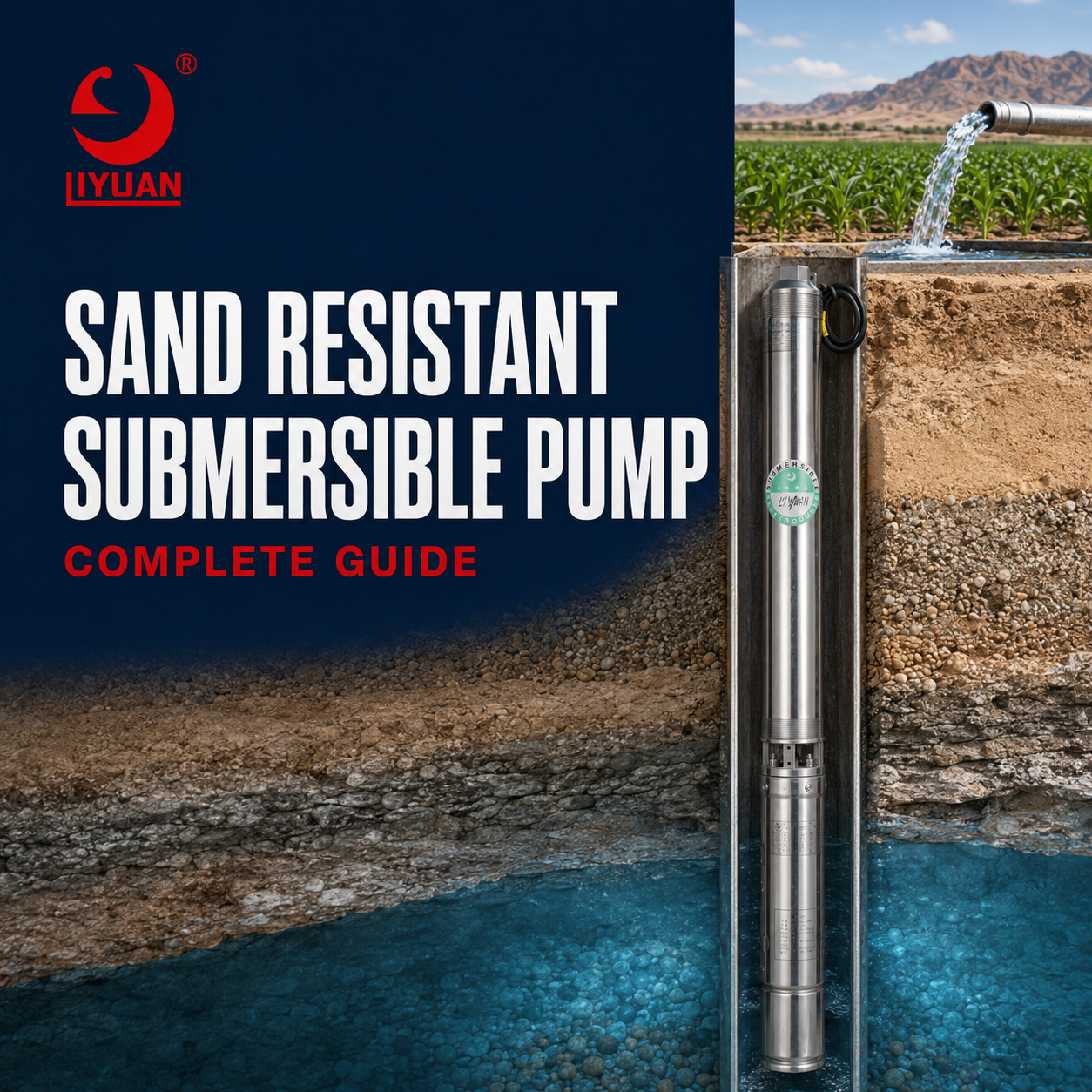
A Sand Resistant Submersible Pump Is A Deep Well Or Borehole Pump Designed To Tolerate Limited Amounts Of Sand And Fine Sediment.
It Usually Uses Reinforced Impellers, Durable Diffusers, Protected Bearings, Strong Shafts, And Abrasion-Resistant Materials.
The Pump Operates Below The Water Level And Pushes Groundwater Through A Drop Pipe.
These Pumps Commonly Serve:
- Agricultural Wells
- Newly Drilled Boreholes
- Sandy Aquifers
- Municipal Water Systems
- Mining Projects
- Construction Sites
- Industrial Water Supply
- Livestock Farms
Buyers Can Review Liyuan Pump’s Range Of Submersible Pumps For Different Well Conditions.
Why Sand Damages Submersible Pumps
Sand Acts As An Abrasive Material Inside The Pump.
The Impellers Rotate At High Speed. Therefore, Sand Particles Strike Hydraulic Surfaces Repeatedly.
Over Time, This Action Removes Material And Changes The Shape Of The Pump Components.
Sand Can Damage:
- Impellers
- Diffusers
- Pump Shafts
- Radial Bearings
- Thrust Bearings
- Mechanical Seals
- Check Valves
- Intake Screens
- Motor Seals
- Drop Pipes
Even A Small Amount Of Sand Can Cause Significant Wear During Continuous Operation.
Common Signs Of Sand Damage
A Pump May Continue Running While Its Hydraulic Parts Wear.
Common Warning Signs Include:
- Falling Water Pressure
- Reduced Flow Rate
- Rising Motor Current
- Increased Vibration
- Grinding Noise
- Frequent Overload Trips
- Sand In Storage Tanks
- Cloudy Discharge Water
- Damaged Check Valves
- Shorter Pumping Cycles
Compare Current Flow, Head, Voltage, And Current With The Original Commissioning Data.
A Gradual Performance Drop Often Indicates Wear, Sediment Accumulation, Or Falling Water Levels.
Sand Content Vs Particle Size
Sand Content Measures The Quantity Of Sand In Water. Manufacturers May Express It In Grams Per Cubic Meter, Milligrams Per Liter, Or A Percentage.
Particle Size Describes The Diameter Of Individual Sand Grains.
Both Values Matter.
A High Quantity Of Fine Sand Can Cause Continuous Surface Wear. Meanwhile, Larger Particles Can Block Narrow Water Passages Or Damage Impellers.
Before Selecting A Pump, Ask The Manufacturer To Confirm:
- Maximum Recommended Sand Content
- Maximum Particle Diameter
- Test Method
- Allowed Operating Time
- Suitable Pump Materials
- Required Maintenance Interval
Do Not Assume That Every “Sand-Resistant” Model Has The Same Tolerance.
A Sand-Resistant Pump Is Not Sand-Proof
The Term Sand-Resistant Describes Improved Abrasion tolerance. It Does Not Guarantee Unlimited Operation In Highly Sandy Water.
A Pump Can Still Fail If:
- The Well Produces Excessive Sand
- The Pump Sits Too Close To The Bottom
- The Flow Exceeds The Well Yield
- The Well Screen Is Damaged
- The Gravel Pack Is Incorrect
- The Borehole Was Not Developed
- The Pump Starts Too Frequently
- Large Particles Enter The Intake
Therefore, Pump Design And Well Management Must Work Together.
Where Does Well Sand Come From?
Sand Can Enter A Well For Several Reasons.
Incomplete Well Development
Drilling Leaves Fine Particles, Mud, And Loose Formation Material Inside The Borehole.
Proper Well Development Removes These materials before permanent pump installation.
Incorrect Well Screen Size
A Well Screen With Oversized Openings Can Allow Sand To Enter.
The Screen Slot Must Match The surrounding formation and gravel pack.
The U.S. Geological Survey Explains That Well Screens Help Prevent Excessive Sediment From Entering A Well.
Damaged Well Screen
Corrosion, Mechanical Damage, Or Age Can Create Openings In The Screen.
As A Result, Sand Can Enter Even If The Original Well Design Was Correct.
Incorrect Gravel Pack
A Poorly Selected Or Poorly Installed Gravel Pack May Fail To Stabilize The Formation.
Excessive Pumping Rate
A Pump That Withdraws Water Too Quickly Can Increase Water Velocity Around The Screen.
This Condition Can Pull Fine Particles Into The Well.
Pump Installed Too Low
A Pump Positioned Near The Well Bottom Can Draw Settled Sand Into Its Intake.
Collapsing Formation
Loose Geological Layers Can Shift Or Collapse Around The Well.
Professional Well Inspection May Be Necessary In This Situation.
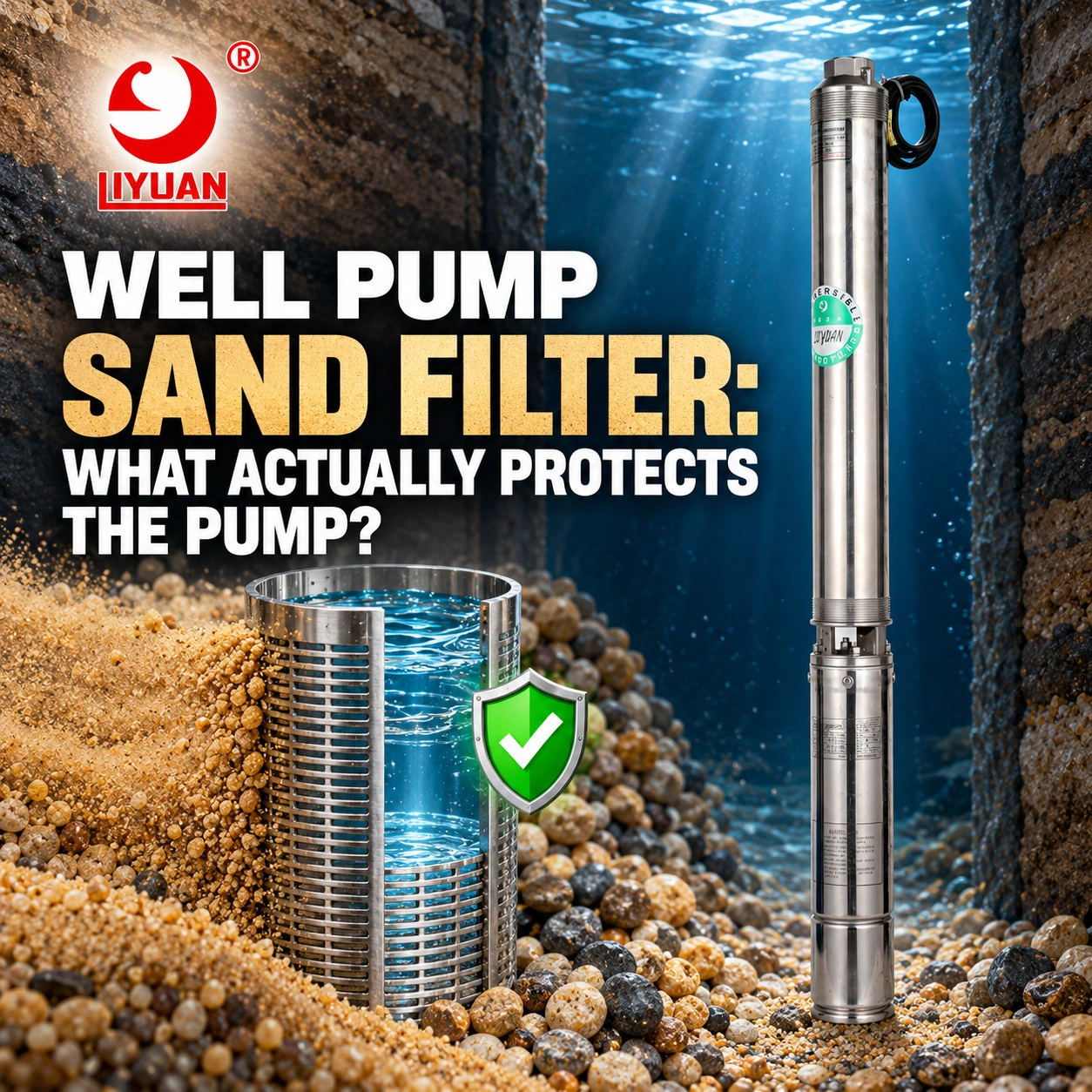
How Well Screens Control Sand
A Well Screen Allows Groundwater To Enter While Restricting Formation Particles.
Common Screen Types Include:
- Continuous-Slot Screens
- Slotted Pipes
- Perforated Pipes
- Wire-Wrapped Screens
- Stainless Steel Screens
- PVC Screens
The Correct Slot Size Depends On The Aquifer Material And Gravel-pack design.
A Screen That Is Too Small Can Restrict Flow. In Contrast, A Screen That Is Too Large Can Allow Sand To Enter.
Therefore, A Pump Upgrade Cannot Correct A Poorly Designed Well Screen.
Why Well Development Matters
Well Development Removes Fine Particles And Drilling Residue From The Area Around The Screen.
Common Development Methods Include:
- Air Lifting
- Surging
- Pumping
- Jetting
- Bailing
- Mechanical Brushing
The Selected Method Depends On Well Construction, Depth, And Water Quality.
The USGS Notes That Sediment, Chemical, Or Biological Accumulation Can Block Well Screens. In Some Cases, Well Redevelopment Can Restore Water Movement.
A Qualified Well Contractor Should Evaluate The Borehole Before Redevelopment.
How To Choose A Sand Resistant Submersible Pump
Confirm Sand Content
Collect Water Samples While The Well Operates At The Planned Flow.
A Single Sample May Not Represent Changing Conditions. Therefore, Test The Well During Startup And Continuous Pumping.
Determine Particle Size
Fine Silt, Fine Sand, Coarse Sand, And Gravel Create Different Wear And Blockage risks.
Send The Particle Information To The Pump Manufacturer.
Calculate The Required Flow
The Pump Flow Must Meet Water Demand Without Exceeding The Sustainable Well Yield.
An Oversized Pump Can Increase Drawdown And Sand production.
Calculate Total Dynamic Head
Use This Formula:
Total Dynamic Head = Vertical Lift + Outlet Pressure + Elevation + Friction Loss
Select A Pump That Delivers The Required Flow At The Calculated Head.
Check The Performance Curve
Choose A Duty Point Near The Pump’s Efficient Operating Range.
Operating Too Far From This Range Can Increase Vibration, Internal Recirculation, And Hydraulic Stress.
Select The Correct Motor
Motor Power Must Match The Hydraulic Load At The Actual Duty Point.
An Oversized Motor Does Not Make The Pump More Resistant To Sand.
Pump Materials For Sandy Water
Stainless Steel
Stainless Steel Provides Corrosion Resistance And Strong Mechanical Performance.
However, Standard Stainless Steel Can Still Wear Under Continuous Abrasion.
Hardened Stainless Steel
Hardened Components Can Improve Wear Resistance In Critical Areas.
Manufacturers May Use Hardened Shafts, sleeves, and bearing surfaces.
High-Chromium Alloys
High-Chromium Materials Can Provide Strong Abrasion Resistance In Demanding Applications.
However, Material Cost And Corrosion Conditions Require Careful Evaluation.
Engineering Polymers
Some Reinforced Polymers Can Resist Corrosion And Absorb Limited Particle Impact.
Their Performance Depends On Temperature, Pressure, And Sand Concentration.
Ceramic Components
Ceramic Bearings Or Wear Surfaces Can Provide Strong Abrasion Resistance.
However, They Require Correct Design Because Ceramic Materials Can Be Brittle Under Impact.
Rubber Components
Rubber-Lined Surfaces Can Reduce Wear In Certain Slurry Applications.
However, Standard Deep Well Pumps Do Not Always Use Rubber Hydraulic Components.
Important Sand-Resistant Design Features
A Suitable Pump May Include:
- Floating Impellers
- Replaceable Wear Rings
- Protected Radial Bearings
- Reinforced Thrust Bearings
- Hardened Pump Shafts
- Wider Water Passages
- Abrasion-Resistant Diffusers
- Strong Intake Screens
- Replaceable Bearing Bushes
- Durable Check Valves
No Single Feature Guarantees Protection. Therefore, Evaluate The Complete Hydraulic Structure.
Floating Impellers Vs Fixed Impellers
Floating Impellers
A Floating Impeller Design Allows Limited Axial Movement.
This Structure Can Help Small Particles Pass Through The Pump. It May Also Reduce Certain Forms Of Axial Wear.
However, Excessive Sand Can Still damage the impeller and diffuser.
Fixed Impellers
Fixed Impellers Maintain A Controlled Position On The Shaft.
They Can Deliver Stable Hydraulic Performance. However, Narrow Clearances May experience greater wear when sand enters continuously.
The Best Design Depends On Sand Content, Head, Flow, And Pump Size.
Bearing Protection
Sand Can Enter Bearing Surfaces And Increase Friction.
A Sand-Resistant Design Should Protect Bearings From Direct Particle contact.
Important Features Include:
- Filtered Lubrication Flow
- Wear-Resistant Bushings
- Replaceable Bearings
- Strong Shaft Support
- Controlled Internal Clearances
- Suitable Thrust-Bearing Capacity
Worn Bearings Allow Shaft Movement. This Movement can cause impellers to contact diffusers and accelerate damage.
Select The Correct Installation Height
Do Not Place The Pump Directly On The Well Bottom.
The Pump Should Remain:
- Below The Lowest Dynamic Water Level
- Above The Sediment Zone
- Inside A Stable Section Of The Casing
- Away From Damaged Screen Areas
- In A Position With Adequate Motor Cooling
The Required Distance Above The Bottom Depends On Well Construction And Sediment conditions.
A Professional Installer Should Review The Well Log Before Selecting The Final Pump position.
Control The Pumping Rate
Excessive Flow Can Increase Sand Movement Around The Screen.
Reduce The Pumping Rate If:
- Sand Appears During High Flow
- Dynamic Water Level Falls Rapidly
- Water Becomes Cloudy
- The Well Recovers Slowly
- Sand Accumulates In Tanks
A Variable Frequency Drive Can Lower Pump Speed And Reduce Flow.
However, The Pump Must Still Operate Within Its Allowed Speed Range.
Soft Starting And Sand Control
A Sudden Start Creates Rapid Water Acceleration.
In Some Wells, This hydraulic shock can disturb settled particles and increase sand intake.
A Soft Starter Or VFD Can Increase Speed Gradually.
Potential Benefits Include:
- Lower Starting Current
- Reduced Water Hammer
- Smoother Flow Acceleration
- Less Mechanical Stress
- Reduced Pressure Shock
However, Soft Starting Cannot Correct A Damaged Screen Or Unstable well.
Avoid Frequent Start-Stop Cycles
Frequent Cycling Can Disturb Sediment And Increase Mechanical Wear.
It Also Increases Motor Temperature And Starting Stress.
Reduce Cycling By Using:
- Correct Pressure Tank Sizing
- Storage Tanks
- VFD Pressure Control
- Suitable Pressure-Switch Settings
- Leak Repair
- Correct Pump Sizing
Agricultural Applications
Agricultural Wells Often Operate For Long Hours And At High Flow.
These conditions can increase sand intake if the pumping rate exceeds the well’s stable capacity.
Important Agricultural Measures Include:
- Complete A Pumping Test
- Monitor Dynamic Water Level
- Divide Irrigation Into Zones
- Use Suitable Pipe Sizes
- Install Sand Separators
- Monitor Discharge Water
- Avoid Excessive Pump Flow
Learn More About Agricultural Applications Of Deep Well Submersible Pumps.
Municipal And Industrial Applications
Municipal And Industrial Wells Require Stable Water Quality And Long Service Life.
Recommended System Features Include:
- Online Flow Monitoring
- Pressure Monitoring
- Current Monitoring
- Water-Level Sensors
- Sand Separators
- Automatic Shutdown
- VFD Control
- Backup Pumps
- Scheduled Water Testing
- Preventive Maintenance
Continuous Monitoring Can Identify Wear Before The Pump Fails.
Can A Sand Separator Protect The Pump?
A Sand Separator Removes Particles From The Discharge Water After The Pump.
It Can Protect:
- Irrigation Equipment
- Valves
- Filters
- Storage Tanks
- Sprinklers
- Process Equipment
However, A Surface Separator Does Not Stop Sand From passing through the pump itself.
A Downhole Separator Or Special Intake System May Reduce Particle entry in some installations.
The Best Solution Starts With Proper Well Construction And Controlled pumping.
Can A Filter Be Installed Before The Pump?
A Standard Fine Filter Should Not Be Attached Directly To A Deep Well Pump Intake Without Engineering Review.
A Restricted Intake Can Reduce Flow, cause cavitation-like hydraulic problems, and reduce motor cooling.
Instead, Use A Correct Well Screen, Proper Gravel Pack, Suitable Pump Placement, And Approved Intake Protection.
Motor Protection In Sandy Wells
Sand Can Increase Pump Torque And Motor Current.
The Control System Should Include:
- Overload Protection
- Locked-Rotor Protection
- Dry-Run Protection
- Phase-Loss Protection
- Phase-Imbalance Protection
- Overvoltage Protection
- Undervoltage Protection
- Temperature Protection
- Water-Level Protection
The Electric Control Box For Submersible Pump Explains Common Protection Functions.
Installation Checklist
Before Installation:
- Review The Well Drilling Log.
- Confirm The Screen Position.
- Complete Well Development.
- Test Sand Content.
- Measure Particle Size.
- Confirm Well Yield.
- Measure Static And Dynamic Water Levels.
- Select The Pump Duty Point.
- Confirm Pump Materials.
- Inspect The Motor And Cable.
During Installation:
- Keep The Pump Above The Sediment Zone.
- Secure The Power Cable.
- Install Suitable Check Valves.
- Avoid Impact Against The Casing.
- Confirm Three-Phase Motor Rotation.
- Measure Flow, Pressure, Voltage, And Current.
- Inspect Discharge Water For Sand.
Review How To Install A Submersible Pump For Additional Guidance.
How To Monitor Sand After Installation
Inspect Water At Startup And During Normal Operation.
Monitor:
- Sand Quantity
- Particle Size
- Water Clarity
- Flow Rate
- Discharge Pressure
- Motor Current
- Pump Vibration
- Dynamic Water Level
- Tank Sediment
- Filter Blockage
Record The Results Regularly. Trends Provide More Useful Information Than A Single Measurement.
Maintenance Requirements
Sandy Water Usually Requires Shorter Inspection Intervals.
Maintenance Tasks Include:
- Measure Flow And Pressure
- Check Motor Current
- Inspect Check Valves
- Clean Storage Tanks
- Inspect Sand Separators
- Test Motor Insulation
- Review VFD Alarms
- Monitor Water Levels
- Check For Pipeline Leaks
- Compare Data With Commissioning Values
Follow The Electric Submersible Pump Maintenance Guide To Improve Reliability.
Common Selection Mistakes
Believing The Pump Is Completely Sand-Proof
Every Pump Has A Sand And Particle Limit. Request Written Operating Specifications.
Ignoring The Well Screen
A Pump Upgrade Cannot Correct A Broken Or Incorrectly Sized Screen.
Installing The Pump Too Low
A Low Pump Position Can Draw Settled Sand Directly Into The Intake.
Selecting Excessive Flow
High Flow Can Increase Drawdown And Pull Formation Particles Into The Well.
Choosing Only By Material
Strong Materials Help, But Hydraulic Design, bearings, and well conditions also matter.
Ignoring Early Performance Loss
A Small Reduction In Flow Or Pressure Can Indicate Progressive Abrasive wear.
Information To Send The Manufacturer
Provide:
- Borehole Diameter
- Total Well Depth
- Screen Position
- Pump Installation Depth
- Static Water Level
- Dynamic Water Level
- Well Yield
- Required Flow
- Total Dynamic Head
- Sand Content
- Particle Size
- Water Chemistry
- Voltage And Frequency
- Daily Operating Hours
- Preferred Materials
Complete Data Helps The Manufacturer Select A Suitable Pump And Motor.
Why Choose Liyuan Pump?
Liyuan Pump Has Manufactured Submersible Pumps And Motors Since 1992.
Available Capabilities Include:
- 3-Inch To 10-Inch Submersible Pumps
- Sand-Resistant Hydraulic Options
- Stainless Steel Pump Construction
- Water-Filled And Oil-Filled Motors
- Single-Phase And Three-Phase Models
- 50Hz And 60Hz Options
- Customized Voltage
- Pump Curve Matching
- Control And Automation Systems
- OEM And Custom Engineering
Buyers Can Review Liyuan Pump’s China Factory Submersible Pump Manufacturer Guide Before Requesting A Project Quotation.
Frequently Asked Questions
Can A Submersible Pump Handle Sand?
Some Pumps Can Handle Limited Sand. However, The Allowed Sand Content And Particle Size Depend On The Pump Design And Materials.
Is Any Deep Well Pump Completely Sand-Proof?
No. Excessive Sand Eventually Wears Hydraulic And Mechanical Components.
How Can I Reduce Sand From A Well?
Develop The Well, Inspect The Screen, Control The Flow Rate, Raise The Pump Position, And Repair Well Construction Problems.
Does Stainless Steel Prevent Sand Wear?
Stainless Steel Provides Strength And Corrosion Resistance. However, It Can Still Wear Under Continuous Abrasion.
Should The Pump Sit On The Well Bottom?
No. Keep The Pump Above The Sediment Zone And Below The Lowest Dynamic Water Level.
Can A VFD Reduce Sand Production?
A VFD Can Reduce Pump Speed And Flow. This May Lower Sand Intake When Excessive Pumping Causes The Problem.
What Causes Sand To Appear Suddenly?
Possible Causes Include Screen Damage, Well Collapse, Excessive Flow, Pump Relocation, Or Changing Groundwater Conditions.
What Information Does Liyuan Pump Need?
Provide Sand Content, Particle Size, Well Diameter, Dynamic Water Level, Required Flow, Total Head, Voltage, And Operating Hours.
Conclusion
A Sand Resistant Submersible Pump Can Reduce Abrasive Wear, But Long-Term Reliability Also Depends On Well Construction, Pump Placement, Flow Control, And Maintenance.
Therefore, Buyers Should Test Sand Content, Measure Particle Size, Review The Well Screen, And Confirm The Manufacturer’s Operating Limits.
For Sand-Resistant Pump Selection, OEM Production, And Custom Engineering Support, Contact Liyuan Pump Through
Email:Liyuan@liyuan-pump.com
WhatsApp:+86 181-2828-2767