Submersible Pump Impeller: Complete Guide
A Submersible Pump Impeller Converts Motor Rotation Into Water Flow And Pressure. Its Diameter, Blade Shape, Material, Speed, And Number Of Stages Directly Affect Pump Head, Capacity, Efficiency, Power Consumption, And Service Life.
Deep-Well Pumps Usually Use Multiple Impellers Arranged Along One Shaft. Each Impeller Works With A Diffuser To Increase Water Pressure before moving it into the next stage.
Selecting The Correct Impeller Requires More Than Matching The Pump Diameter. The Required Flow, Total Dynamic Head, Water Quality, Sand Content, Temperature, Motor Power, And Operating Point Must All Be considered.
What Is A Submersible Pump Impeller?
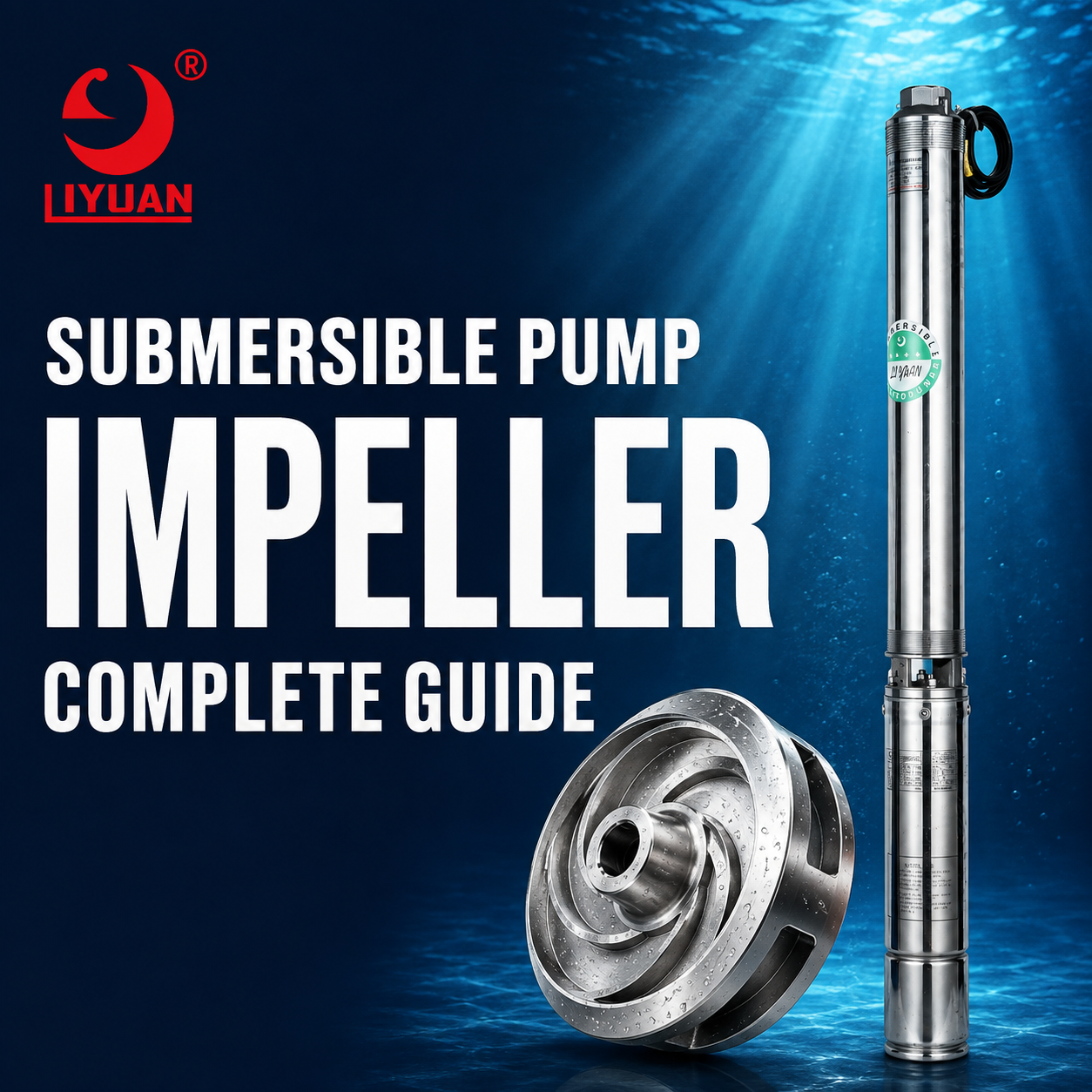
A Submersible Pump Impeller Is A Rotating Hydraulic Component Installed Inside The Pump body.
The Motor Rotates The Pump Shaft. The Shaft Transfers Torque To The Impellers. Each Impeller Adds Energy To The Water And Moves It Toward The Pump discharge.
According To The KSB Impeller Guide, An Impeller Uses Vanes Or Blades To Convert Mechanical Power Into Hydraulic Pump output.
The Main Impeller Components Include:
- Impeller Eye
- Blades Or Vanes
- Front Shroud
- Back Shroud
- Hub
- Shaft Connection
- Balancing Holes
- Wear Surfaces
The Exact Design Depends On Pump Type, Flow, Head, Speed, And water conditions.
How Does A Submersible Pump Impeller Work?
Water Enters The Center Of The Impeller Through The Impeller eye.
As The Impeller Rotates, The Blades Accelerate The Water Outward. This Creates Velocity And pressure.
The Water Then Enters The Diffuser Or Pump Chamber. The Diffuser Slows The Water And Converts Part Of Its Velocity Into Additional pressure.
The Process Includes Four Main Steps:
- Water Enters The Impeller Eye.
- The Rotating Blades Increase Water Velocity.
- Water Leaves The Impeller At A Higher Energy Level.
- The Diffuser Converts Velocity Into Pressure.
In A Multistage Pump, This Process Repeats At Every stage.
Impeller And Diffuser: What Is The Difference?
The Impeller Rotates, While The Diffuser Remains stationary.
The Impeller Adds Energy To The water. The Diffuser Collects The Water And Directs It Into The Next impeller.
A Typical Deep-Well Pump Stage Includes:
- One Impeller
- One Diffuser
- One Stage Casing
- Wear Surfaces
- Guide Vanes
The Impeller And Diffuser Must Work Together. Installing An Incorrect Impeller With A Different Diffuser Can Reduce Flow, Head, And efficiency.
What Is A Multistage Submersible Pump?
A Multistage Submersible Pump Uses Several Impellers Connected To One shaft.
Each Impeller And Diffuser Combination Forms One hydraulic stage.
When Water Passes Through More Stages, The Pump Adds More total head. The Flow Rate Remains Primarily Determined By The Hydraulic Design And Operating point.
Therefore:
- More Stages Usually Increase Head.
- Larger Flow Passages Usually Increase Capacity.
- More Stages Do Not Automatically Increase Flow.
- A Larger Motor Does Not Automatically Increase Head.
A High Head Submersible Pump Often Uses More Stages Than A Lower-Head Pump With Similar flow.
How The Number Of Impellers Affects Head
Each Stage Produces A Certain Amount Of head.
A Simplified Relationship Is:
Total Pump Head = Head Per Stage × Number Of Stages
For Example, If One Stage Produces 10 Meters Of Head, Ten Similar Stages May Theoretically Produce Approximately 100 Meters.
Actual Performance Can Differ Because Of:
- Hydraulic Losses
- Manufacturing Tolerances
- Wear
- Water Viscosity
- Pump Speed
- Stage Design
- Operating Flow
- Installation Conditions
Always Use The Manufacturer’s Certified Pump Curve Instead Of Calculating Performance Only From Stage count.
Does Adding Impellers Increase Flow?
Adding More Impellers To A Standard Multistage Pump Primarily Increases head.
It Does Not Proportionally Increase Flow.
Flow Depends More Strongly On:
- Impeller Diameter
- Blade Width
- Impeller Eye Size
- Blade Angle
- Rotational Speed
- Diffuser Passage
- Pump Diameter
- System Resistance
A High Flow Deep Well Pump Uses Larger Hydraulic Passages And A Suitable Impeller Geometry Instead Of Simply Adding More stages.
Main Impeller Flow Designs
Impellers Can Be Classified According To The Direction In Which Water Leaves The blades.
Radial-Flow Impeller
Water Leaves A Radial Impeller Perpendicular To The Pump shaft.
Radial Impellers Are Commonly Used For:
- High Head
- Moderate Flow
- Deep Wells
- Pressure Boosting
- Multistage Pumps
They Can Produce Significant Head Per stage.
Mixed-Flow Impeller
Water Leaves A Mixed-Flow Impeller In Both Radial And Axial directions.
Mixed-Flow Impellers Balance Flow And head.
They Are Commonly Used For:
- Agricultural Irrigation
- Municipal Water Supply
- Medium-Head Systems
- Higher Flow Applications
Axial-Flow Impeller
Water Moves Primarily Parallel To The Pump shaft.
Axial-Flow Impellers Are Suitable For:
- Very High Flow
- Low Head
- Drainage
- Flood Control
- Large Irrigation Systems
They Are Less Common In Slim Multistage Deep-Well pumps.
Closed Impeller
A Closed Impeller Has A Front Shroud And A Back shroud.
The Blades Remain Enclosed Between These two surfaces.
Advantages Include:
- Good Hydraulic Efficiency
- Controlled Internal Flow
- Stable Clean-Water Performance
- Reduced Leakage Between Blade Passages
Possible Limitations Include:
- Smaller Solids Passage
- Greater Sensitivity To Sand
- More Difficult Cleaning
- Close Manufacturing Tolerances
Closed Impellers Are Common In Clean-Water Deep-Well pumps.
Semi-Open Impeller
A Semi-Open Impeller Has One Shroud And Exposed Vanes On The Other side.
Advantages Include:
- Larger Flow Passages
- Better Tolerance Of Small Particles
- Easier Inspection
- Simpler Manufacturing
Possible Limitations Include:
- Higher Internal Leakage
- Greater Clearance Sensitivity
- Potentially Lower Efficiency
Correct Clearance Between The Impeller And Pump Chamber Is essential.
Open Impeller
An Open Impeller Has Blades Without A Full Front Or Back shroud.
It Can Handle Liquids Containing More Solids Or fibrous materials.
However, Open Impellers Usually Require Precise Clearance adjustment and may provide lower efficiency in clean-water applications.
They Are More Common In Drainage, Wastewater, And Industrial pumps than standard deep-well water pumps.
Floating Impeller Design
A Floating Impeller Can Move Slightly Along The Shaft During operation.
This Design Can Reduce Continuous Contact Between Certain wear surfaces.
Possible Advantages Include:
- Controlled Axial Movement
- Reduced Friction Under Correct Conditions
- Easier Stage Assembly
- Improved Sand Handling In Some Designs
However, Excessive Sand Or Wear Can Increase Clearance And Reduce pump performance.
The Term “Floating Impeller” Does Not Mean The Impeller Moves Freely Without control. The Stage Design Limits Its movement.
Fixed Impeller Design
A Fixed Impeller Remains In A Defined Position On The shaft.
This Design Can Provide:
- Stable Hydraulic Clearance
- Precise Stage Alignment
- Good Efficiency
- Controlled Axial Position
However, Manufacturing And Assembly Accuracy Are essential. Incorrect Spacing Can Cause Rubbing, Heat, Or excessive thrust.
Common Impeller Materials
Impeller Material Affects Strength, Corrosion Resistance, Wear Resistance, Efficiency, And price.
Engineering Thermoplastic
Engineering Thermoplastic Impellers Are Common In Residential And Light Commercial deep-well pumps.
Advantages Include:
- Low Weight
- Corrosion Resistance
- Smooth Hydraulic Surfaces
- Competitive Cost
- Low Rotating Mass
Possible Limitations Include:
- Temperature Restrictions
- Lower Mechanical Strength
- Wear In Sandy Water
- Sensitivity To Certain Chemicals
The Exact Polymer Grade Is More Important Than The General Word “Plastic.”
Stainless Steel
Stainless Steel Impellers Provide Good Strength And Corrosion resistance.
Common Grades Include:
- AISI 304
- AISI 316
- Duplex Stainless Steel
AISI 316 Can Provide Better Resistance To Chlorides Than AISI 304 In Certain water conditions.
Stainless Steel Is Common In Agricultural, Industrial, Municipal, And corrosive-water applications.
Read The Stainless Steel Deep Well Pump: Complete Guide For Detailed Material Selection information.
Cast Iron
Cast-Iron Impellers Provide Good Strength And Competitive cost.
However, They May Corrode In Aggressive Water Without Suitable protection.
They Are More Common In Large Industrial Pumps Than Small Residential borehole pumps.
Bronze
Bronze Offers Good Corrosion Resistance And Stable Hydraulic performance.
It Can Be Used In Marine, Industrial, And Specialized water applications.
High-Chromium Alloy
High-Chromium Materials Provide Strong Abrasion resistance.
They Are More Common In Slurry And Mining pumps. Their Weight, Cost, And Hydraulic Requirements May Limit Their Use In Standard deep-well systems.
Stamped Vs Cast Stainless Steel Impellers
Stainless Steel Impellers Can Use Stamped, Welded, Or Cast construction.
Stamped Stainless Steel
Stamped Impellers Can Provide:
- Thin Hydraulic Surfaces
- Consistent Production
- Low Weight
- Smooth Flow Passages
- Good Clean-Water Efficiency
Cast Stainless Steel
Cast Impellers Can Provide:
- Thicker Sections
- Complex Shapes
- Strong Mechanical Structure
- Suitability For Larger Pumps
Casting Quality Must Be Controlled To Prevent Porosity, Imbalance, And surface defects.
Neither Method Is Automatically Better. The Correct Choice Depends On Pump Size, Flow, Head, Material Grade, And manufacturing quality.
How Impeller Diameter Affects Performance
Impeller Diameter Strongly Influences Pump head and power consumption.
A Larger Outer Diameter Generally Produces More head at the same speed. However, It Can Also Increase Motor power demand.
Reducing Impeller Diameter Can Lower:
- Pump Head
- Flow
- Power Consumption
- Motor Load
Impeller Trimming Is Common In Some Centrifugal Pumps. However, Small Multistage Deep-Well Impellers Should Not Be Modified Without Manufacturer approval.
Changing Diameter Can Affect Diffuser Matching, Stage Efficiency, Axial Thrust, And operating stability.
How Pump Speed Affects Impeller Performance
For The Same Pump And Similar Operating Conditions, The Affinity Laws Provide Approximate relationships:
- Flow Changes In Proportion To Speed.
- Head Changes In Proportion To Speed Squared.
- Power Changes In Proportion To Speed Cubed.
Therefore, A Small Speed Increase Can Produce A Much Larger Increase In Power demand.
Likewise, Reducing Speed With A VFD Can Reduce Flow, Head, And energy use.
These Relationships Are Approximate. Actual Results Depend On Pump Efficiency, System Curve, Minimum Speed, Cooling, And hydraulic limitations.
What Is The Best Efficiency Point?
The Best Efficiency Point Is The Operating Condition Where The Pump Converts Energy Most efficiently.
At This Point, The Impeller And Diffuser Experience More Balanced hydraulic loading.
Operating Near The Best Efficiency Point Can Help Reduce:
- Energy Consumption
- Vibration
- Radial Load
- Axial Thrust Variation
- Internal Recirculation
- Bearing Wear
- Impeller Wear
Operating Far From This Point Can Increase turbulence and mechanical stress.
An Energy Efficient Submersible Pump Should Be Selected Around The Expected Duty Point, Not Only The Maximum Published performance.
How Impellers Create Axial Thrust
Pressure Differences Across The Impeller Produce Axial force.
In A Multistage Pump, The Combined Force From Multiple Impellers Can Be significant.
The Motor’s Thrust Bearing Must Support This load.
Excessive Thrust Can Result From:
- Operation At Very Low Flow
- Operation At Excessive Flow
- Incorrect Impeller Assembly
- Too Many Pump Stages
- Blocked Discharge
- Incorrect Pump And Motor Matching
- Worn Hydraulic Components
- Reversed Rotation
Persistent Axial Overload Can Damage The Submersible Motor Thrust Bearing.
How Sand Damages An Impeller
Sand Is One Of The Most Common Causes Of Impeller wear.
Abrasive Particles Can Strike The Blades And Flow passages at high velocity.
Sand Can Cause:
- Rounded Blade Edges
- Enlarged Clearances
- Scratched Surfaces
- Worn Impeller Eyes
- Damaged Diffusers
- Reduced Pump Head
- Lower Flow
- Unbalanced Rotation
- Increased Vibration
- Higher Power Consumption
A Small Amount Of Fine Sand May Cause Gradual wear. High Sand Concentrations Can Damage Stages quickly.
A Sand Resistant Submersible Pump Uses Suitable Materials, Protected Bearings, And Hydraulic Designs To Improve Service life.
Can An Impeller Pump Sand?
A Standard Deep-Well Pump Is Designed Primarily For Clean water.
It May Tolerate A Limited Amount Of Fine particles, but it should not be used to clean a new well or continuously pump heavy sediment unless specifically designed for that purpose.
For Sandy Wells:
- Develop The Well Before Installing The Pump.
- Install The Pump Above The Sediment Zone.
- Avoid Starting The Pump At Maximum Flow.
- Select Abrasion-Resistant Materials.
- Monitor Water Sand Content.
- Inspect Pump Performance Regularly.
No Impeller Material Can Completely Eliminate Wear In Severely Sandy water.
Cavitation And Impeller Damage
Cavitation Occurs When Local Pressure Falls Low Enough For Vapor Bubbles To form.
These Bubbles Collapse In Higher-Pressure Areas And Can Damage The impeller surface.
Cavitation May Cause:
- Crackling Or Gravel-Like Noise
- Pitted Blade Surfaces
- Vibration
- Reduced Head
- Unstable Flow
- Lower Efficiency
- Premature Bearing Wear
The KSB NPSH Guide Explains That Pressure At The Impeller Inlet Must Remain Sufficiently Above The Liquid’s Vapor pressure to limit cavitation.
Submersible Pumps Usually Have Positive Inlet Pressure. However, Cavitation Can Still Occur Because Of Restricted Inlets, Low Water Level, High Temperature, Excessive Flow, Or Incorrect pump selection.
How Hot Water Affects Impeller Performance
Hot Water Has A Higher Vapor Pressure Than Cold water. Therefore, Cavitation Risk Can Increase.
Temperature Can Also Affect:
- Plastic Impeller Strength
- Stage Clearances
- Elastomer Components
- Material Expansion
- Motor Cooling
- Mechanical Seal Life
A Standard Thermoplastic Impeller May Not Be Suitable For High-temperature water.
For Geothermal Or Industrial Applications, Use The Hot Water Submersible Pump: Complete Selection Guide.
Corrosion And Impeller Damage
Water Chemistry Can Corrode Metal impellers.
Important Factors Include:
- PH
- Chloride Concentration
- Dissolved Oxygen
- Salinity
- Temperature
- Industrial Chemicals
- Galvanic Contact
Corrosion Can Create Pits, Thin Blade Sections, And Change The Hydraulic shape.
A Water Analysis Should Be Completed Before Selecting Materials For aggressive environments.
Impeller Balance And Vibration
An Impeller Must Rotate Around Its Center Of mass.
Manufacturing Defects, Sand Wear, Mineral Deposits, Or Broken Blades Can Create imbalance.
An Unbalanced Impeller Can Cause:
- Pump Vibration
- Bearing Wear
- Shaft Stress
- Motor Current Fluctuation
- Mechanical Noise
- Seal Damage
- Reduced Efficiency
One Damaged Impeller Can Affect The Complete Multistage assembly.
Impeller Clearance And Efficiency
Clearance Is The Gap Between The Rotating Impeller And Stationary stage components.
Correct Clearance Allows Rotation Without excessive leakage.
If Clearance Is Too Small:
- The Impeller May Rub.
- Friction Increases.
- The Motor Can Overload.
- Components May Overheat.
If Clearance Is Too Large:
- Internal Leakage Increases.
- Pump Head Decreases.
- Efficiency Falls.
- Water Output Drops.
Wear Rings Or Replaceable Stage Components Can Help Restore Original clearances in some pump designs.
How Rotation Direction Affects The Impeller
Three-Phase Pumps Can Rotate In Either Direction Depending On The Phase sequence.
Incorrect Rotation Can Cause:
- Reduced Flow
- Reduced Head
- Higher Or Abnormal Current
- Vibration
- Unstable Operation
- Impeller Or Shaft-Nut Loosening In Certain Designs
Verify Rotation Before Final Installation According To Manufacturer instructions.
Never Run A Water-Lubricated Pump Dry To Check Rotation Unless The Manufacturer Specifically allows it.
Common Impeller Failure Causes
Abrasive Wear
Sand And Sediment Remove Material From Blade surfaces.
Corrosion
Aggressive Water Attacks Metal components.
Cavitation
Collapsing Vapor Bubbles Damage The Impeller surface.
Dry Running
Loss Of Water Removes Cooling And Lubrication.
Excessive Speed
High Speed Increases Hydraulic Load And power demand.
Incorrect Rotation
Reverse Rotation Reduces Pump Performance And May Damage components.
Blocked Pump Intake
Restricted Flow Can Create Unstable Hydraulic conditions.
Incorrect Operating Point
Very Low Or Excessive Flow Can Increase Internal recirculation and thrust.
Foreign Objects
Stones, Metal Fragments, Or Well Debris Can Break impeller blades.
Incorrect Assembly
Wrong Spacing, Reversed Stages, Or Loose Fasteners Can Damage The pump.
Signs Of A Worn Or Damaged Impeller
Common Warning Signs Include:
- Reduced Water Flow
- Reduced Pressure
- Longer Pump Operating Time
- Higher Energy Consumption
- Abnormal Vibration
- Unusual Noise
- Sand Or Metal Particles In Discharge Water
- Increased Motor Current
- Unstable Pressure
- Failure To Reach The Shut-Off Setting
- Frequent Pressure-Switch Cycling
These Symptoms Can Also Result From A Falling Water Level, Pipe Leak, Worn Motor, Blocked Screen, Or check-valve failure.
The Complete Pump System Should Be tested before disassembly.
How To Inspect A Submersible Pump Impeller
A Qualified Technician Should Complete The Inspection.
A Typical Process Includes:
- Disconnect And Lock Out The Power Supply.
- Remove The Pump From The Well.
- Clean The Pump Exterior.
- Record Pump And Motor Data.
- Inspect The Intake Screen.
- Disassemble The Pump Stages In Order.
- Check Every Impeller And Diffuser.
- Measure Critical Clearances.
- Inspect The Shaft And Coupling.
- Check For Sand, Corrosion, And Mineral Scale.
- Replace Damaged Components.
- Reassemble Stages In The Correct Direction.
- Rotate The Shaft By Hand.
- Complete Electrical And Performance Tests.
Take Photos During Disassembly To Preserve The Original Stage sequence.
Can A Worn Impeller Be Repaired?
Repair Depends On Material, Pump Size, And Damage level.
A Lightly Worn Large Metal Impeller May Sometimes Be Restored By A Specialist. However, Small Deep-Well Impellers Are Commonly replaced.
Replacement Is Usually Recommended When The Impeller Has:
- Broken Blades
- Severe Sand Wear
- Cracks
- Excessive Clearance
- Heat Deformation
- Deep Corrosion
- Damaged Shaft Connection
- Permanent Imbalance
Use A Matching Impeller And Diffuser. Mixing Different Hydraulic Models Can Change The Pump curve.
Should Every Impeller Be Replaced Together?
Not Always. However, Every Stage Should Be inspected.
If One Impeller Shows Severe Sand Wear, Other Stages May Have Similar damage.
Replacing Only One Stage Can Leave The Pump With:
- Uneven Clearances
- Inconsistent Hydraulic Performance
- Old And New Wear Surfaces
- Continued Low Efficiency
The Repair Decision Should Consider Pump Age, Number Of Stages, Parts Cost, And remaining service life.
How To Extend Impeller Service Life
Use The Following Practices:
- Select The Correct Pump Duty Point.
- Avoid Dry Running.
- Keep The Pump Below The Dynamic Water Level.
- Install The Pump Above Well Sediment.
- Develop New Wells Before Pump Installation.
- Control Sand Concentration.
- Use Suitable Impeller Materials.
- Avoid Excessive Pump Speed.
- Verify Three-Phase Rotation.
- Prevent Frequent Starting.
- Inspect Flow And Pressure Trends.
- Maintain Adequate Motor Cooling.
- Use Correct Pipe And Valve Sizes.
- Follow The Manufacturer’s Maintenance Schedule.
The Electric Submersible Pump Maintenance Guide Provides Additional Preventive Maintenance recommendations.
How To Select The Correct Impeller
Provide Complete Operating Information To The Manufacturer.
Important Information Includes:
- Required Flow
- Required Total Dynamic Head
- Well Diameter
- Pump Diameter
- Static Water Level
- Dynamic Water Level
- Installation Depth
- Discharge Pipe Size
- Water Temperature
- Sand Content
- Water Chemistry
- Motor Power
- Voltage
- Frequency
- VFD Speed Range
- Daily Operating Hours
- Required Materials
- Expected Service Life
The Manufacturer Can Then Select The Correct Impeller Diameter, Hydraulic Design, Stage Count, Material, And motor power.
Why Choose Liyuan Pump?
Liyuan Pump Has Manufactured Deep-Well Submersible Pumps And Motors Since 1992.
Our Product Range Includes 3-Inch To 10-Inch Submersible Pumps, Submersible Motors, Solar Pump Systems, Control Equipment, And Customized Water-Pumping solutions.
Liyuan Pump Can Help Customers Evaluate:
- Impeller Flow Design
- Stage Quantity
- Required Flow And Head
- Stainless Steel Or Engineering Plastic Impellers
- Sand-Resistant Materials
- High-Temperature Applications
- Motor Power
- Pump And Motor Matching
- Energy Efficiency
- OEM And Customized Production
Our Products Serve Residential, Agricultural, Industrial, And Municipal water-supply applications.
Frequently Asked Questions
What Does A Submersible Pump Impeller Do?
It Converts Motor Rotation Into Water Velocity And pressure.
Does More Impellers Mean More Flow?
No. More Stages Mainly Increase Total pump head. Flow Depends On Hydraulic Design, Impeller Size, Speed, And system resistance.
Which Impeller Is Best For A Deep Well?
Radial Or Mixed-Flow Impellers Are Common. The Best Design Depends On Required Flow, Head, Well Diameter, And water conditions.
Is A Stainless Steel Impeller Better Than Plastic?
Stainless Steel Provides More Strength And Temperature resistance. Engineering Plastic Offers Corrosion Resistance, Low Weight, And Competitive cost. Application Conditions Determine The Better choice.
Can Sand Damage A Stainless Steel Impeller?
Yes. Stainless Steel Can Still Wear Under Continuous abrasive conditions.
Why Is My Pump Producing Less Water?
Possible Causes Include Impeller Wear, Blocked Intake, Low Water Level, Pipe Leakage, Incorrect Rotation, Or voltage problems.
Can I Add More Impellers To Increase Head?
Only If The Pump Shaft, Housing, Motor, Thrust Bearing, And Hydraulic Design Support Additional stages. Manufacturer Approval Is Required.
Can An Impeller Cause Motor Overload?
Yes. An Incorrect, Blocked, Rubbing, Or Oversized Impeller Can Increase motor load.
What Is The Difference Between An Impeller And A Propeller?
An Impeller Adds Energy To Water Inside A Pump casing. A Propeller Is A Type Of Axial-Flow Impeller Designed Mainly For High Flow And low head.
How Often Should Impellers Be Replaced?
There Is No Fixed Interval. Replacement Depends On Sand Content, Water Chemistry, Operating Hours, Material, And performance decline.
Can I Replace Only One Damaged Impeller?
Yes, In Some Cases. However, Every Stage Should Be Inspected For Similar wear and correct clearance.
How Do I Know The Correct Number Of Stages?
The Manufacturer Selects Stage Quantity Based On Required Total Dynamic Head And The Head Produced By Each stage.
Conclusion
A Submersible Pump Impeller Determines How Much Water A Pump Can Move, How Much Pressure It Can Produce, And How Efficiently It uses energy.
Impeller Flow Design, Diameter, Material, Stage Quantity, Clearance, And Operating Speed Must Match The Actual well conditions.
Correct Selection And Routine Performance Monitoring Can Reduce Sand Wear, Cavitation, Overloading, And Energy loss. This Helps Extend The Service Life Of The Complete Deep-Well Pump System.
Email:Liyuan@liyuan-pump.com
WhatsApp:+86 181-2828-2767