How Deep Should A Submersible Pump Be Installed In A Well?
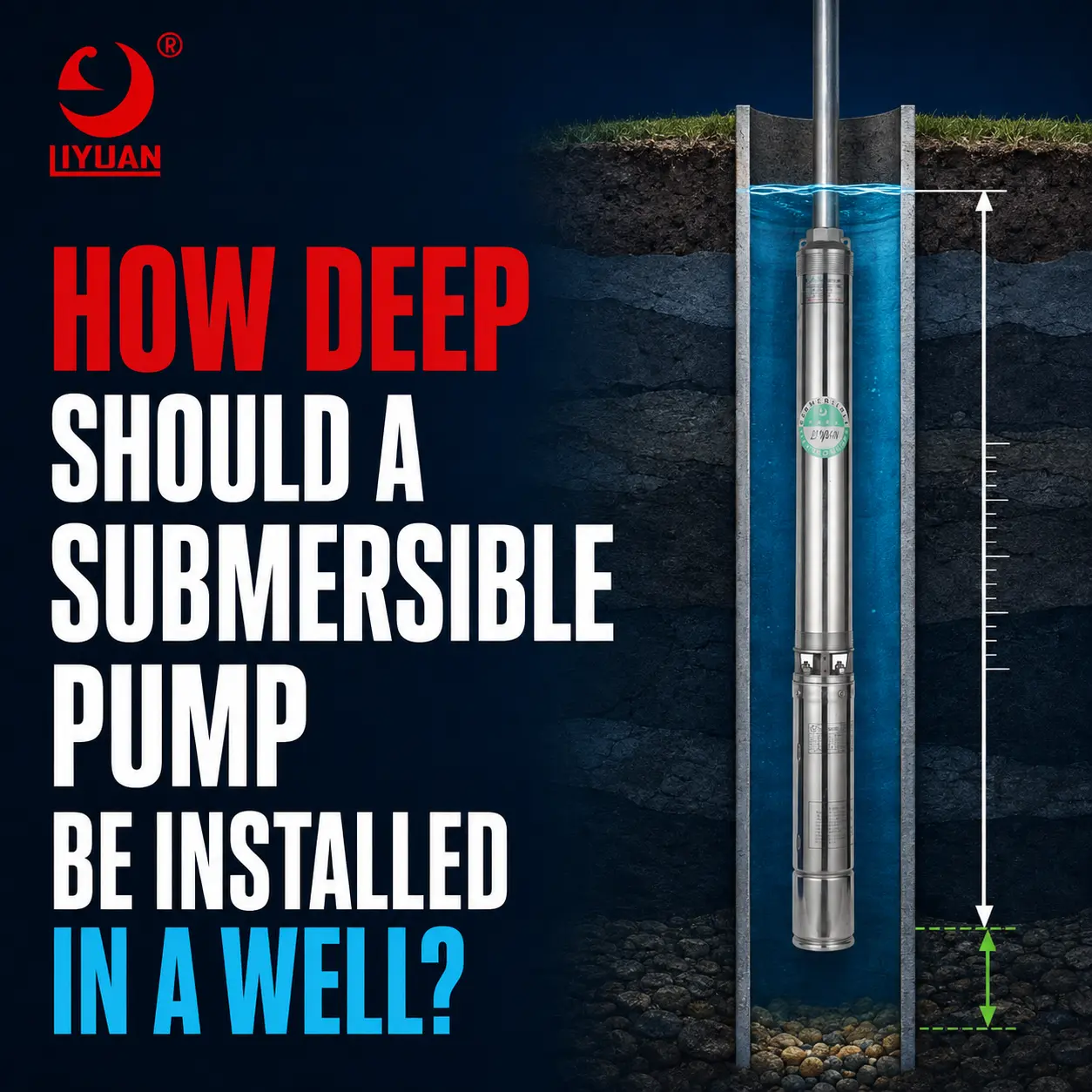
A Submersible Pump Should Be Installed Below The Lowest Expected Dynamic Water Level, With Enough Submergence To Prevent Air Entry And Dry Running, But High Enough Above The Well Bottom To Avoid Sand And Sediment. The Correct Depth Depends On Drawdown, Seasonal Water-Level Changes, Well Construction, Motor Cooling, And Manufacturer Requirements.
Placing A Pump Deeper Does Not Automatically Improve Water Pressure Or Pump Performance. An Excessively Deep Setting Can Increase Installation Cost, Cable Length, Pipe Weight, Sediment Exposure, And Maintenance Difficulty Without Increasing The Sustainable Yield Of The Well.
What Is Submersible Pump Setting Depth?
Submersible Pump Setting Depth Is The Vertical Distance From A Defined Wellhead Reference Point To The Pump Intake Or Another Manufacturer-Specified Pump Reference Point.
It Is Not Necessarily The Same As:
- Total Well Depth
- Static Water Level
- Dynamic Water Level
- Pumping Water Level
- Submergence Depth
- Vertical Lift
- Total Dynamic Head
- Riser-Pipe Length
The Installation Record Should Clearly State Which Part Of The Pump Was Used As The Depth Reference.
For Example, A Pump Installed 80 Meters Below The Wellhead Does Not Have 80 Meters Of Submergence If The Dynamic Water Level Is 65 Meters Below The Wellhead. Its Approximate Submergence Is Only 15 Meters.
What Is The Difference Between Well Depth And Pump Depth?
| Measurement | Meaning |
|---|---|
| Well Depth | Distance From The Wellhead Reference Point To The Bottom Of The Well |
| Pump Setting Depth | Distance From The Wellhead To The Installed Pump Reference Point |
| Static Water Level | Water Level When The Pump Is Off And The Well Has Recovered |
| Dynamic Water Level | Water Level While The Pump Operates At A Specific Flow Rate |
| Drawdown | Difference Between Static And Dynamic Water Levels |
| Pump Submergence | Vertical Water Depth Above The Pump Intake During Operation |
| Bottom Clearance | Distance Between The Pump Intake Or Motor And The Well Bottom |
| Total Dynamic Head | Total Hydraulic Resistance The Pump Must Overcome |
A 150-Meter-Deep Well Does Not Require The Pump To Be Installed At 150 Meters. The Pump May Be Installed At A Shallower Depth If It Remains Safely Below The Lowest Pumping Water Level.
Should A Submersible Pump Be Installed Below The Static Water Level?
Yes, But Static Water Level Alone Is Not Enough To Determine The Installation Depth.
When The Pump Starts, Water Is Removed From The Well And The Water Level Usually Falls. This Operating Level Is The Dynamic Water Level.
The Pump Must Remain Below The Dynamic Water Level During:
- Maximum Water Demand
- Seasonal Dry Conditions
- Extended Pumping
- Nearby Well Operation
- Drought Conditions
- Aquifer Decline
- Future Changes In Well Yield
The U.S. Geological Survey’s Groundwater Well Explanation Notes That Pumping Lowers The Water Level Around A Well And That Wells Can Begin Pumping Air If The Water Level Drops Below The Pump Intake.
What Is The Dynamic Water Level?
The Dynamic Water Level Is The Depth To Water While The Pump Operates At A Measured Flow Rate.
Dynamic Water Level Is Not A Fixed Number. It Can Change With:
- Pump Flow Rate
- Pumping Duration
- Aquifer Recharge
- Rainfall
- Seasonal Conditions
- Nearby Pumping
- Well-Screen Condition
- Mineral Deposits
- Well Age
- Drought
- Aquifer Pressure
A Dynamic Water Level Should Always Be Recorded Together With The Test Flow Rate And Pumping Duration.
A Statement Such As “The Dynamic Water Level Is 60 Meters” Is Incomplete Unless It Also Explains How Much Water Was Being Pumped And Whether The Level Had Stabilized.
How Is Well Drawdown Calculated?
Use This Formula:
Drawdown = Dynamic Water Level Depth − Static Water Level Depth
Assume:
- Static Water Level: 30 Meters
- Dynamic Water Level: 55 Meters
The Drawdown Is:
Drawdown = 55 − 30
Drawdown = 25 Meters
This Means Pumping Has Lowered The Water Level By 25 Meters.
Large Drawdown Can Indicate:
- Pump Flow Exceeding Well Yield
- Restricted Well Screen
- Aquifer Limitations
- Well Aging
- Mineral Encrustation
- Interference From Nearby Wells
- Seasonal Groundwater Decline
Installing The Pump Deeper May Prevent Immediate Dry Running, But It Does Not Increase The Aquifer’s Sustainable Water Production.
How Is Pump Submergence Calculated?
When Depths Are Measured Downward From The Same Wellhead Reference Point:
Pump Submergence = Pump Intake Depth − Dynamic Water Level Depth
For Example:
- Pump Intake Depth: 85 Meters
- Dynamic Water Level: 65 Meters
The Pump Submergence Is:
Pump Submergence = 85 − 65
Pump Submergence = 20 Meters
Use The Lowest Anticipated Dynamic Water Level, Not Only The Water Level Measured During A Short Initial Test.
The Minimum Required Submergence Must Follow The Pump Manufacturer’s Instructions, Well Design, Pump Capacity, Flow Pattern, And Local Regulations.
How Much Water Should Be Above A Submersible Pump?
There Is No Universal Submergence Depth For Every Deep Well Pump.
Required Submergence Depends On:
- Pump Model
- Pump Intake Design
- Flow Rate
- Motor Size
- Well Diameter
- Water Velocity
- Well Inflow Location
- Water Temperature
- Pump Orientation
- Risk Of Vortex Formation
- Seasonal Water-Level Variation
- Manufacturer Requirements
- Local Well Regulations
Some Installations Require Only A Modest Operating Margin, While Others Require Greater Submergence Because Of Large Drawdown Or Unstable Water Levels.
Do Not Use A Fixed Online Recommendation Without Checking The Exact Pump Manual and Local Requirements.
How Far Should A Submersible Pump Be From The Bottom Of The Well?
The Pump Should Be High Enough Above The Bottom To Avoid Drawing Settled Sand, Drilling Debris, Silt, Scale, And Other Sediment Into The Intake.
The Correct Bottom Clearance Depends On:
- Well Construction
- Screen Position
- Sediment Accumulation
- Water-Bearing Formation
- Pump Intake Location
- Flow Rate
- Well Diameter
- Previous Sand Test Results
- Pump Manufacturer Requirements
- Well Driller Recommendations
Avoid Installing The Pump Directly On The Well Bottom.
A Pump Installed Too Close To Sediment May Experience:
- Impeller Wear
- Blocked Diffusers
- Bearing Damage
- High Motor Current
- Reduced Flow
- Vibration
- Frequent Overload Trips
- Shortened Service Life
For Wells With Abrasive Water, Consider A Properly Selected Sand Resistant Submersible Pump. However, A Sand-Resistant Design Cannot Correct A Poorly Developed Or Structurally Damaged Well.
How Do You Calculate The Possible Pump Setting Range?
A Preliminary Installation Range Can Be Calculated From The Lowest Anticipated Pumping Level And The Required Bottom Clearance.
Minimum Candidate Pump Depth
Minimum Candidate Depth = Lowest Anticipated Dynamic Water Level + Required Submergence Margin
Maximum Candidate Pump Depth
Maximum Candidate Depth = Total Well Depth − Required Bottom Clearance
The Selected Depth Must Fall Between These Two Limits.
If The Minimum Candidate Depth Is Greater Than The Maximum Candidate Depth, The Well Does Not Provide Enough Usable Water Column For The Proposed Design.
Possible Solutions Include:
- Reducing Pump Flow
- Installing A Storage Tank
- Using Variable-Speed Control
- Rehabilitating The Well
- Deepening The Well When Geologically Appropriate
- Selecting A Different Pump
- Developing Another Water Source
Submersible Pump Installation Depth Example
Assume The Following Well Data:
- Total Well Depth: 120 Meters
- Static Water Level: 35 Meters
- Tested Dynamic Water Level: 65 Meters
- Lowest Anticipated Seasonal Pumping Level: 75 Meters
- Required Submergence Margin: 5 Meters
- Required Bottom Clearance: 10 Meters
Calculate The Minimum Candidate Depth:
Minimum Candidate Depth = 75 + 5
Minimum Candidate Depth = 80 Meters
Calculate The Maximum Candidate Depth:
Maximum Candidate Depth = 120 − 10
Maximum Candidate Depth = 110 Meters
The Preliminary Pump-Intake Setting Range Is Therefore:
80 To 110 Meters
The Final Setting Depth Must Also Consider:
- Well Screen Or Open-Hole Inflow Zones
- Motor Cooling Direction
- Pump Length
- Cable And Pipe Support
- Well Deviation
- Sediment Conditions
- Pump Performance
- Local Regulations
This Calculation Finds A Possible Physical Installation Range. It Does Not Select The Pump Model Or Determine Total Dynamic Head.
Is A Deeper Pump Setting Always Better?
No. A Deeper Setting May Provide More Protection Against Falling Water Levels, But It Can Also Create Additional Problems.
Higher Installation Cost
A Deeper Setting Requires More Riser Pipe, Cable, Safety Cable, Splices, And Installation Labor.
Greater Suspended Weight
Longer Pipe And Cable Increase The Load On The Wellhead, Pitless Adapter, Pipe Connections, And Lifting Equipment.
Higher Sediment Exposure
The Pump May Be Closer To Sand, Silt, Or Drilling Debris Near The Well Bottom.
More Difficult Maintenance
A Pump Installed Deeper Is More Expensive And Time-Consuming To Remove.
Increased Cable Voltage Drop
A Longer Electrical Cable Increases Resistance And Can Reduce Motor-Terminal Voltage.
Higher Pipe-Pressure Requirements
The Riser Pipe, Fittings, Check Valves, And Wellhead Components Must Withstand The Maximum Operating And Shut-Off Pressure.
The Best Setting Is Deep Enough To Maintain Submergence But Not Deeper Than Necessary.
Does Pump Installation Depth Determine Pump Head?
Not Directly.
The Pump Does Not Usually Lift Water From Its Physical Setting Depth To The Surface. It Lifts Water From The Pumping Water Level To The Discharge Point.
For Example:
- Pump Setting Depth: 100 Meters
- Dynamic Water Level: 60 Meters
- Surface Discharge Elevation: 0 Meters
- Required Pressure Head: 30 Meters
- Friction Loss: 8 Meters
The Approximate Total Dynamic Head Is:
TDH = 60 + 30 + 8
TDH = 98 Meters
The 40 Meters Of Water Above The Pump Intake Creates Submergence, But It Is Not Added Again As Vertical Lift.
This Distinction Prevents Pump Oversizing. Use The Total Dynamic Head For Submersible Pump To Calculate The Actual Required Head.
How Does Flow Rate Affect Installation Depth?
A Higher Pump Flow Usually Produces Greater Drawdown.
If Pump Capacity Exceeds The Well’s Sustainable Yield:
- Dynamic Water Level Falls
- Submergence Decreases
- Dry-Run Risk Increases
- Air May Enter The Pump
- Flow Becomes Unstable
- Motor Cooling May Decline
- Sand Production May Increase
- The Pump May Cycle On Dry-Run Protection
The Correct Submersible Pump Flow Rate Should Be Based On Both Water Demand And Sustainable Well Yield.
A Larger Pump Is Not Better If The Well Cannot Supply Its Rated Flow.
How Do You Measure Static And Dynamic Water Levels?
Water Levels Can Be Measured With:
- Electric Water-Level Meter
- Pressure Transducer
- Air-Line System
- Acoustic Water-Level Meter
- Data Logger
- Manufacturer-Approved Level Sensor
Measure Static Water Level After The Well Has Recovered.
To Measure Dynamic Water Level:
- Start The Pump At The Intended Flow Rate.
- Record Water Level At Regular Intervals.
- Continue Until The Level Stabilizes Or The Test Period Ends.
- Record The Flow Rate At The Same Time.
- Stop The Pump.
- Measure Water-Level Recovery.
A Short Test May Not Reveal Long-Term Drawdown. Irrigation, Industrial, And Municipal Wells May Require Extended Yield Testing.
What Happens If The Pump Is Installed Too Shallow?
A Pump Installed Too Close To The Operating Water Level May:
- Draw Air
- Lose Stable Flow
- Run Dry
- Overheat
- Cavitate
- Produce Pressure Fluctuation
- Trip Underload Protection
- Experience Shortened Bearing Life
- Deliver Intermittent Water
The Submersible Pump Dry Running Risk Increases During Drought, Peak Demand, And Long Pumping Cycles.
The Grundfos Pump Installation Information States That The Pump Unit Should Be Installed Below The Dynamic Water Table To Reduce Dry-Running Risk.
What Happens If The Pump Is Installed Too Deep?
A Pump Installed Unnecessarily Deep May:
- Pump More Sand
- Require Longer Cable
- Increase Pipe And Cable Cost
- Increase Installation Weight
- Complicate Pump Removal
- Require Higher Pipe-Pressure Ratings
- Place The Pump Near Sediment
- Enter An Undesirable Water-Quality Zone
- Increase The Risk Of Pump Entrapment In A Deviated Well
Deeper Water Zones Can Also Have Different:
- Mineral Content
- Salinity
- Iron Concentration
- Temperature
- Gas Content
- Chemical Composition
Water Quality Should Be Tested At The Intended Pumping Zone When It Affects Drinking, Irrigation, Or Industrial Use.
Where Should The Pump Be Positioned Relative To The Well Screen?
The Correct Position Depends On The Well’s Construction And Inflow Pattern.
A Pump Should Not Be Positioned Solely From Total Well Depth. Review:
- Screen Top And Bottom
- Open-Hole Interval
- Major Water-Bearing Fractures
- Sediment Zones
- Casing Diameter Changes
- Well Liner Position
- Water Inflow Direction
- Well Driller’s Log
Placing The Pump Near A High-Velocity Inflow Zone Can Increase Sand Entry Or Turbulence.
Placing The Pump Where Water Does Not Flow Past The Motor May Reduce Cooling. A Well Driller And Pump Manufacturer Should Review Complex Well Profiles.
Why Does Motor Cooling Affect Pump Depth?
Most Deep Well Submersible Motors Depend On Water Moving Across The Motor Surface To Remove Heat.
Cooling Depends On:
- Water Velocity
- Motor Diameter
- Well Diameter
- Pump Flow
- Inflow Direction
- Water Temperature
- Pump Position
- Motor Load
- Cooling-Sleeve Design
If The Well Casing Is Much Larger Than The Motor, Water Velocity Around The Motor May Be Too Low.
If Water Enters The Well Above The Pump Intake, It May Travel Directly Into The Pump Without Flowing Along The Motor Housing.
A Submersible Motor Cooling System Or Flow Sleeve May Be Required To Direct Water Across The Motor.
The Required Minimum Cooling Velocity Must Come From The Motor Manufacturer.
When Is A Flow Sleeve Required?
A Flow Sleeve May Be Necessary When:
- Well Diameter Is Much Larger Than Motor Diameter
- Water Enters Above The Pump
- The Pump Is Installed In An Open Reservoir
- The Pump Operates Horizontally
- Water Temperature Is High
- Natural Cooling Flow Is Insufficient
- Motor Load Is High
- The Manufacturer Requires One
A Flow Sleeve Directs Pumped Water Around The Motor Before It Enters The Pump Intake.
The Sleeve Must Be Designed For The Required Flow Velocity Without Creating Excessive Restriction.
How Does The Well Diameter Affect Pump Placement?
The Pump Outside Diameter Must Fit Inside The Smallest Internal Well Diameter, Not Only The Nominal Casing Size.
Check For:
- Casing Joints
- Liners
- Encrustation
- Well Deviation
- Cable Guards
- Pipe Couplings
- Welded Seams
- Corrosion
- Internal Restrictions
A Nominal 4-Inch Pump May Not Pass Through Every Nominal 4-Inch Well.
Allow Enough Clearance For:
- Pump Installation
- Power Cable
- Cable Guards
- Centralizers
- Pump Removal
- Water Flow
The Pump Should Not Rub Against The Casing During Operation.
How Does A Deep Setting Affect The Power Cable?
A Deeper Setting Requires A Longer Drop Cable.
Long Cable Runs Can Cause:
- Voltage Drop
- Increased Starting Difficulty
- Higher Conductor Cost
- Greater Cable Weight
- More Splice Risk
- VFD Reflected-Wave Problems
- Insulation Stress
- Difficult Pump Removal
Select The Submersible Pump Cable According To Motor Current, Voltage, Cable Length, Starting Method, Water Temperature, And Applicable Electrical Standards.
Secure The Cable To The Riser Pipe Using Manufacturer-Approved Spacing And Materials. Do Not Allow The Cable To Rub Against The Well Casing.
Does The Riser Pipe Need To Match The Installation Depth?
Yes. The Riser Pipe Must Support Its Own Weight, The Pump, Cable, Water Column, Starting Torque, And Hydraulic Pressure.
Check:
- Pipe Material
- Pressure Rating
- Tensile Strength
- Connection Type
- Corrosion Resistance
- Water Temperature
- Pump Weight
- Installation Depth
- Maximum Shut-Off Pressure
- Water Hammer
- Lifting Method
Do Not Select Pipe Only From Its Diameter. A Pipe With Adequate Flow Capacity May Still Have Insufficient Pressure Or Tensile Rating.
Are Check Valves Required In A Deep Well?
Check-Valve Requirements Depend On Pump Design, Installation Depth, Pipe System, And Local Regulations.
A Proper Check-Valve Arrangement Can:
- Maintain The Water Column
- Reduce Reverse Flow
- Prevent Reverse Rotation
- Reduce Starting Shock
- Maintain System Pressure
- Reduce Water Hammer
Too Many Check Valves Or Incorrect Placement Can Create Trapped Pressure, Additional Friction Loss, And Difficult Troubleshooting.
Follow The Pump Manufacturer’s Check-Valve Instructions And Local Well Regulations.
How Should The Pump Be Protected From Dry Running?
Possible Dry-Run Protection Methods Include:
- Water-Level Electrodes
- Downhole Level Sensors
- Motor Underload Monitoring
- Flow Switches
- Pressure Monitoring
- Well-Recovery Timers
- VFD Dry-Run Detection
- Automatic Restart Delay
- Low-Level Float Switches In Tanks
The Protection Should Stop The Pump Before The Water Level Reaches The Pump Intake Or Drops Below The Required Motor-Cooling Level.
The Restart Delay Should Allow The Well To Recover without causing repeated short cycling.
Can A Pump Be Lowered Deeper When The Well Yield Declines?
Sometimes, But Only If The Well Has Sufficient Usable Depth And Acceptable Water Quality Below The Current Pump Position.
Before Lowering The Pump:
- Measure The Current Well Depth.
- Check For Sediment Accumulation.
- Measure Static Water Level.
- Perform A Pumping Test.
- Measure Dynamic Water Level.
- Review The Original Well Log.
- Confirm Screen And Inflow Locations.
- Test Water Quality.
- Verify Cable And Pipe Length.
- Recalculate Total Dynamic Head.
If The Well Yield Has Declined Because Of Screen Blockage Or Aquifer Changes, Lowering The Pump May Provide Only Temporary Improvement.
How Do Seasonal Water-Level Changes Affect Pump Depth?
Groundwater Levels Can Vary Between Wet And Dry Seasons.
A Pump Setting Based Only On A Wet-Season Measurement May Be Too Shallow During:
- Summer Irrigation
- Extended Drought
- Low-Rainfall Periods
- Heavy Regional Pumping
- Peak Industrial Demand
Use Historical Water-Level Records When Available.
Where Long-Term Data Is Unavailable, Include A Reasonable Design Margin Based On Local Hydrogeology, Well Testing, And Professional Recommendations.
What Information Should Be Sent To The Pump Manufacturer?
Provide:
- Total Well Depth
- Internal Well Diameter
- Casing And Liner Details
- Well Screen Position
- Open-Hole Interval
- Static Water Level
- Dynamic Water Level
- Test Flow Rate
- Pumping-Test Duration
- Seasonal Lowest Water Level
- Well Recovery Rate
- Required Flow Rate
- Required Discharge Pressure
- Pump Setting Depth
- Bottom Sediment Depth
- Water Temperature
- Sand Content
- Water Chemistry
- Voltage
- Frequency
- Phase
- Cable Length
- Pipe Size
- Pipe Material
- Installation Angle
- Daily Operating Hours
A Well Log, Pumping-Test Report, And Water Analysis Can Significantly Improve Pump Selection.
Frequently Asked Questions
How Deep Can A Submersible Pump Be Installed?
The Maximum Depth Depends On The Pump And Motor Pressure Rating, Available Head, Cable Length, Pipe Strength, Well Diameter, Water Temperature, And Manufacturer Limits. It Is Not Determined By Well Depth Alone.
Should The Pump Be At The Bottom Of The Well?
No. The Pump Should Normally Remain Above The Bottom To Avoid Sediment, Sand, And Drilling Debris. The Required Clearance Depends On Well Construction And Manufacturer Recommendations.
Should The Pump Be Below The Well Screen?
Not Automatically. Pump Position Relative To The Screen Depends On The Well Design, Inflow Direction, Sediment Conditions, And Motor-Cooling Requirements.
How Far Below The Water Level Should A Well Pump Be?
It Should Be Far Enough Below The Lowest Anticipated Dynamic Water Level To Maintain The Manufacturer’s Required Submergence During Maximum Pumping And Seasonal Low-Water Conditions.
Is Static Water Level Used To Set The Pump Depth?
Static Water Level Is Only One Input. Dynamic Water Level, Drawdown, Seasonal Variation, Pump Flow, Bottom Clearance, And Motor Cooling Are More Important During Operation.
What Is The Best Depth For A Deep Well Pump?
The Best Depth Is Below The Lowest Expected Pumping Water Level, Above The Sediment Zone, Within A Suitable Inflow And Cooling Position, And Inside The Pump, Cable, And Pipe Design Limits.
Can Installing The Pump Deeper Increase Water Pressure?
Not By Itself. Water Pressure Depends On The Pump Curve, Dynamic Water Level, Elevation, Pipe Loss, And Pressure-System Settings.
Can Installing The Pump Deeper Increase Well Yield?
No. Pump Depth Does Not Increase Aquifer Yield. It Only Provides Access To A Larger Stored Water Column When The Well Construction Allows It.
What Happens If The Water Level Drops Below The Pump?
The Pump May Draw Air, Lose Flow, Overheat, Cavitate, Or Trigger Dry-Run Protection. Continued Operation Can Damage The Pump And Motor.
How Often Should Well Water Levels Be Checked?
Measure Water Levels During Commissioning And Periodically During High-Demand Or Dry Seasons. Agricultural And Industrial Wells Benefit From Continuous Or Logged Water-Level Monitoring.
Final Answer
How Deep Should A Submersible Pump Be Installed? Install It Below The Lowest Expected Dynamic Water Level With The Manufacturer’s Required Submergence, While Maintaining Adequate Clearance Above Sediment And The Well Bottom.
The Final Setting Must Also Support Motor Cooling, Stable Water Quality, Correct Cable Sizing, Safe Pipe Loading, And Efficient Pump Operation.
Before Following The How To Install A Submersible Pump Procedure, Record The Well Depth, Static Water Level, Dynamic Water Level, Drawdown, Screen Position, Sand Content, And Required Flow.
Liyuan Pump Can Select A Suitable Submersible Pump When You Provide The Complete Well And Operating Data. This Reduces Dry-Running Risk, Sand Damage, Energy Waste, And Premature Motor Failure.
Email:Liyuan@liyuan-pump.com
WhatsApp:+86 181-2828-2767