Submersible Motor Cooling System: Complete Guide
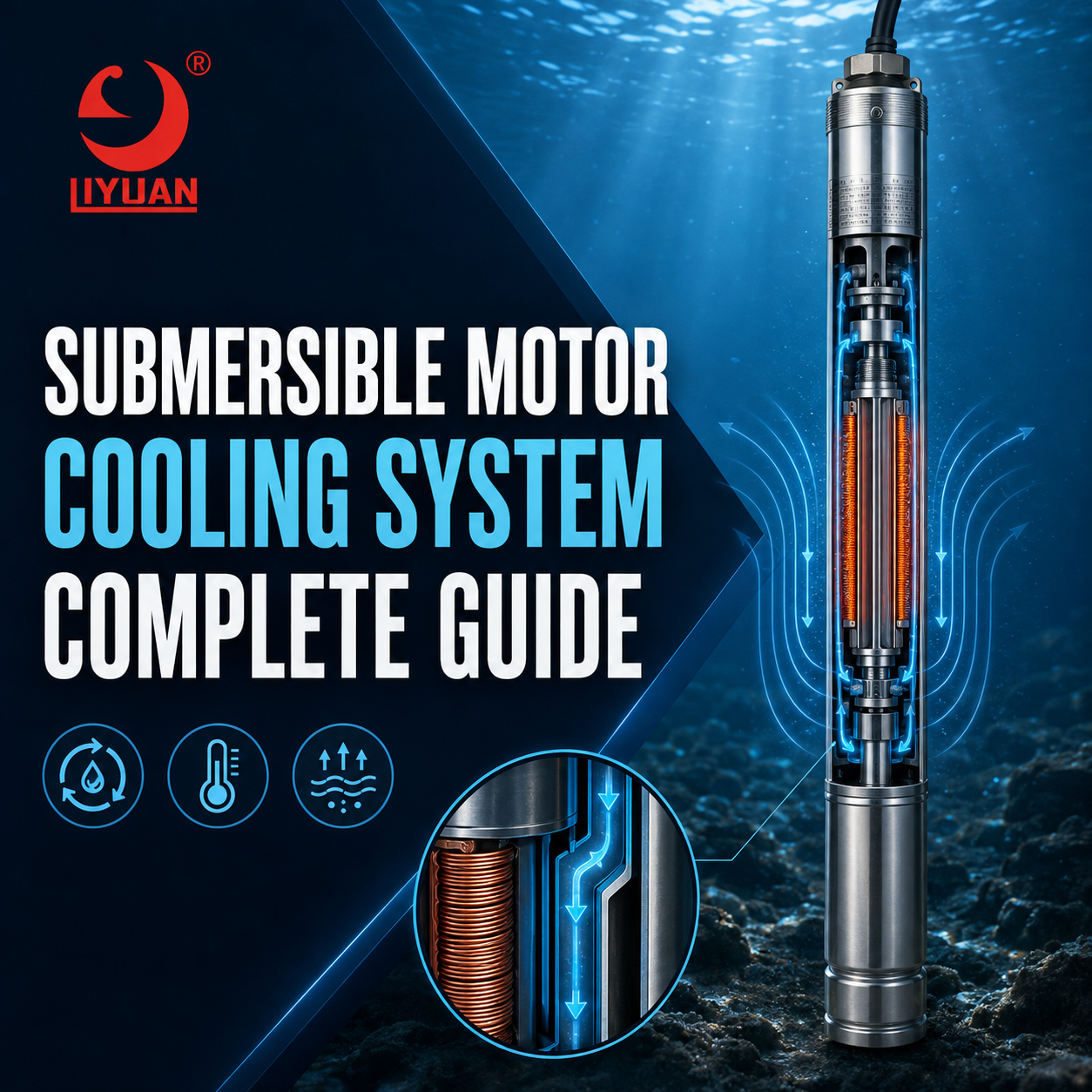
A Submersible Motor Cooling System Uses The Surrounding Water And Internal Motor Fluid To Remove Heat From Windings, Bearings, And Other Components. Adequate Water Velocity Around The Motor Is Essential For Preventing Overheating.
When Natural Water Flow Cannot Cool The Motor, A Flow Sleeve Or Cooling Jacket Should Be Installed. This Is Especially Important In Large Wells, Open Tanks, Reservoirs, Horizontal Installations, And High-Temperature Applications.
Correct Cooling Improves Motor Efficiency, Protects Electrical Insulation, And Extends The Operating Life Of The Complete Pump System.
What Is A Submersible Motor Cooling System?
A Submersible Motor Cooling System Is The Combination Of Internal Heat Transfer, External Water Circulation, Motor Housing Design, And Protective equipment used to control motor temperature.
During Operation, Electrical And Mechanical Losses Produce Heat Inside The Motor. This Heat Must Move Through The Internal Fluid, Stator, And Motor Housing Before Entering The Surrounding Water.
The Main Cooling Components Include:
- Internal Motor Fluid
- Motor Housing
- Water Flow Around The Motor
- Well Casing
- Flow Sleeve Or Cooling Jacket
- Temperature Sensors
- Motor Protection Equipment
A Reliable Cooling System Must Remove Heat Under Normal Load, Maximum Ambient Temperature, And Expected Water-Flow Conditions.
Why Do Submersible Motors Generate Heat?
No Electric Motor Converts All Input Power Into Mechanical Output. Some Energy Becomes Heat.
The Main Heat Sources Include:
- Electrical Resistance In The Windings
- Magnetic Losses In The Stator And Rotor
- Bearing Friction
- Mechanical Seal Friction
- Hydraulic Load From The Pump
- Voltage Imbalance
- Low Or High Voltage
- Frequent Starting
- Overloading
- Harmonics From Incorrect Drive Settings
An Energy Efficient Submersible Pump Can Reduce Energy Losses. However, Even A Highly Efficient Motor Still Requires Adequate Cooling.
How Does A Submersible Motor Stay Cool?
The Motor Is Normally Installed Below The Pump Intake. When The Pump Operates, Water Moves Toward The Intake And Passes Across The Motor Housing.
This Water Movement removes heat from the motor surface.
The Cooling Process Includes Three Main Steps:
- Heat Moves From The Windings To The Internal Motor Fluid And Stator.
- Heat Transfers Through The Motor Housing.
- Flowing Water Carries Heat Away From The Motor Surface.
Continuous Water Movement Is More Effective Than Stationary Water. Therefore, Complete Submersion Alone Does Not Always Guarantee Adequate Cooling.
Internal And External Cooling
Submersible Motor Cooling Includes Both Internal And External Heat Transfer.
Internal Cooling
Water-Filled Motors Use A Clean Water-Based Fluid For Cooling And Bearing Lubrication.
Oil-Filled Motors Use A Dielectric Fluid That Transfers Heat And Lubricates Internal Components.
Internal Fluid Circulation Helps Distribute Heat From The Windings To The Motor Housing. However, The Fluid Must Match The Motor Design.
The Water Filled Submersible Motor Vs Oil Filled Motor Guide Explains The Differences Between These Two Motor Types.
External Cooling
External Cooling Depends On Water Moving Across The Motor Housing.
Important Factors Include:
- Water Velocity
- Well Diameter
- Motor Diameter
- Water Temperature
- Pump Position
- Well Inflow Location
- Motor Load
- Installation Orientation
A Motor May Overheat Even While Fully Submerged If Water Does Not Flow Across Its Surface.
What Is Minimum Cooling Flow Velocity?
Minimum Cooling Flow Velocity Is The Lowest Water Speed Required Across The Motor Surface To Remove Heat Safely.
The Required Velocity Depends On:
- Motor Diameter
- Motor Power
- Motor Construction
- Water Temperature
- Motor Load
- Manufacturer Specifications
- Installation Conditions
Some Motor Models Specify A Minimum Cooling Velocity Of Approximately 0.25 Feet Per Second. Larger Or Higher-Power Motors May Require Approximately 0.50 Feet Per Second.
These Values Are Examples, Not Universal Requirements. For Instance, A Franklin Electric Eight-Inch Submersible Motor Specification Lists Water Cooling And A Minimum Cooling Flow Of 0.50 Feet Per Second.
Always Use The Technical Data For The Selected Motor.
How To Calculate Water Velocity Around The Motor
Water Velocity Around A Motor Depends On Pump Flow And The Annular Area Between The Motor And Well Casing.
The Basic Formula Is:
Water Velocity = Actual Water Flow ÷ Annular Flow Area
The Annular Area Can Be Calculated With:
Annular Area = π ÷ 4 × (Well Diameter² − Motor Diameter²)
All Units Must Be Consistent.
For Accurate Calculation, Consider:
- Actual Pump Flow At The Operating Point
- Internal Well Diameter
- Maximum Motor Diameter
- Cable Guard Obstruction
- Riser Pipe Position
- Well Deviation
- Installation Depth
- Water Entering Above Or Below The Motor
A Large Difference Between Well Diameter And Motor Diameter Creates A Larger Annular area. Therefore, The Same Pump Flow Produces A Lower Water Velocity.
Why Can A Large Well Cause Motor Overheating?
A Large Well Provides More Space Around The Motor. However, This Can Reduce Cooling Velocity.
When Water Moves Slowly, It May Not Remove Heat From The Motor Surface Fast Enough.
For Example, A Six-Inch Motor Installed In A Large-Diameter Well May Have Insufficient Cooling Even If The Pump Delivers Significant Flow.
Possible Solutions Include:
- Installing A Correctly Sized Flow Sleeve
- Selecting A Different Motor Diameter
- Increasing Water Flow Within Safe Pump Limits
- Reducing Motor Load
- Using A High-Temperature Motor
- Verifying The Well Inflow Direction
The Required Solution Should Be Based On Actual Flow, Motor Data, And Installation dimensions.
What Is A Flow Sleeve?
A Flow Sleeve Is A Cylindrical Tube Installed Around The Motor. It Is Also Called A Cooling Sleeve, Cooling Jacket, Shroud, Or Flow Inducer.
The Sleeve Forces Pumped Water To Travel Along The Motor Surface before entering the pump intake.
According To Grundfos, A Cooling Jacket Helps Maintain Sufficient Water Flow Across The Motor Surface. It Is Especially Important When An Open-Water Installation Does Not Have Well Walls To Guide Flow Past The Motor.
A Typical Flow Sleeve Includes:
- A Cylindrical Outer Body
- A Sealed Or Restricted Lower End
- Centralizing Supports
- Space For Power Cables
- An Open Upper Outlet Near The Pump Intake
The Sleeve Diameter Must Provide Enough Flow Area Without Creating Excessive Hydraulic Resistance.
When Is A Flow Sleeve Required?
A Flow Sleeve May Be Necessary In The Following Conditions.
Open Tank Installation
In A Tank, Reservoir, Lake, Or Pond, Water Can Enter The Pump Intake Without Passing Across The Motor.
A Flow Sleeve Creates A Controlled Cooling Path.
Large-Diameter Well
A Large Annular Area Can Reduce Water Velocity Below The Motor Manufacturer’s Requirement.
Water Enters Above The Motor
If Well Inflow Enters Near Or Above The Pump Intake, Water May Not Travel Past The Motor.
Horizontal Installation
In Horizontal Installations, Natural Flow May Not Cool The Entire Motor Surface evenly.
Hot-Water Application
Hot Water Has Less Capacity To Absorb Additional Heat Before The Motor Reaches Its Temperature limit.
Low-Flow Pump
A Low-Flow Pump May Not Generate Enough Velocity Around A Large Motor.
Variable-Speed Operation
Operating At Low Frequency Reduces Pump Flow. Therefore, Water Velocity May Fall Below The Cooling Requirement.
Motor Installed In A Sump
A Sump Or Booster Application May Not Naturally Direct Water Across The Motor body.
How Should A Flow Sleeve Be Installed?
A Flow Sleeve Must Force Water Along The Full Length Of The Motor.
The Lower End Should Be Closed Or Restricted So Water Cannot Bypass The Motor. The Upper End should direct the cooling water toward the pump intake.
Important Installation Requirements Include:
- Center The Motor Inside The Sleeve.
- Leave Adequate Clearance Around The Motor.
- Protect The Power Cable From Sharp Edges.
- Prevent Water From Bypassing The Sleeve.
- Use Corrosion-Resistant Materials.
- Avoid Obstructing The Pump Intake.
- Provide Enough Space For Motor Removal.
- Verify Cooling Velocity At Minimum Pump Speed.
Stainless Steel, Engineered Plastic, And Coated Steel Can Be Used For Flow Sleeves. Material Selection Depends On Water Quality, Temperature, Pressure, And Installation Environment.
Cooling Requirements For Hot Water
Higher Water Temperature Reduces The Temperature Difference Between The Motor Housing And The Surrounding Water.
As This Difference Becomes Smaller, Heat Transfer becomes less effective.
Hot-Water Applications May Require:
- A High-Temperature Submersible Motor
- Heat-Resistant Winding Insulation
- Suitable Bearings And Lubricants
- High-Temperature Mechanical Seals
- Heat-Resistant Cables
- Increased Cooling Velocity
- Reduced Motor Load
- A Flow Sleeve
- Temperature Monitoring
A Standard Motor Rated For Cool Groundwater Should Not Be Used In Hot Water Without Manufacturer Approval.
Read The Hot Water Submersible Pump: Complete Selection Guide Before Selecting Equipment For Geothermal Wells, Industrial Process Water, Or Other High-Temperature Applications.
Cooling A High-Flow Pump
A High-Flow Pump Usually Produces Strong Water Movement. However, High Flow Does Not Automatically Guarantee Correct Motor Cooling.
Cooling Can Still Be Insufficient When:
- The Well Diameter Is Extremely Large.
- Water Enters Above The Motor.
- Water Bypasses The Motor Housing.
- The Pump Operates In An Open Tank.
- The Motor Is Installed Horizontally.
- The Flow Sleeve Is Incorrectly Sized.
A High Flow Deep Well Pump Should Be Evaluated At Its Actual Operating Point, Not Only At Its Maximum Rated Flow.
Cooling Larger Submersible Motors
Larger Motors Generate More Total Heat And Often Require A Defined Minimum Cooling velocity.
A 4-Inch Residential Motor May Have Different Requirements From A 6-Inch Industrial Motor. Likewise, 8-Inch And 10-Inch Motors Require Careful hydraulic and thermal evaluation.
When Selecting A Larger Motor, Consider:
- Rated Power
- Full-Load Current
- Service Factor
- Minimum Cooling Velocity
- Maximum Water Temperature
- Maximum Installation Depth
- Starting Method
- Number Of Starts Per Hour
- Temperature Sensor Availability
- Flow-Sleeve Requirements
The 6 Inch Submersible Motor Guide Provides Additional Information For Medium And Large Deep-Well Systems.
Cooling During Variable-Frequency Operation
A Variable-Frequency Drive Can Adjust Pump Speed According To Water demand. This Can Save Energy And Improve Pressure control.
However, Lower Speed Also Reduces Pump Flow. As A Result, Water Velocity Across The Motor May decrease.
At Low Frequency, The Motor May Experience:
- Reduced External Cooling
- Increased Harmonic Heating
- Unstable Hydraulic Operation
- Insufficient Bearing Lubrication
- Low Flow Through The Well
The Minimum Operating Frequency Should Be Established according to motor, pump, and cooling requirements.
VFD Programming Should Include:
- Minimum Frequency
- Maximum Frequency
- Acceleration Time
- Deceleration Time
- Current Protection
- Overtemperature Protection
- Dry-Run Protection
- Phase-Loss Protection
- Restart Delay
Never Assume That A Motor Can Operate Continuously At Any Reduced Speed.
How Voltage Problems Affect Motor Temperature
Incorrect Voltage Can Increase Current And Heat.
Low Voltage
Low Voltage Can Force The Motor To Draw More Current while producing the required torque.
High Voltage
Excessive Voltage Can Increase Magnetic Losses And Stress The winding insulation.
Voltage Imbalance
A Small Voltage Imbalance In A Three-Phase System Can Create A Much Larger Current imbalance.
This Produces Uneven Winding Temperatures And Can cause premature insulation failure.
Phase Loss
Losing One Phase Can Rapidly Overheat A Three-Phase Motor.
Suitable Control Equipment Should Protect The Motor From Abnormal Voltage, Current, Phase Sequence, And Phase loss.
The Single Phase Submersible Pump Vs Three Phase Pump Guide Explains The Electrical Differences Between These Systems.
Common Causes Of Submersible Motor Overheating
Insufficient Water Velocity
Water Does Not Move Across The Motor Fast Enough To Remove Heat.
Motor Not Fully Submerged
A Falling Dynamic Water Level Can Expose Part Of The Motor.
Dry Running
The Pump Continues Operating After The Water Level Drops Below The Intake.
Excessive Water Temperature
The Surrounding Water Cannot Absorb Motor Heat Effectively.
Pump Overload
An Incorrect Pump Or Operating Point Can Load The Motor Above Its rating.
Voltage Imbalance
Unbalanced Three-Phase Voltage Creates Uneven Current And Winding temperatures.
Frequent Starting
Each Start Produces High Current And Additional Heat.
Restricted Pump Flow
A Blocked Pipe, Closed Valve, Or Worn Pump Can Move The Operating Point Outside The Recommended range.
Incorrect VFD Settings
Very Low Speed Or Excessive Harmonics Can Increase Motor temperature.
Sediment Around The Motor
Accumulated Sand Or Mineral Deposits Can Insulate The Motor housing and restrict water movement.
Damaged Internal Components
Worn Bearings, Rotor Contact, Or A Damaged Thrust Bearing Can Increase friction.
Warning Signs Of Inadequate Cooling
Possible Warning Signs Include:
- Repeated Thermal Trips
- Increased Motor Current
- Reduced Insulation Resistance
- Discolored Internal Motor Fluid
- Burned Winding Odor
- Cable Insulation Damage
- Frequent Overload Activation
- Reduced Pump Output
- Abnormal Vibration
- Bearing Noise
- Mechanical Seal Deterioration
- Shorter Motor Service Life
A Single Symptom Does Not Confirm A Cooling Problem. A Qualified Technician Should Inspect The Complete Electrical And Hydraulic System.
How To Test Motor Cooling Conditions
A Cooling Evaluation Should Include Both Design calculations and operating measurements.
Recommended Checks Include:
- Measure The Actual Pump Flow.
- Confirm The Dynamic Water Level.
- Record Water Temperature.
- Measure The Well’s Internal Diameter.
- Confirm The Motor’s Maximum Diameter.
- Calculate Annular Water Velocity.
- Identify The Well Inflow Location.
- Measure Voltage And Current On Every Phase.
- Check Motor Load Against Rated Current.
- Review VFD Frequency And Protection Settings.
- Inspect The Flow Sleeve For Blockage Or Bypass.
- Test Insulation Resistance.
- Review Starting Frequency.
- Compare Results With Manufacturer Specifications.
The Motor Should Be Tested Under The Most Demanding Expected Condition, Including Maximum Water Temperature And Minimum Operating Flow.
How To Prevent Motor Overheating
Use The Following Practices To Protect The Motor:
- Keep The Motor Fully Submerged.
- Maintain The Required Cooling Velocity.
- Install A Flow Sleeve When Necessary.
- Avoid Dry Running.
- Select The Correct Pump Operating Point.
- Monitor Voltage And Current.
- Limit Starts Per Hour.
- Use Thermal And Overload Protection.
- Configure The VFD Correctly.
- Remove Sand And Mineral Deposits.
- Verify Water Temperature.
- Inspect Motor Fluid And Bearings.
- Maintain The Mechanical Seal.
- Follow Manufacturer Operating Limits.
Regular Inspection Can Identify Cooling Problems Before They cause winding failure. Additional Recommendations Are Available In The Electric Submersible Pump Maintenance Guide.
How To Select A Motor For Reliable Cooling
Provide Complete Project Information To The Manufacturer.
Important Information Includes:
- Required Flow
- Required Head
- Well Diameter
- Well Depth
- Static Water Level
- Dynamic Water Level
- Well Inflow Position
- Water Temperature
- Water Quality
- Sand Content
- Motor Power
- Voltage And Frequency
- Single-Phase Or Three-Phase Supply
- Installation Orientation
- Daily Operating Hours
- Starts Per Hour
- VFD Operating Range
- Ambient Conditions
- Flow-Sleeve Dimensions
This Information Allows The Manufacturer To Evaluate Motor Load, Cooling Velocity, Temperature Rise, And Protection requirements.
Why Choose Liyuan Pump?
Liyuan Pump Has Manufactured Deep-Well Submersible Pumps And Motors Since 1992.
Our Product Range Includes 3-Inch To 10-Inch Submersible Pumps, Submersible Motors, Solar Water Pump Systems, Control Equipment, And Customized Pumping solutions.
Liyuan Pump Can Help Evaluate:
- Motor Power
- Cooling Velocity
- Well Diameter
- Flow-Sleeve Requirements
- Water Temperature
- Installation Depth
- Voltage And Phase
- Pump And Motor Matching
- Materials For Corrosive Water
- Protection And Control Equipment
Our Products Serve Residential, Agricultural, Industrial, And Municipal Water-Pumping Applications.
Frequently Asked Questions
Does A Submersible Motor Need Water Flow For Cooling?
Yes. Most Submersible Motors Require Water Movement Across The Motor Surface. Complete Submersion Without Adequate Flow May Not Provide Sufficient Cooling.
What Is A Submersible Motor Flow Sleeve?
A Flow Sleeve Is A Tube Installed Around The Motor. It Forces Water To Flow Along The Motor Housing Before Entering The Pump Intake.
When Should I Install A Flow Sleeve?
A Flow Sleeve Is Commonly Needed In Open Tanks, Large Wells, Horizontal Installations, Hot Water, Low-Flow Systems, Or Any Application With Insufficient Water Velocity.
Can A Submersible Motor Operate In Hot Water?
Only If The Motor, Cable, Seal, Bearings, And Internal Fluid Are Suitable For The Required Temperature. Manufacturer Approval Is Essential.
Can A VFD Cause Motor Overheating?
Yes. Incorrect VFD Settings, Harmonics, Or Operation At Very Low Speed Can Increase Heat And Reduce Cooling flow.
Does A Larger Well Improve Cooling?
Not Always. A Larger Well Creates More Space Around The Motor, Which Can Reduce Water Velocity And weaken cooling.
Can Sand Affect Motor Cooling?
Yes. Sand Can Accumulate Around The Motor, Restrict Water Flow, And Create An Insulating Layer. It Can Also Damage Bearings And Seals.
How Can I Know The Required Cooling Velocity?
Check The Motor Manufacturer’s Technical Data. The Required Velocity Depends On Motor Size, Power, Design, Water Temperature, And Operating conditions.
Can A Motor Overheat While It Is Underwater?
Yes. A Submerged Motor Can Still Overheat If Water Is Stationary, Too Hot, Or Not Directed Across The Motor surface.
What Protection Should A Submersible Motor Have?
Recommended Protection Can Include Overload, Phase Loss, Voltage Imbalance, Dry Running, High Temperature, Short Circuit, And Excessive Starting protection.
Conclusion
A Submersible Motor Cooling System Must Transfer Heat From The Windings And Bearings Into The Surrounding Water. Effective Cooling Depends On Water Velocity, Motor Load, Water Temperature, Well Diameter, And Installation design.
When Natural Flow Cannot Pass Across The Motor, A Correctly Sized Flow Sleeve Can Create The Required Cooling path.
Proper Motor Selection, Cooling Calculations, Electrical Protection, And Routine Maintenance Help Prevent Overheating, Reduce Downtime, And Extend The Service Life Of The Complete Submersible Pump System.
Email:Liyuan@liyuan-pump.com
WhatsApp:+86 181-2828-2767