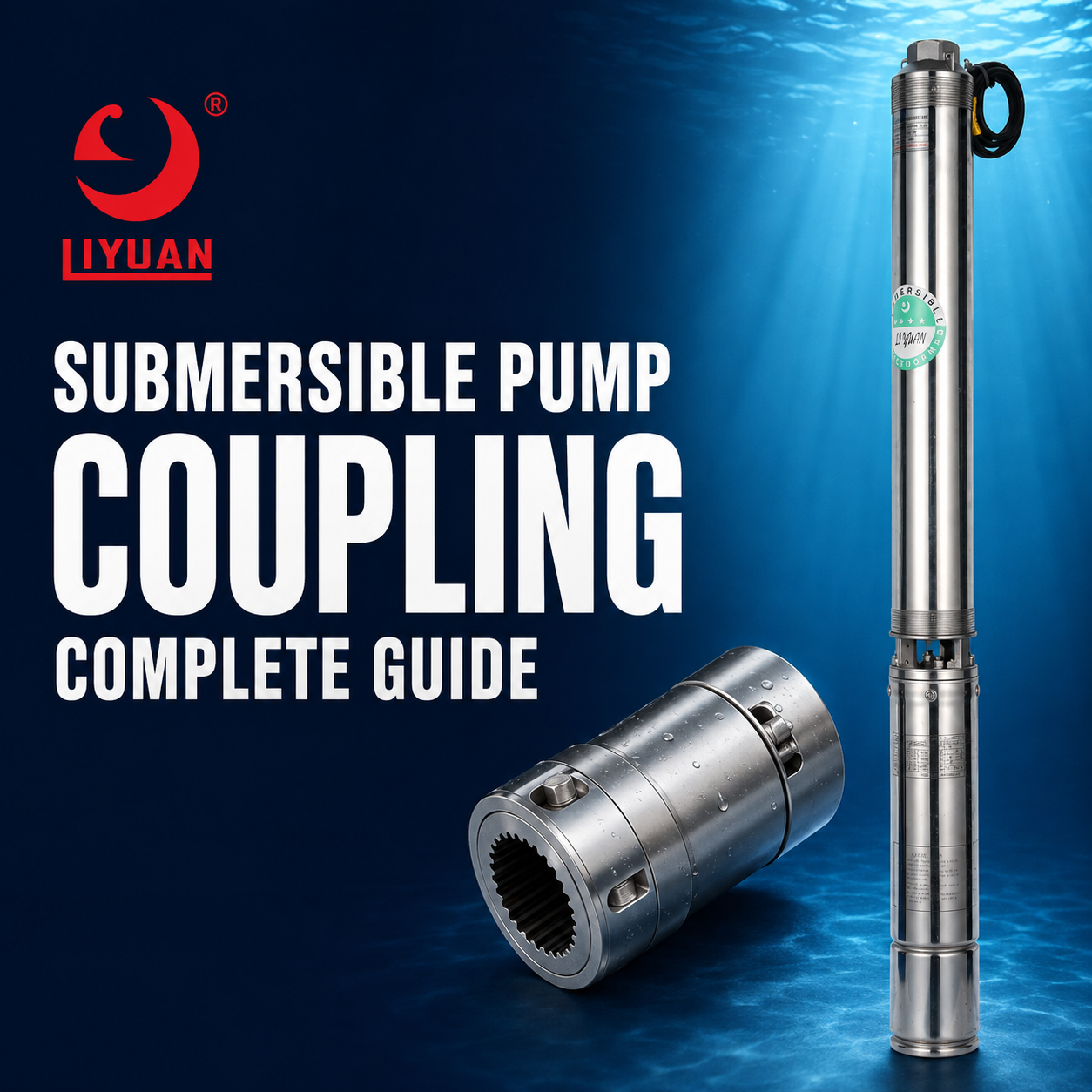
Submersible Pump Coupling: Complete Guide
A Submersible Pump Coupling Connects The Motor Shaft To The Pump Shaft And Transfers The Torque Required To Rotate Every Impeller. Correct Spline Fit, Material, Alignment, Axial Clearance, And Mounting Accuracy Are Essential For Reliable Operation.
A Worn, Loose, Corroded, Or Incorrect Coupling Can Cause Vibration, Noise, Spline Damage, Impeller Instability, Reduced Water Output, And Complete Loss Of Torque Transfer.
The Coupling Must Match The Pump, Motor, Shaft Dimensions, Rotational Speed, Power, Thrust Rating, And installation environment.
What Is A Submersible Pump Coupling?
A Submersible Pump Coupling Is A Mechanical Connector Installed Between The Submersible Motor And The Pump Hydraulic section.
The Motor Shaft Rotates The Coupling. The Coupling Then Rotates The Pump Shaft And impellers.
The Main Functions Include:
- Transferring Motor Torque
- Connecting The Pump And Motor Shafts
- Maintaining Rotational Alignment
- Distributing Load Across Shaft Contact Surfaces
- Supporting Reliable Starting
- Allowing Pump And Motor Separation During Maintenance
The Coupling Usually Operates Inside The Pump’s Motor-Connection bracket.
How Does A Submersible Pump Coupling Work?
The Motor Produces Torque When Electrical Power Energizes The windings.
The Motor Shaft Rotates. Its Shaft End Engages With One Side Of The coupling.
The Pump Shaft Engages With The Other side. Therefore, The Coupling Transfers Rotation From The Motor To The hydraulic stages.
The Complete Process Includes:
- The Motor Rotor Begins To Turn.
- The Motor Shaft Rotates The Coupling.
- The Coupling Transfers Torque To The Pump Shaft.
- The Pump Shaft Rotates Every Impeller.
- The Impellers Produce Flow And Pressure.
The Coupling Must Transfer Torque Without Slipping, twisting excessively, or damaging either shaft.
Pump Coupling Vs Surface Pump Coupling
A Deep-Well Pump Coupling Differs From A Typical Surface-Pump flexible coupling.
Submersible Pump Coupling
A Deep-Well Coupling Is Usually:
- Short
- Rigid
- Compact
- Splined Or Keyed
- Installed Inside A Motor Bracket
- Surrounded By Water
- Aligned By The Pump And Motor Flanges
Surface Pump Coupling
A Surface-Pump Coupling May Be:
- Flexible
- Externally Accessible
- Installed Between Separate Base-Mounted Machines
- Designed To Compensate For Limited Misalignment
- Protected By A Coupling Guard
A Submersible Pump’s Rigid Coupling Cannot Compensate For Major misalignment.
Main Parts Of The Pump-To-Motor Connection
The Complete Connection Includes More Than The coupling.
Important Parts Include:
- Motor Shaft End
- Pump Shaft End
- Coupling Sleeve
- Pump Motor Bracket
- Motor Mounting Flange
- Mounting Studs Or Bolts
- Retaining Components
- Shaft-Support Bearing
- Cable Guard
Every Component Must Share The Correct dimensions and alignment.
What Is A Splined Coupling?
A Splined Coupling Has Internal Teeth That Engage With Matching external shaft splines.
Instead Of Transferring Torque Through One Key, The Coupling Distributes Load Across multiple teeth.
Advantages Include:
- High Contact Area
- Compact Construction
- Positive Torque Transfer
- Accurate Shaft Centering
- Easy Pump And Motor Assembly
- Good High-Speed Performance
Franklin Electric States That Its 8×6-Inch Encapsulated Submersible Motor Uses A Splined Shaft For Maximum Shaft-And-Coupling Contact.
Other Coupling Designs
Hex-Shaft Coupling
A Hexagonal Pump Shaft Can Engage With A Shaped coupling insert.
This Design Is Common In Certain 4-Inch Pump hydraulic assemblies.
It Provides:
- Positive Torque Transfer
- Simple Manufacturing
- Convenient Stage Assembly
- Compact Dimensions
Keyed Coupling
A Key Fits Into Matching Slots In The Shaft And coupling.
Keyed Connections Are Common In Larger Industrial pumps.
The Key Transfers Torque While The Coupling Bore Supports alignment.
Threaded Coupling
A Threaded Connection Can Join Shaft components.
Rotation Direction And Starting Torque Must Not Loosen The threads.
Pin Coupling
A Pin Passes Through The Shaft And coupling.
This Design Requires Accurate Hole Alignment And sufficient pin strength.
Rigid Sleeve Coupling
A Rigid Sleeve Fits Over Two Shaft ends.
It Can Use Splines, Keys, Pins, Or set screws to transfer torque.
What Does NEMA Compatibility Mean?
Many Submersible Motors And Pumps Use Standardized Mounting dimensions.
A NEMA-Compatible Interface Can Define:
- Motor-Flange Dimensions
- Mounting-Hole Positions
- Pilot Diameter
- Shaft Position
- Shaft-End Dimensions
- Pump-To-Motor Connection Geometry
Standardized Dimensions Allow Compatible Pumps And Motors From Different manufacturers to be connected.
However, Physical Fit Does Not Confirm Complete application compatibility.
The Installer Must Also Verify:
- Motor Power
- Voltage
- Frequency
- Phase
- Rotational Speed
- Thrust Capacity
- Water Temperature
- Cooling Requirements
- Rotation Direction
- Installation Orientation
- Service Factor
A Pump Can Physically Fit A Motor But Still overload it.
Four-Inch Pump Couplings
Four-Inch Deep-Well Pumps Are Common In Residential, Agricultural, And light commercial wells.
A Typical Connection May Include:
- NEMA-Standard Motor Mount
- Splined Motor Shaft
- Hexagonal Or Round Pump Shaft
- Stainless Steel Coupling
- Four Mounting Studs
The 4 Inch Submersible Motor Guide Explains Common Motor Applications And selection requirements.
Always Compare Actual Drawings Before Combining Products From Different manufacturers.
Six-Inch And Larger Couplings
Larger Pumps Transfer More torque and often operate with greater thrust.
Their Connections May Use:
- Larger-Diameter Splines
- Double-Flange Mounting
- Hardened Stainless Steel Components
- Larger Motor Adapters
- Higher-Capacity Thrust Bearings
- More Mounting Bolts
- Stronger Pump Shafts
Read The 6 Inch Submersible Motor Guide For Medium And Large Water-Supply systems.
How The Coupling Transfers Torque
Torque Is The Rotational Force Required To Turn The pump shaft.
Required Torque Depends On:
- Motor Power
- Rotational Speed
- Pump Flow
- Pump Head
- Number Of Stages
- Starting Method
- Hydraulic Resistance
- Impeller Condition
- Water Density
- Pump Mechanical Condition
A High-Power, Low-Speed Motor Generally Produces More Torque Than A Lower-Power Motor At The Same operating condition.
The Coupling Must Handle Both Normal Running Torque And short-duration starting torque.
Coupling Contact Area
Spline Or Key Contact Area Distributes torque between the shaft and coupling.
Insufficient Contact Can Concentrate Stress In A Small area.
Possible Causes Include:
- Incorrect Spline Profile
- Partial Shaft Engagement
- Worn Teeth
- Incorrect Coupling Length
- Manufacturing Errors
- Shaft Not Fully Seated
- Corrosion Or Debris
Full, Correct Engagement Helps Reduce local stress and wear.
Coupling Material Selection
The Coupling Requires Strength, Corrosion Resistance, Wear Resistance, And dimensional stability.
AISI 304 Stainless Steel
304 Provides Good Corrosion Resistance In Many clean-water applications.
AISI 316 Stainless Steel
316 Provides Improved Resistance To Chlorides And Certain chemicals.
17-4 PH Stainless Steel
17-4 PH Stainless Steel Provides High Strength And Good corrosion resistance.
It Can Be Used For Higher-Torque Shaft And coupling applications.
Hardened Alloy Steel
Hardened Alloy Steel Provides High Mechanical strength.
However, It Requires Suitable Corrosion protection in underwater environments.
Bronze
Bronze Can Provide Good Corrosion And bearing characteristics in certain water applications.
The Coupling Material Must Also Be Compatible With Both shaft materials.
Galvanic Corrosion At The Coupling
Different Metals Can Create Galvanic Corrosion When Connected In conductive water.
Important Contact Points Include:
- Motor Shaft To Coupling
- Coupling To Pump Shaft
- Coupling To Retaining Hardware
- Motor Bracket To Pump Housing
Water Chemistry Can Increase Corrosion risk.
Factors Include:
- Chloride Concentration
- Salinity
- PH
- Temperature
- Dissolved Oxygen
- Metal Potential Difference
The Stainless Steel Deep Well Pump: Complete Guide Provides Additional Material Selection information.
Coupling Alignment
The Motor Shaft And Pump Shaft Must Share The Same centerline.
Misalignment Can Be:
- Angular
- Parallel
- Axial
- A Combination Of Multiple Conditions
KSB Explains In Its Coupling Alignment Guide That Correct Shaft-Centerline Alignment And Axial Distance Are Essential For Reliable mechanical operation.
In A Submersible Pump, The Motor Flange And Pump Bracket Control most alignment. Therefore, Machining Accuracy And Clean Mounting Surfaces Are critical.
What Causes Coupling Misalignment?
Possible Causes Include:
- Bent Pump Shaft
- Bent Motor Shaft
- Damaged Motor Bracket
- Incorrect Motor Adapter
- Dirt Between Mounting Surfaces
- Uneven Bolt Tightening
- Worn Radial Bearings
- Incorrect Coupling Dimensions
- Transportation Damage
- Corrosion On The Pilot Surface
- Pump And Motor From Incompatible Standards
A Coupling Should Never Be Used To Force Two Misaligned shafts together.
Axial Clearance And Shaft Position
Axial Clearance Is The Available Movement Along The shaft direction.
The Pump And Motor Must Have The Correct axial relationship after assembly.
Insufficient Clearance Can Cause:
- Shaft Bottoming
- Impeller Rubbing
- Continuous Thrust Load
- Bearing Overheating
- High Motor Current
Excessive Clearance Can Cause:
- Impact Loading
- Coupling Movement
- Impeller Instability
- Spline Wear
- Starting Noise
The Required Clearance Depends On Pump And motor design. Follow The Manufacturer’s Specification.
Does The Coupling Carry Thrust?
The Coupling Transfers Torque. It Also Maintains The Intended Connection Between The Pump And Motor shafts.
In Many Deep-Well Designs, Hydraulic Axial Load Travels Through The Pump Shaft And Motor Shaft To The motor thrust bearing.
The Coupling Must Transfer Or Accommodate This Load According To The system design.
It Should Not Create An Unintended Axial preload.
The Submersible Motor Thrust Bearing: Complete Guide Explains How The Motor Supports Pump Upthrust And downthrust.
Coupling Performance In High-Head Pumps
High-Head Pumps Often Use Many stages.
The Coupling Must Handle:
- Motor Starting Torque
- Long Pump Shafts
- Significant Axial Thrust
- Higher System Pressure
- Stage Friction
- Frequent Pressure Changes
Incorrect Pump Assembly Can Increase The Required torque beyond the normal design value.
A High Head Submersible Pump Requires Correct Pump, Motor, Coupling, And thrust-bearing matching.
Coupling Performance In High-Flow Pumps
High-Flow Pumps Often Require Larger impellers and higher motor power.
This Increases:
- Running Torque
- Starting Torque
- Coupling Contact Stress
- Shaft Load
- Bearing Load
- Motor Current
A High Flow Deep Well Pump Should Use A Coupling Rated For The Complete motor power and hydraulic duty.
How Sand Affects The Coupling
The Pump-To-Motor Coupling Operates In An Underwater environment.
Sand Can Enter Open Connection Areas And Cause:
- Abrasive Wear
- Spline Damage
- Restricted Axial Movement
- Coupling Binding
- Shaft Grooves
- Corrosion Acceleration
- Difficult Disassembly
A Suitable Motor Bracket, Sand Protection, And Correct Pump Installation Can Reduce exposure.
The Sand Resistant Submersible Pump: Complete Guide Explains Additional Abrasion-Protection methods.
Fretting Wear
Fretting Occurs When Two Contacting Surfaces Experience Very Small repeated movements.
At A Coupling, Fretting Can Affect:
- Splines
- Keys
- Shaft Flats
- Coupling Bores
Possible Causes Include:
- Loose Fit
- Misalignment
- Vibration
- Incomplete Engagement
- Repeated Starting
- Torque Reversal
Fretting Can Produce Fine Metal particles, surface pitting, and increased clearance.
Coupling Backlash
Backlash Is The Rotational Movement Available Before The Coupling Fully engages the shaft.
A Small Designed Clearance May Be Necessary For assembly. However, Excessive Backlash Can Create Impact loading.
Possible Symptoms Include:
- Clicking During Starting
- Rattling
- Spline Wear
- Torque Shock
- Unstable Rotation
- Metal Debris
A Severely Worn Coupling Should Be replaced with matching shaft components.
Common Causes Of Coupling Failure
Incorrect Coupling Size
The Coupling Does Not Match The Shaft Diameter Or spline profile.
Partial Shaft Engagement
The Shaft Does Not Enter Far Enough Into The coupling.
Misalignment
The Motor And Pump Shaft Centerlines Do Not match.
Excessive Torque
A Locked Or Overloaded Pump Exceeds The Coupling strength.
Corrosion
Water Chemistry Attacks The Coupling And shaft surfaces.
Worn Bearings
Shaft Movement Creates Cyclic Coupling loads.
Reverse Rotation
Backflow Rotates The Pump Backward Before Restarting.
Frequent Starting
Repeated Torque Shocks Accelerate spline wear.
Dry Running
Pump Components Heat, Rub, Or Lock, Increasing coupling torque.
Incorrect Assembly
Debris, Uneven Bolts, Or Forced Installation Damages The connection.
Coupling Failure From A Locked Pump
A Pump Can Lock Because Of:
- Sand
- Mineral Scale
- Broken Impeller
- Damaged Diffuser
- Melted Plastic Components
- Bearing Seizure
- Foreign Objects
- Bent Shaft
When The Motor Starts Against A Locked pump, starting torque acts directly on the coupling.
Possible Results Include:
- Stripped Splines
- Broken Coupling
- Twisted Shaft
- Motor Overload Trip
- Burned Winding
Never Repeatedly Restart A Motor That Cannot Rotate freely.
Coupling Damage From Reverse Rotation
A Leaking Check Valve Can Allow Water To Flow Back Through The pump.
This Can Rotate The Pump Shaft Backward.
If The Motor Restarts During Reverse Rotation, The Coupling May Experience sudden torque reversal.
This Can Damage:
- Splines
- Keys
- Pump Shaft
- Motor Shaft
- Retaining Components
- Thrust Bearing
The Check Valve Should Be Inspected When Couplings Show repeated impact damage.
VFD Starting And Coupling Load
A Variable-Frequency Drive Can Reduce Starting shock by accelerating the motor gradually.
However, Incorrect VFD Settings Can Still Damage The coupling.
Potential Problems Include:
- Excessively Fast Acceleration
- Sudden Direction Changes
- Operation Above Rated Speed
- Resonant Vibration
- Incorrect Minimum Frequency
- Repeated Automatic Restarts
The VFD Settings Must Match The Pump, Motor, And coupling limitations.
Hot-Water Coupling Applications
Hot Water Changes Material dimensions and can affect clearances.
A High-Temperature Application May Require:
- Heat-Resistant Coupling Material
- Corrosion-Resistant Stainless Steel
- Correct Thermal Expansion Allowance
- Suitable Shaft Materials
- Heat-Resistant Bearings
- High-Temperature Motor
- Manufacturer-Approved Clearances
Use The Hot Water Submersible Pump: Complete Selection Guide For High-Temperature system selection.
Signs Of Coupling Problems
Common Warning Signs Include:
- Motor Runs But No Water Is Pumped.
- Motor Current Appears Unusually Low.
- Clicking Occurs During Starting.
- Pump Produces Intermittent Flow.
- Abnormal Vibration Develops.
- Metal Particles Appear Near The Connection.
- Coupling Splines Show Polishing Or Wear.
- Pump Shaft Can Rotate Without The Motor Shaft.
- The Coupling Is Difficult To Remove.
- Repeated Shaft Or Bearing Failures Occur.
A Motor That Runs Without Producing Water Can Also Indicate Low Water Level, Broken Pump Shaft, Closed Valve, Or damaged impellers.
How To Inspect A Pump Coupling
A Qualified Technician Should Inspect The Coupling When The Pump Is removed.
A Typical Inspection Includes:
- Disconnect And Lock Out The Power Supply.
- Remove The Pump From The Well.
- Clean The Pump And Motor Exterior.
- Separate The Pump From The Motor.
- Inspect Both Shaft Ends.
- Clean The Coupling.
- Check Spline And Key Profiles.
- Measure Coupling And Shaft Dimensions.
- Inspect For Cracks And Corrosion.
- Check Coupling Engagement Depth.
- Measure Shaft Runout.
- Inspect The Motor Bracket And Flange.
- Replace Worn Components.
- Reassemble Without Force.
- Verify Free Rotation.
- Complete Electrical And Hydraulic Tests.
Do Not Reuse A Coupling With Deep Wear, Cracks, Or distorted splines.
How To Install A Submersible Pump Coupling
A Typical Installation Process Includes:
- Confirm Pump And Motor Compatibility.
- Verify The Motor Power And Thrust Rating.
- Inspect The Pump And Motor Shafts.
- Clean Splines And Mounting Surfaces.
- Install The Correct Coupling.
- Confirm Full Shaft Engagement.
- Check Required Axial Clearance.
- Align The Pump Bracket With The Motor Flange.
- Install All Mounting Hardware.
- Tighten Bolts Evenly In A Cross Pattern.
- Confirm The Pump And Motor Are Fully Seated.
- Rotate The Shaft According To Manufacturer Instructions.
- Check For Binding Or Noise.
- Install The Cable Guard.
- Complete Final Testing.
Never Hammer The Coupling Onto The shaft. Impact Can Damage The Shaft, Bearings, Splines, And thrust surfaces.
When Should A Coupling Be Replaced?
Replace The Coupling When It Has:
- Cracks
- Corrosion Pits
- Worn Splines
- Excessive Backlash
- Distorted Bore
- Heat Discoloration
- Damaged Keyway
- Loose Shaft Fit
- Incomplete Engagement
- Previous Torque Failure
If The Coupling Is Worn, Inspect Both Shafts. A New Coupling Cannot Correct Severely damaged shaft splines.
Can A Coupling Be Repaired?
Minor Surface Cleaning May Be acceptable. However, Precision Torque-Transfer Surfaces Should Not Be Rebuilt Without Manufacturer approval.
Welding, Grinding, Or Filling Worn Splines Can Change:
- Material Strength
- Hardness
- Concentricity
- Spline Geometry
- Balance
- Corrosion Resistance
Replacement Is Usually Safer And More Economical For Small submersible pump couplings.
How To Prevent Coupling Failure
Use The Following Practices:
- Match The Pump And Motor Interface.
- Use The Correct Spline Profile.
- Confirm Full Engagement.
- Maintain Correct Axial Clearance.
- Keep Mounting Surfaces Clean.
- Tighten Bolts Evenly.
- Avoid Dry Running.
- Control Sand.
- Maintain Bearings.
- Inspect The Check Valve.
- Limit Frequent Starting.
- Configure The VFD Correctly.
- Never Force Pump-To-Motor Assembly.
- Inspect The Coupling During Pump Service.
The Electric Submersible Pump Maintenance Guide Provides Additional Maintenance recommendations.
Information Required For Coupling Selection
Provide The Supplier With:
- Pump Brand And Model
- Motor Brand And Model
- Pump Diameter
- Motor Diameter
- Motor Power
- Rotational Speed
- Motor Shaft Dimensions
- Pump Shaft Dimensions
- Spline Profile
- Coupling Length
- Mounting Standard
- Number Of Stages
- Installation Depth
- Water Temperature
- Water Chemistry
- Sand Content
A Similar-Looking Coupling May Not Have The Correct spline geometry or torque capacity.
Why Choose Liyuan Pump?
Liyuan Pump Has Manufactured Deep-Well Submersible Pumps And Motors Since 1992.
Our Product Range Includes 3-Inch To 10-Inch Submersible Pumps, Submersible Motors, Solar Pump Systems, Control Equipment, And Customized Water-Pumping solutions.
Liyuan Pump Can Help Customers Evaluate:
- Pump And Motor Compatibility
- Coupling Dimensions
- Spline Profiles
- Shaft Materials
- Torque Requirements
- Axial Clearance
- Motor Thrust Capacity
- Sand-Resistant Components
- High-Temperature Applications
- OEM And Customized Production
For Complete Project Support, Contact A Professional Submersible Motor Manufacturer In China.
Frequently Asked Questions
What Does A Submersible Pump Coupling Do?
It Connects The Motor Shaft To The Pump Shaft And transfers motor torque.
Are All Submersible Pump Couplings Universal?
No. Shaft Diameter, Spline Profile, Length, Mounting Standard, And torque capacity can differ.
What Is A Splined Coupling?
It Is A Coupling With Internal Teeth That Engage Matching shaft splines.
Does NEMA Compatibility Guarantee Pump And Motor Compatibility?
No. It Mainly Confirms Certain Physical Dimensions. Power, Thrust, Speed, Cooling, Voltage, And temperature must also match.
Can A Worn Coupling Cause No Water Output?
Yes. The Motor May Run While A Stripped Coupling Fails To rotate the pump shaft.
Why Does A Coupling Make A Clicking Noise?
Possible Causes Include Backlash, Worn Splines, Partial Engagement, Reverse Rotation, Or misalignment.
Can Sand Damage A Coupling?
Yes. Sand Can Abrade Splines, Restrict Movement, And accelerate corrosion.
Can I Hammer The Coupling Onto The Shaft?
No. Impact Can Damage The Shaft, Coupling, Bearings, And thrust components.
Should I Lubricate The Coupling?
Follow The Pump Manufacturer’s Instructions. Use Only A Material Approved For The Water, Coupling, And potable-water requirements.
Can I Reuse An Old Coupling?
Reuse It Only If Inspection Confirms Correct Dimensions, No Cracks, Minimal Wear, And proper shaft fit.
Should The Coupling Carry Axial Thrust?
That Depends On The Pump And Motor Design. The Coupling Must Maintain The Manufacturer’s intended axial load path.
How Do I Check Coupling Alignment?
Inspect Shaft Runout, Flange Condition, Bracket Concentricity, Shaft Engagement, And axial clearance according to manufacturer tolerances.
Conclusion
A Submersible Pump Coupling Transfers Motor Torque To The Pump Shaft And Maintains The Connection Between The Motor And hydraulic assembly.
Correct Spline Fit, Material Strength, Alignment, Engagement Depth, And Axial Clearance Help Prevent Vibration, Shaft Wear, Stripped Splines, And loss of water output.
Matching The Complete Pump And Motor System Is Essential. Physical Fit Alone Does Not Guarantee Reliable deep-well operation.
Email:Liyuan@liyuan-pump.com
WhatsApp:+86 181-2828-2767