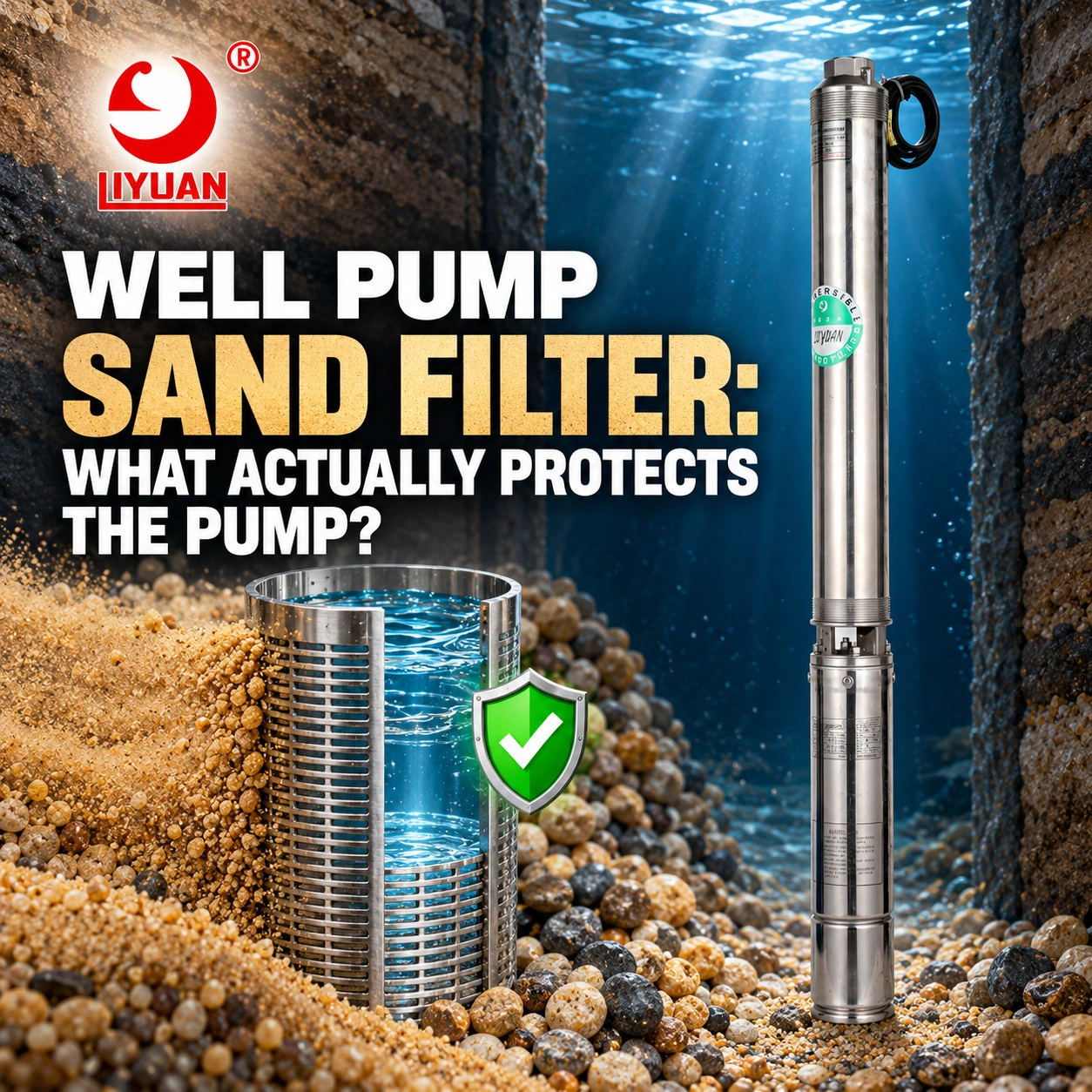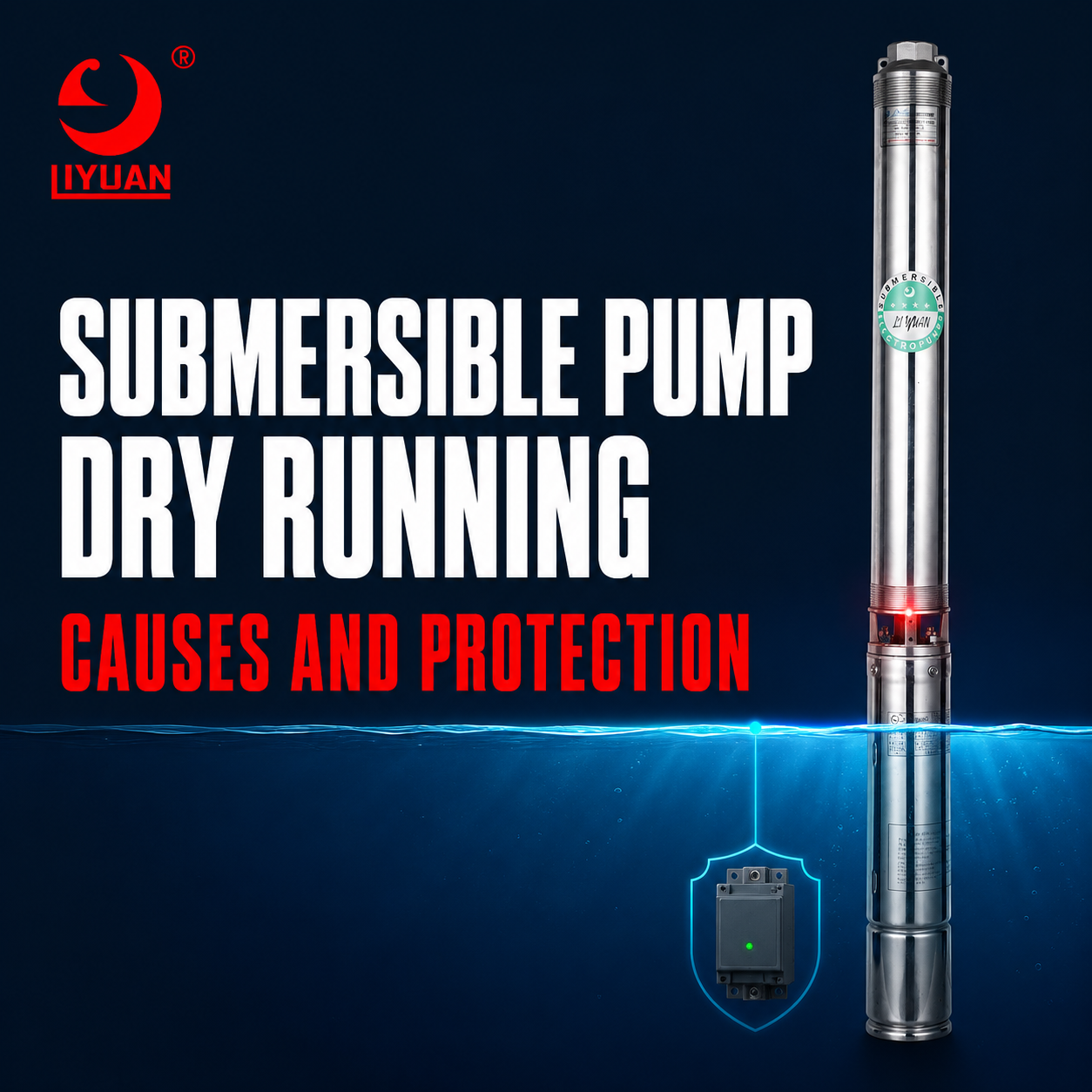
What Is Submersible Pump Dry Running?
Submersible Pump Dry Running Occurs When A Pump Operates Without Enough Water To Cool, Lubricate, And Load Its Hydraulic Components.
Dry Running Can Overheat The Motor, Damage Water-Lubricated Bearings, Wear Impellers, Destroy Seals, And Cause Complete Pump Failure.
The Best Protection Combines Correct Pump Sizing With Reliable Water-Level Detection, Underpower Monitoring, Automatic Shutdown, And A Controlled Well-Recovery Delay.
An Ordinary Motor Overload Relay May Not Detect Dry Running. Motor Current Often Decreases When The Pump Loses Water. Therefore, The Pump Can Continue Running Without Triggering A Conventional Overload Device.
Operators Should Never Assume That A Submersible Pump Cannot Run Dry Simply Because It Sits Inside A Well.
Can A Submersible Pump Really Run Dry?
Yes. A Submersible Pump Can Run Dry When The Water Level Falls Below The Pump Inlet.
This Condition Usually Develops When The Pump Removes Water Faster Than The Well Can Recover.
A Pump Can Also Experience Partial Dry Running. In This Condition, Some Water Remains Around The Pump, But The Available Flow Cannot Provide Sufficient Hydraulic Loading Or Motor Cooling.
Partial Dry Running Can Be Difficult To Detect. The Pump May Continue Producing A Small Flow While Its Temperature, vibration, And Internal Wear Increase.
According To Grundfos, Overpumping A Well Can Lower The Water Level To The Pump Intake. The Result Can Damage The Pump, Motor, And Mechanical Components.
Why Does A Submersible Pump Need Water?
Water Performs Several Essential Functions Inside A Deep Well Pumping System.
Water Provides Motor Cooling
Most Submersible Motors Depend On Water Flow Across The Motor Housing To Remove Heat.
The Motor Converts Electrical Energy Into Mechanical Power. Electrical Resistance, Magnetic Losses, Bearings, And Hydraulic loading Generate Heat.
Without Sufficient Water Movement, The Motor Temperature Can Rise Rapidly.
A Large Well Casing, Tank, Pond, Or Reservoir May Not Produce Enough Natural Flow Across The Motor. In These Installations, A Cooling Sleeve May Be Required.
Learn More About Heat Removal In The Submersible Motor Cooling System: Complete Guide.
Water Lubricates Pump Bearings
Many Multistage Deep Well Pumps Use Water-Lubricated Radial Bearings.
A Stable Water Film Reduces Direct Contact Between Rotating And Stationary Surfaces.
When Water Disappears, Friction And Temperature Increase. The Bearing Material Can Wear, deform, Or Seize.
Water Loads The Impellers
A Centrifugal Impeller Requires Water To Create Hydraulic Resistance.
When The Pump Loses Water, Hydraulic Load Falls. The Motor May accelerate Slightly Or Operate At A Lower Current.
The Impellers Can Also rub Against Diffusers Or Wear Components if Internal clearances Change Because Of Heat.
Water Cools Hydraulic Components
Water Carries Heat Away From Impellers, Diffusers, Bearings, Bushings, And Pump casings.
Without Water, Friction And Internal heat Remain Concentrated Inside The Pump.
Water Protects Sealing Components
Some Submersible Pump Designs Use Mechanical Seals Or Other Water-Dependent sealing Arrangements.
Dry Friction Can Damage Seal Faces Within A Short period.
The Exact Damage Depends On Pump Design, Motor Type, Materials, And Dry-Running Duration.
Main Causes Of Submersible Pump Dry Running
Pump Capacity Exceeds Well Yield
Every Well Has A Maximum Sustainable Water Production rate.
If The Pump Delivers More Water Than The Aquifer Can Replace, The Dynamic Water Level Continues To Fall.
Eventually, The Level Can Reach The Pump Inlet.
The Pump Should Match The Well’s Tested Yield, Not Only The Customer’s Maximum Water demand.
Use The Submersible Pump Flow Rate: Complete Sizing Guide To Compare Pump Capacity With System Requirements.
Seasonal Water-Level Changes
Groundwater Levels Can Change During Droughts, Irrigation Seasons, Or Periods Of Heavy Community demand.
A Pump Installed Safely Below The Water Level During A Wet Season May Lose Submergence Later.
Therefore, Installation Depth Should Consider The Lowest Expected Dynamic Water level.
Incorrect Pump Installation Depth
A Pump Installed Too Close To The Normal Water Level Has Limited Protection Against Drawdown.
However, Simply Lowering The Pump To The Well Bottom Is Not Always Correct. The Pump Requires Clearance From Sediment, Debris, And Well-bottom deposits.
The Final Depth Should Balance:
- Minimum Dynamic Water Level
- Required Pump Submergence
- Well Depth
- Pump Length
- Sediment Conditions
- Motor Cooling Requirements
- Cable And Riser Pipe Length
- Manufacturer Instructions
Blocked Well Screen
Mineral Deposits, Corrosion, Sand, Clay, Or Biological Growth Can Restrict The Well screen.
The Well May Then Recover More Slowly Than It Did During Initial testing.
A Falling Flow Rate And Increasing Drawdown Can Indicate Well deterioration.
Clogged Pump Inlet
Debris, Scale, Plants, Plastic, Sand, Or Other Material Can Block The Pump inlet.
A Restricted Inlet Reduces Water Delivery And Cooling.
The Pump May Remain Submerged While Receiving too Little Water For Safe operation.
Failed Level Sensor
A Damaged Probe, Float Switch, Pressure Transmitter, Or Control Cable May Send An Incorrect Water-Level signal.
The Controller May Continue Running The Pump Even After The Level Falls Below The Safe limit.
Sensor Maintenance Should Form Part Of The Pump’s Preventive Maintenance program.
Incorrect Controller Settings
A Dry-Run Relay Requires Correct Current, Power, delay, And Restart settings.
A Threshold Set Too Low May Fail To Stop The Pump.
A Threshold Set Too High May Cause Nuisance Trips During Normal pressure Or Flow changes.
Commissioning Data Should Establish The Normal Operating range.
Pressure Tank Problems
A Failed Pressure Tank Can Cause Frequent Starting And stopping.
Although Short Cycling Does Not Directly Mean Dry Running, It Can Increase demand On A Weak Well And Reduce Recovery time.
An Incorrectly Sized Tank Can Also Make Control behavior Unstable.
Review The Submersible Pump Pressure Tank: Complete Sizing Guide For Proper Tank Selection.
Leaking Delivery System
A Broken Pipe, Open Valve, Failed Irrigation line, Or Large Undetected Leak Can Make The Pump Run Continuously.
Continuous Operation May Lower The Well Water level Faster Than Expected.
A Flow Sensor Or Runtime Alarm Can Help Identify Abnormal demand.
Incorrect Variable Frequency Drive Programming
A Variable Frequency Drive Can Increase Pump Speed To Maintain pressure.
If Demand Becomes Excessive, The Drive May Raise Speed While The Well Level continues Falling.
The Control System Should include Maximum Speed, Minimum Water Level, Underload, And Restart limits.
Read The Variable Frequency Drive For Submersible Pump: Complete Guide Before Setting Protection Parameters.
What Damage Does Dry Running Cause?
Motor Overheating
Insufficient Water Flow Reduces Heat transfer From The Motor Housing.
Excessive Temperature Damages Winding insulation. It Can Also Reduce Lubricant Life And Change Internal component clearances.
Repeated Moderate Overheating Can Be As Harmful As One Severe event.
Winding Insulation Failure
High Temperature Accelerates Insulation aging.
Once Insulation Breaks Down, The Motor May Develop A Phase-To-Phase, Phase-To-Ground, Or Turn-To-Turn fault.
A Rewindable Motor May Be Repairable. However, The Operator Must Correct The Dry-Running Cause Before Reinstallation.
Bearing Damage
Dry Operation Can Remove The Water Film From Pump bearings.
The Bearings May Develop Scoring, Excessive clearance, Melting, Or Seizure.
Bearing Damage Can Then Increase Shaft movement And Impeller contact.
Impeller And Diffuser Wear
Heat Can Expand Hydraulic components And Reduce Internal clearances.
The Impeller May Rub Against The Diffuser Or Wear ring. Plastic Or Composite components May distort.
Metal Components May Show Abrasion, discoloration, Or Cracking.
Use The Submersible Pump Impeller: Complete Guide To Identify Common Impeller Damage.
Seal Failure
Dry Seal Faces Create Friction And heat.
The Faces Can Crack, glaze, Warp, Or Lose Their polished contact surface.
A Failed Seal Can Allow Water To Enter The Motor Or Motor fluid To Escape.
Shaft And Coupling Stress
Unstable Hydraulic conditions Can Produce Vibration And Uneven loading.
Damaged Bearings May Allow Additional shaft movement. This Movement Can Stress The Coupling And Rotating assembly.
Reduced Service Life
A Pump May Continue Operating After A Short Dry-Running event.
However, Heat And Friction May Have already weakened Bearings, seals, And Winding insulation.
The Failure Can Appear Days Or Months Later.
Common Signs Of Dry Running
Low Or Zero Water Flow
A Sudden Loss Of Flow Provides The Clearest warning.
However, A Broken Pipe, Closed Valve, Blocked Inlet, Or Failed Check Valve Can Create Similar symptoms.
Falling Discharge Pressure
When The Pump Loses Water, It Cannot Maintain Normal pressure.
A Dedicated Low-Pressure cutoff Can Stop The Pump After An Adjustable delay.
An Ordinary Pressure Switch Usually Starts The Pump When pressure Falls. Therefore, A Standard Pressure Switch Alone Cannot Provide Complete Dry-Run protection.
Read The Submersible Pump Pressure Switch: Complete Guide Before Designing The Control Circuit.
Lower Motor Current Or Power
A Pump Moving Air Or Very Little Water usually Requires Less Hydraulic power.
Consequently, Current Or Real Power May fall Below The Normal operating range.
This Behavior Allows An Underload Or Underpower relay To Detect Water shortage.
Unstable Current
A Pump Alternating Between Water And Air May Produce Fluctuating current.
The Controller May Record Repeated Underload events.
Unusual Noise Or Vibration
Partial Water Loss Can Create Gurgling, surging, Vibration, Or Hydraulic instability.
These Symptoms May Also Indicate Cavitation, Air entrainment, Worn Bearings, Or Impeller damage.
High Motor Temperature
Temperature Sensors Can Detect Abnormal motor heating.
However, Temperature Protection may react Later Than A Properly configured water-level Or Underpower system.
Continuous Operation
A Pump That Normally Runs For Short periods But Suddenly Operates Continuously May Have Lost pressure Or flow.
Continuous Runtime Alarms Can Provide Early warning.
Repeated Automatic Restarts
Frequent Dry-Run Trips And Restarts Indicate That The Well Cannot recover Fast Enough Or That The Settings Are incorrect.
Do Not Ignore Repeated Trips. Every restart Can Add Heat And Mechanical stress.
Why An Overload Relay May Not Stop Dry Running
An Overload Relay Protects A Motor From Excessive current.
Dry Running Often Reduces Pump load. Therefore, Motor Current May Fall Instead Of rise.
The Motor Can Overheat From Insufficient external cooling While Current Remains Below The overload threshold.
For This Reason, A Complete Protection system Should Include Both:
- Overcurrent Protection
- Undercurrent Or Underpower Protection
The Submersible Pump Overload Protection: Complete Guide Explains How Motor Overload Devices Work.
Best Dry-Running Protection Methods
Water-Level Probes
Level Probes Detect Water Directly inside The Well.
A Low-Level probe Stops The Pump Before Water Reaches The inlet.
A Higher Restart probe Allows The Well To recover Before The Next start.
Probe placement Should Maintain The Manufacturer’s Minimum submergence And Motor cooling requirements.
Conductivity probes Depend On Water conductivity. Very Pure Water May Require A Different sensing method.
Float Switches
Float Switches Work Well In Tanks, sumps, Reservoirs, And Wide wells.
A Falling Float Opens Or closes The Control circuit At A Predetermined level.
Narrow Boreholes May Not Provide Enough Space For Reliable float movement.
Underload Or Undercurrent Relay
An Underload relay Monitors Motor current.
When Current Falls Below The Configured limit For A Set time, The Relay Stops The pump.
This Method Does Not Require A Sensor cable Inside The well.
However, Current thresholds Can Change With Voltage, flow, head, And Motor loading.
Underpower Protection
Underpower Protection Measures Real Motor input Power.
Power-Based Detection Can Provide More Stable results Than Current-only detection In Some Applications.
For Example, Franklin Water Lists Underpower-Based Dry-Pump Detection And Timed Well-Recovery Restart Among Its Motor Protection Functions.
Every Controller Requires Correct Commissioning. Settings From One Pump Should Not Be Copied Automatically To Another model.
Low-Pressure Cutoff
A Low-Pressure sensor Can Stop The Pump When pressure Remains Below A Safe limit.
The Controller Should include A Starting delay Because pressure Naturally remains Low For A Short period During Startup.
Low Pressure Can Also indicate A Burst Pipe Or Open outlet. Therefore, The Alarm Helps Protect Both The Pump And Delivery system.
Flow Switch Or Flow Meter
A Flow Device Can Detect Insufficient water delivery.
A Flow Meter Provides More information Than A Simple switch. It Can identify Gradual Performance decline, leakage, And well deterioration.
Flow Protection Needs A Delay To Prevent False trips During startup And valve changes.
Motor Temperature Protection
Temperature Sensors Monitor Motor heat Directly.
Common Sensor types Include Thermistors, resistance temperature detectors, And thermal switches.
Temperature Protection Provides An Important backup. However, It Should Not Replace Faster water-level Or underload detection.
Variable Frequency Drive Protection
Many Pump Drives Monitor Current, power, pressure, flow, speed, And runtime.
The Drive Can Stop The Motor When It Detects A Dry-well condition.
A Drive Can Also reduce Speed When Well level Falls, Allowing The Well To match Pump demand.
Combined Protection
The Most Reliable System Uses More Than One detection method.
For Example:
- Low-Level Probe For Direct Water Detection
- Underpower Relay For Backup Detection
- Temperature Sensor For Motor Protection
- Runtime Alarm For Remote Monitoring
- Restart Timer For Well Recovery
Combined Protection Reduces The Risk Of One Sensor Failure Causing Pump damage.
How To Set A Dry-Run Protection System
Record Normal Operating Data
During Commissioning, Measure:
- Static Water Level
- Dynamic Water Level
- Flow Rate
- Discharge Pressure
- Motor Current
- Real Input Power
- Supply Voltage
- Motor Temperature
- Normal Runtime
These Values Establish The Healthy Operating baseline.
Set A Detection Delay
A Short Delay Prevents False trips During startup, valve changes, Or Temporary flow disturbances.
However, An Excessively Long Delay Allows The Pump To Run Dry For Too long.
Use Manufacturer Instructions And Actual system behavior To select The delay.
Set A Recovery Delay
The Well Needs Time To refill After A Low-water shutdown.
The Correct delay Depends On Well yield, aquifer recovery, Pump capacity, And Water demand.
A Fixed delay May Work For Stable wells. A High-level restart probe Provides Direct confirmation That The Water Has recovered.
Limit Restart Attempts
Unlimited Automatic Restarts Can Repeat The damaging condition.
The Controller Should limit Attempts Or Generate An Alarm After Repeated failures.
Critical Systems Should Require Manual inspection After A Defined Number Of trips.
Prevent Short Cycling
Use Separate Stop And restart levels To Create Hysteresis.
This Difference Allows Water to recover And Prevents Rapid on-and-off operation.
How To Test Dry-Run Protection Safely
Do Not Intentionally Operate The Pump Without Water Unless The Manufacturer Provides A Specific Test procedure.
A Safer Test Can Simulate The Protection input.
Depending On The System, A Technician Can:
- Simulate A Low-Level Probe Signal
- Operate The Float Switch Manually
- Use The Controller’s Test Function
- Adjust A Test Threshold Temporarily
- Verify The Low-Pressure Input
- Confirm Alarm And Shutdown Outputs
Restore Every Setting After The test.
Record Trip time, restart delay, alarm status, And controller fault history.
How To Restart A Pump After Dry Running
First, Switch Off And Isolate The Power.
Then, Confirm That The Well Has recovered And The Water Level remains Above The Safe minimum.
Next, Inspect The Control Panel, cable, sensors, pipework, And protection history.
Measure Winding insulation Resistance Before Restarting A Motor That Experienced Severe overheating.
After Restarting, Monitor:
- Flow Rate
- Discharge Pressure
- Current
- Voltage
- Input Power
- Vibration
- Noise
- Motor Temperature
Stop The Pump Immediately If Performance Remains unstable.
Preventive Maintenance Checklist
A Preventive Maintenance Program Should Include:
- Measuring Static And Dynamic Water Levels
- Recording Pump Flow And Pressure
- Checking Motor Current And Input Power
- Testing Level Probes And Float Switches
- Verifying Underload Trip Settings
- Testing Recovery And Restart Timers
- Inspecting The Control Panel
- Checking Alarm Records
- Inspecting The Inlet Screen
- Checking The Pressure Tank
- Confirming Motor Cooling Conditions
- Reviewing Pump Runtime Trends
Follow The Electric Submersible Pump Maintenance Guide For A Complete Inspection Schedule.
Frequently Asked Questions
How Long Can A Submersible Pump Run Without Water?
There Is No Universal Safe Dry-running time.
Some Pumps Can Suffer Damage Within Seconds. Others May tolerate A Short interval. The Result Depends On Pump design, materials, speed, motor cooling, And Existing temperature.
Always Treat Zero Water flow As An Immediate shutdown condition.
Will Dry Running Increase Motor Current?
Not Usually. Loss Of Hydraulic load Often Reduces Current Or Real power.
This Is Why Undercurrent Or Underpower protection Is Important.
Can An Overload Relay Detect A Dry Well?
A Standard Overload relay May Not Detect It Because Current Often decreases.
Use Dedicated Dry-run protection In Addition To Overload protection.
Can A Pressure Switch Protect Against Dry Running?
A Standard Pressure switch Usually Starts The Pump When pressure falls.
A Controller Needs A Separate Low-pressure cutoff, delay, Or dry-run function To provide Protection.
Can A Variable Frequency Drive Prevent Dry Running?
Yes, If It Includes Properly configured underload, underpower, pressure, flow, Or level protection.
A Drive Without Correct Settings Cannot Guarantee protection.
Should The Pump Automatically Restart?
Automatic Restart Can Be Useful After Well recovery. However, The Controller Should Apply A Suitable delay And limit Repeated attempts.
Can Lowering The Pump Solve A Dry-Well Problem?
Lowering The Pump Can Increase Available water above The inlet.
However, The Pump Must remain Above Sediment And Within The Well’s structural limits. Lowering The Pump Does Not Increase Aquifer yield.
Does Dry Running Always Cause Immediate Failure?
No. A Pump May Continue Working After A Short event.
However, Hidden Heat Damage Can Reduce Future service life.
Conclusion
Submersible Pump Dry Running Can Damage The Motor, Bearings, Impellers, Diffusers, Seals, And Complete Hydraulic assembly.
The Most Common Cause Is A Pump That Removes Water Faster Than The Well Can recover.
Reliable Protection Should Detect Low Water level, undercurrent, underpower, low pressure, low flow, Or Excessive motor temperature.
Correct Pump Sizing Remains The First Step. The Pump’s Flow Must Match Sustainable well yield And Actual system demand.
Liyuan Pump Can Evaluate Well depth, dynamic water level, flow, total dynamic head, motor power, voltage, cable length, And control requirements To Develop A Reliable Deep Well Pump System With Suitable Dry-Running Protection.
Email:Liyuan@liyuan-pump.com
WhatsApp:+86 181-2828-2767