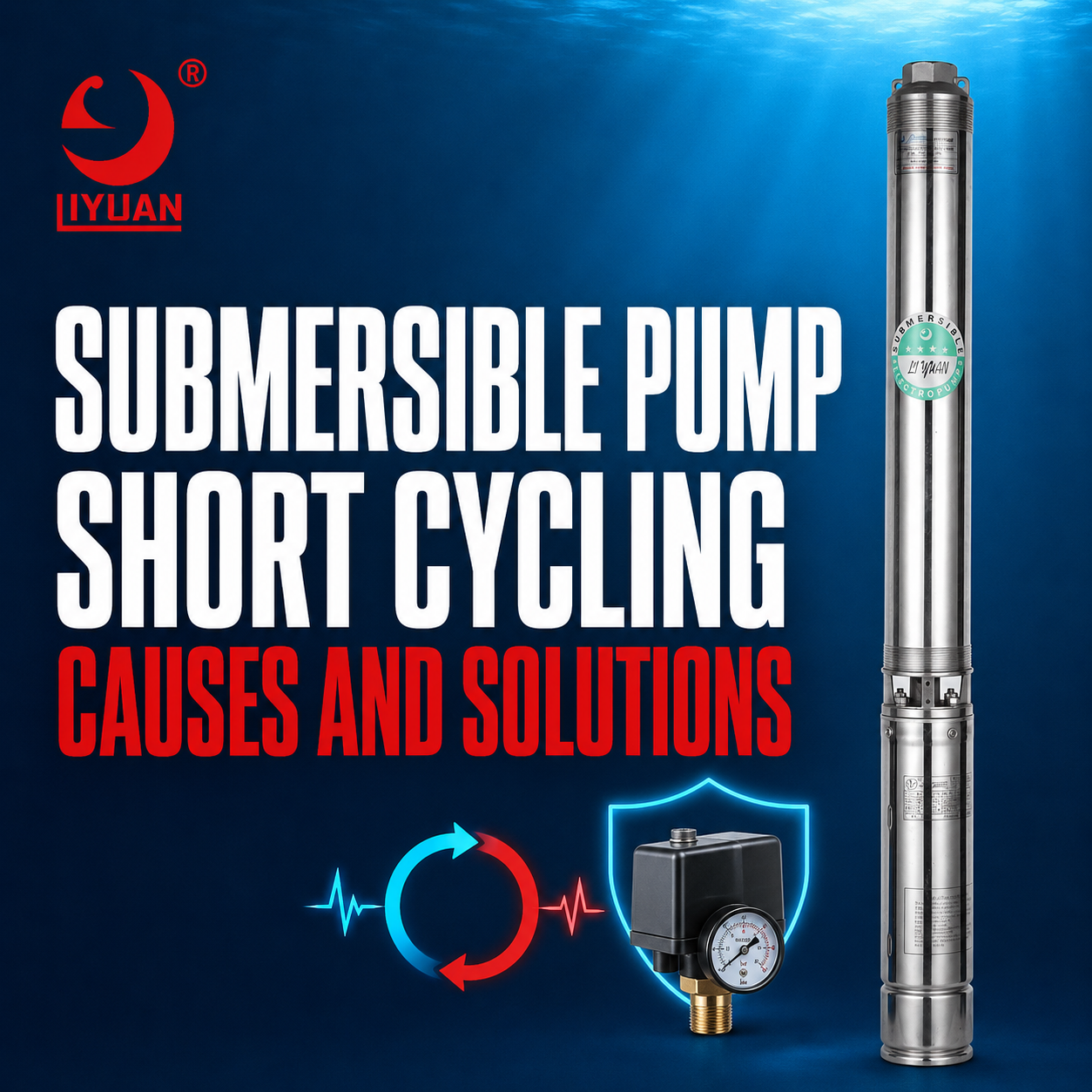
What Is Submersible Pump Short Cycling?
Submersible Pump Short Cycling Means The Pump Starts And Stops More Frequently Than The System Design And Motor Manufacturer Allow.
The Most Common Causes Include A Waterlogged Pressure Tank, Incorrect Air Precharge, A Ruptured Bladder, A Faulty Pressure Switch, A Leaking Check Valve, An Oversized Pump, Or Incorrect Variable Frequency Drive Settings.
Frequent Starting Creates Electrical Heat, Mechanical Stress, Pressure Surges, And Accelerated Wear.
The Correct Solution Starts With Measuring The Actual Cycle Time. Then, Operators Should Test The Pressure Tank, Pressure Switch, Check Valve, Plumbing System, And Pump Controls In A Logical Order.
Replacing The Pump Before Testing These Components Can Waste Money And Leave The Real Problem Uncorrected.
How A Normal Well Pump Cycle Works
A Conventional Water System Uses A Submersible Pump, Pressure Tank, Pressure Switch, Check Valve, Pressure Gauge, And Delivery Pipe.
When Users Consume Water, The Pressure Tank supplies Water Before The Pump Starts.
System Pressure Gradually Falls To The Pressure Switch’s Cut-In Setting. The Switch Then Starts The Pump.
The Pump Supplies Current Demand And Refills The Pressure Tank.
When Pressure Reaches The Cut-Out Setting, The Switch Stops The Pump.
A Correctly Sized System Gives The Pump A Reasonable Continuous Running Period. The Pressure Tank Then Supplies Water Between Pump Cycles.
Short Cycling Occurs When The Tank Provides Too Little Drawdown Or The System Loses Pressure Too Quickly.
Why Frequent Starts Damage A Submersible Pump
Starting A Motor Produces More Electrical And Mechanical Stress Than Steady operation.
The Motor Draws High Starting Current. This Current Generates Additional heat In The Windings, Cable, Control Box, And Switching components.
The Rotor Accelerates From Zero Speed. At The Same Time, The Pump shaft, coupling, impellers, bearings, And Water Column Experience Changing forces.
Repeated Starts Can Accelerate Wear In:
- Motor Windings
- Thrust Bearings
- Radial Bearings
- Pump Coupling
- Check Valves
- Pressure Switch Contacts
- Contactors
- Capacitors
- Control Relays
- Riser Pipes
Franklin Water Describes A Pumping System Where Rapid Cycling Increased Wear, Motor Heat, Bearing Damage, And Pressure-Control Maintenance. The Company Used A Variable-Speed System To Reduce Cycling And Improve System Life In Its Constant Water Pressure Case Study.
What Is An Acceptable Pump Cycle Time?
No Single Cycle Time Applies To Every Pump.
The Maximum Number Of Starts Depends On:
- Motor Power
- Motor Diameter
- Single-Phase Or Three-Phase Design
- Starting Method
- Motor Temperature
- Pump Flow Rate
- Pressure Tank Drawdown
- Application Type
- Manufacturer Limits
Many Installers Aim For Longer Motor Run Times Because Longer Cycles Reduce Starting Frequency.
However, Operators Should Follow The Pump And Motor Manufacturer’s Published Minimum Run Time And Maximum Start recommendations.
Do Not Apply A Residential Pump Rule To A Large Agricultural, Municipal, Or Industrial motor.
Main Causes Of Submersible Pump Short Cycling
Waterlogged Pressure Tank
A Pressure Tank Requires A Compressible Air Cushion.
Water Does Not Compress significantly. Therefore, A Tank Filled Almost Completely With Water stores Very Little usable volume.
When A Faucet Opens, Pressure Falls Immediately. The Pump Starts After Only A Small Amount Of Water Leaves The Tank.
The Pump Then Raises Pressure Quickly And Stops again.
This Repeated Pattern Creates Very Short Cycles.
Ruptured Tank Bladder Or Diaphragm
A Precharged Pressure Tank Separates Air And Water With A Bladder Or diaphragm.
If The Bladder Ruptures, Water Enters The Air chamber. The Tank Loses Its Designed drawdown capacity.
Water Coming From The Tank’s Air valve Commonly Indicates A Failed Bladder.
A Ruptured-Bladder Tank Usually Requires replacement.
Incorrect Air Precharge
Air Precharge Must Match The Pressure Switch’s cut-in setting.
Too Little Air Reduces Useful tank performance And Can Create A Waterlogged condition.
Too Much Air Can Limit Water Entry And Create Pressure fluctuations.
For Many Bladder Tanks, Installers Set Precharge Slightly Below The Pressure Switch’s cut-in pressure. However, The Exact Setting Must Follow The Tank Manufacturer’s instructions.
Measure Precharge Only After Disconnecting Power, Draining The Water Side, And Reducing System Pressure To Zero.
Undersized Pressure Tank
An Undersized Tank Provides Insufficient drawdown.
The Pump Refills The Small Volume Quickly. Then, Water demand Causes Pressure To Drop Again.
The Required Tank Size Depends On Pump Flow And Desired Minimum runtime.
A Basic Sizing Relationship Is:
Required Drawdown = Pump Flow Rate × Minimum Run Time
For Example, A Pump Delivering 60 Liters Per Minute Requires 60 Liters Of Actual Drawdown For A One-Minute Run Time.
Tank Drawdown Is Not The Same As The Tank’s Total Nominal volume. Pressure settings And Precharge Determine The Actual Usable Water volume.
Use The Submersible Pump Pressure Tank: Complete Sizing Guide Before Selecting A Tank.
Pressure Switch Differential Is Too Narrow
The Pressure Differential Is The Difference Between Cut-In And Cut-Out pressure.
A Very Narrow Differential Gives The Tank Less Usable drawdown. Consequently, The Pump Starts And Stops More Often.
For Example, A 40/60 PSI Setting Has A 20 PSI differential.
Operators Should Not Change Pressure Settings Without Confirming Pump capacity, tank rating, plumbing limits, And Required outlet pressure.
Faulty Pressure Switch
Burned Contacts, Corrosion, Dirt, Loose Wiring, Or Mechanical Wear Can Make A Pressure Switch Operate incorrectly.
The Switch May chatter, open prematurely, Or Fail To Detect Stable pressure.
A Blocked Pressure-sensing port Can Also Delay Or Distort The Pressure signal.
Read The Submersible Pump Pressure Switch: Complete Guide For Testing And Adjustment Information.
Leaking Check Valve
A Check Valve Holds Water In The Discharge Pipe After The Pump stops.
If The Valve Leaks, Water Can Flow Back Toward The Well. System Pressure Then falls Even When Nobody Uses Water.
The Pressure Switch Restarts The Pump. The Cycle Repeats As The Water Leaks Back again.
A Pump That Cycles With Every Faucet Closed Often Has A Leak, Check-Valve Problem, Or Tank problem.
The Submersible Pump Check Valve: Complete Guide Explains Valve Placement And Common Failure Modes.
Plumbing Leakage
A Leaking Toilet, Underground Pipe, Irrigation valve, Faucet, Or Water Treatment Unit Can Create Continuous demand.
Small Leaks May Not Appear Serious. However, They Can Repeatedly lower Pressure To The Pump’s cut-in setting.
Operators Should Inspect The Complete System Before Removing The Pump From The well.
Leaking Riser Pipe
A Hole Or Loose Connection In The Well’s riser pipe Can Return Water To The well.
The Pump May still Build Pressure, But The System loses It After Shutdown.
This Condition Can Look Similar To A Failed Check valve.
A Pressure test And Wellhead inspection Can Help Locate The leakage.
Oversized Pump
An Oversized Pump Refills The Pressure Tank Too quickly.
High Flow Shortens Runtime And Increases Starts Per hour.
The Pump May also Produce Excessive Pressure, high velocity, water hammer, Or valve wear.
Pump Selection Should Match Required Flow, total dynamic head, well yield, And pressure tank size.
Low Water Demand
A Large Pump Supplying One Small Faucet Or Low-Flow appliance May Cycle Frequently.
The Pump Produces More Water Than The outlet consumes. Pressure Reaches The cut-out value Quickly, So The Pump Stops.
Demand Immediately lowers Pressure Again, And The Pump restarts.
A Larger Tank, Smaller Pump, Or Properly configured variable-speed system May Solve This condition.
Failed Tank Air Valve
A Leaking Schrader valve Can Slowly release The Tank’s air charge.
The Pressure Tank Then Loses drawdown And Becomes waterlogged.
After Setting The Correct precharge, Apply An Approved leak-detection solution Around The Valve And Inspect For bubbles.
Replace A Damaged Valve core Or Tank Assembly As required.
Incorrect Variable Frequency Drive Settings
A Constant-Pressure Drive Adjusts Motor speed To Match water demand.
Incorrect Minimum speed, sleep frequency, wake pressure, ramp time, Or Pressure setpoint Can Cause Repeated Starting And stopping.
The Drive May Stop Too Early At Low demand. Pressure Then Drops, And The Drive immediately restarts.
A Small Pressure Tank Often Stabilizes A Variable-Speed system. However, Its Size And Precharge Must Match The Drive Manufacturer’s instructions.
Review The Variable Frequency Drive For Submersible Pump: Complete Guide Before Changing Drive Parameters.
Unstable Pressure Sensor Signal
Variable-Speed Systems Often Use An Electronic Pressure sensor.
Loose Wiring, Poor Grounding, Water Entry, incorrect sensor range, Or Electrical noise Can Create An Unstable signal.
The Drive Responds By Increasing And Decreasing speed Or By Repeatedly entering Sleep mode.
Compare The Sensor Reading With A Calibrated Mechanical gauge.
Electrical Protection Trips
Voltage Imbalance, Low Voltage, Overload, Phase Loss, Or Motor overheating Can Stop The Pump.
After The Protection delay, The Controller May Restart The Motor automatically.
This Behavior Can Appear Similar To Hydraulic Short cycling. However, The Pump Stops Because Of A Fault Instead Of Reaching Normal cut-out pressure.
Check The Controller’s Fault history Before Adjusting The Pressure Tank.
The Submersible Pump Overload Protection: Complete Guide Explains Common Trip Conditions.
Insufficient Well Yield
A Weak Well Can Trigger Low-water Or underload protection.
The Controller Stops The Pump And Restarts It After A Recovery delay.
This Pattern Is Not Traditional Pressure-Tank Short Cycling. However, Repeated recovery cycles Can still Damage Equipment If Settings Allow Excessive Restart attempts.
Reduce Pump Flow Or Increase The Well recovery period.
Short-Cycling Symptom And Likely Cause
| Observed Symptom | Likely Cause |
|---|---|
| Pump Cycles With Every Outlet Closed | Check Valve, Riser Pipe, Or Plumbing Leak |
| Pump Starts After Very Little Water Use | Low Tank Precharge, Ruptured Bladder, Or Small Tank |
| Pressure Switch Chatters Rapidly | Blocked Switch Port, Damaged Contacts, Or Unstable Pressure |
| Pump Stops Before Reaching Cut-Out Pressure | Overload, Voltage Fault, Dry-Run Protection, Or Thermal Trip |
| VFD Repeatedly Enters Sleep Mode | Incorrect Sleep Frequency, Pressure Setting, Or Tank Precharge |
| Pressure Rises Extremely Fast | Oversized Pump Or Insufficient Tank Drawdown |
| Pressure Falls Immediately After Shutdown | Leak, Failed Check Valve, Or Waterlogged Tank |
| Cycling Appears During Low-Flow Demand | Oversized Pump, Small Tank, Or Incorrect VFD Settings |
How To Diagnose A Short-Cycling Submersible Pump
Step 1: Confirm The Cycle Pattern
Record Cut-In Pressure, Cut-Out Pressure, Motor Runtime, And Time Between starts.
Observe The System With Water outlets Open And Closed.
A Pump That Restarts Without Water demand Indicates Pressure loss Somewhere In The system.
Step 2: Read The Pressure Gauge
The Gauge Should Rise And Fall Smoothly.
A Gauge That Jumps, sticks, Or Displays An Unstable value May Be damaged.
Replace Or Compare It With A Calibrated gauge Before Making Pressure adjustments.
Step 3: Turn Off Electrical Power
Isolate The Pump Before Inspecting Electrical Components Or Draining The tank.
Verify That The Circuit Cannot Restart automatically.
A Qualified Technician Should Perform Electrical measurements.
Step 4: Drain The Pressure Tank
Open A Suitable Drain Or Faucet And Release All Water pressure.
The System Gauge Must Read Zero Before Measuring tank precharge.
Water Pressure On The Bladder Side Will Produce An Incorrect Air reading.
Step 5: Measure Tank Precharge
Use An Accurate Air-pressure gauge At The Tank air valve.
Compare The Reading With The Tank And Pressure-switch manufacturer’s requirements.
Adjust The Charge With Air Only After Confirming That The Bladder remains intact.
Step 6: Check For A Ruptured Bladder
Briefly Press The Air-valve pin After Safely Depressurizing The tank.
If Water Exits The Air valve, The Bladder Has Likely failed.
Replace The Tank According To Manufacturer instructions.
Step 7: Inspect The Pressure Switch
Check Contacts, wiring, springs, sensing port, And tubing.
Do Not Adjust The Switch While Power Remains connected.
A Dirty Or Restricted sensing connection Can Cause Delayed pressure response.
Step 8: Test For Pressure Loss
Close All Water outlets And Observe The Gauge After The Pump stops.
A Steady Pressure drop Indicates Leakage.
Inspect Toilets, faucets, irrigation valves, water treatment equipment, underground piping, The Riser Pipe, And Check valves.
Step 9: Inspect The Check Valve
Listen For Water movement After Shutdown.
Check For Pressure loss And Reverse flow.
Do Not Add Multiple Check valves Without Reviewing The Complete system. Incorrect Valve Placement Can Trap Pressure Or Increase Water-hammer risk.
Step 10: Review Electrical Fault Records
Check Overload, underload, voltage, phase, and temperature alarms.
Measure Voltage And Current During Startup And Normal operation.
A Thermal Or Electrical trip Requires A Different Solution From A Pressure-control problem.
Step 11: Check Variable Frequency Drive Parameters
Review:
- Pressure Setpoint
- Minimum Speed
- Maximum Speed
- Sleep Frequency
- Wake Pressure
- Acceleration Time
- Deceleration Time
- Anti-Cycling Delay
- Underload Threshold
- Pressure Sensor Range
Restore Manufacturer-recommended settings Before Making Small Site-specific adjustments.
How To Calculate Pressure Tank Drawdown
Pressure Tank Drawdown Means The Usable Water Delivered Between The Pump’s cut-out And cut-in settings.
Use This Basic Formula:
Required Drawdown = Pump Flow × Desired Minimum Run Time
Assume A Pump Produces 50 Liters Per Minute.
If The Motor Requires At Least One Minute Of Continuous Operation:
50 Liters Per Minute × 1 Minute = 50 Liters Of Required Drawdown
The Tank’s nominal volume Must Be Larger Than 50 Liters Because It Contains Both Water And Compressed air.
Manufacturer Data Should Show Actual Drawdown At Specific Pressure settings. For Example, Pentair WellMate Tank Specifications List Different Drawdown values At Defined pressure ranges.
How To Fix Submersible Pump Short Cycling
Restore The Correct Tank Precharge
Drain The Tank Completely.
Set The Air pressure According To The Tank And pressure-switch manufacturer’s instructions.
Then, Restart The System And Verify The Complete cycle.
Replace A Failed Pressure Tank
Replace A Tank With A Ruptured bladder, damaged shell, severe corrosion, Or Unrepairable Air valve.
Select The Replacement From Required drawdown, pressure rating, connection size, And Installation environment.
Install A Larger Tank
A Larger Tank Increases drawdown And Reduces Starts.
However, The Tank Must Match The Pump flow And Pressure settings.
Do Not Select Tank Size Only From Total gallon Or liter capacity.
Repair System Leaks
Repair Leaking Fixtures, underground pipes, riser connections, irrigation valves, And treatment equipment.
Confirm That Pressure Remains stable After The Pump stops.
Replace The Check Valve
Install A Check Valve With The Correct size, pressure rating, flow capacity, And Material.
Follow Pump And Local well-code requirements.
Correct Pressure-Switch Settings
Use A Suitable cut-in, cut-out, And Differential range.
The Pump Must Produce Enough head To Reach cut-out pressure At The Actual pumping water level.
Never Increase Cut-Out Pressure Above The Tank, pipe, valve, Or Pump rating.
Match Pump Capacity To Demand
Replace A Severely Oversized pump If Tank And Control changes Cannot Provide Acceptable runtime.
A Correctly Sized Pump Usually Operates More steadily And efficiently.
Program Anti-Cycling Functions
Modern Drives And Controllers Can Add:
- Minimum Run Time
- Minimum Stop Time
- Sleep Delay
- Wake Delay
- Controlled Acceleration
- Controlled Deceleration
- Low-Flow Detection
- Restart Limits
These Functions Need Careful commissioning.
Add A Soft Starter When Appropriate
A Soft Starter Reduces Electrical And Mechanical stress During Motor acceleration.
However, It Does Not Correct A Small tank, leak, Or Failed check valve.
Use A Soft Starter Only After Resolving The Cycling cause.
Learn More In The Submersible Pump Soft Starter: Complete Guide.
Short Cycling And Water Hammer
Rapid Starts And Stops Change Water velocity Repeatedly.
These Changes Can Create Pressure surges, pipe movement, check-valve slamming, And fitting damage.
A Larger Pressure Tank Or Correctly programmed drive Can Reduce sudden velocity changes.
However, Operators Must Also Review Pipe length, flow velocity, valve closing speed, And Check-valve placement.
The Submersible Pump Water Hammer: Causes And Prevention Guide Explains These Risks In Detail.
Preventive Maintenance Checklist
- Record Pump Start Counts
- Record Daily Motor Runtime
- Measure Cut-In And Cut-Out Pressure
- Check Tank Precharge
- Inspect The Tank Air Valve
- Test Pressure Switch Operation
- Inspect Check Valves
- Check For Plumbing Leaks
- Review Controller Fault History
- Measure Motor Voltage And Current
- Verify Dynamic Water Level
- Test VFD Sleep And Wake Functions
- Inspect Contactors And Relays
- Compare Current Flow With Original Data
A Rising Start Count Often Reveals A Problem Before The Pump fails.
Frequently Asked Questions
Why Does My Well Pump Start Every Few Seconds?
The Pressure Tank May Have Lost Its Air charge, developed A Ruptured bladder, Or Become Too Small For The Pump.
A Leak Or Failed check valve Can Also Lower Pressure quickly.
Why Does The Pump Run When Nobody Uses Water?
The System Is Losing Pressure.
Inspect The Check valve, riser pipe, underground pipe, toilets, faucets, And irrigation valves.
Can A Bad Pressure Tank Damage A Submersible Pump?
Yes. A Failed Tank Can Cause Frequent starts, motor heating, switch wear, And Water hammer.
Can I Add Air Without Draining The Tank?
No. Water pressure Can Produce A False precharge reading.
Turn Off The Pump, drain The Water, And Reduce System Pressure To zero Before Measuring.
Will A Larger Pressure Tank Stop Short Cycling?
A Larger Tank Can Solve Cycling Caused By Insufficient drawdown.
It Will Not Repair A Leak, faulty switch, failed valve, Or Electrical trip.
Can A Variable Frequency Drive Eliminate Cycling?
A Correctly sized And Programmed Drive Can Reduce Starting frequency.
Incorrect Sleep, wake, pressure, Or minimum-speed settings Can Also Create Cycling.
Does A Soft Starter Fix Short Cycling?
No. A Soft Starter Reduces Starting stress But Does Not Remove The Cause Of Frequent starts.
Should I Adjust The Pressure Switch First?
No. Test The Tank, pressure loss, And Pump capacity Before Changing The switch.
Incorrect Adjustment Can Create Excessive Pressure Or Prevent The Pump From reaching cut-out.
Conclusion
Submersible Pump Short Cycling Usually Results From Insufficient Pressure Tank drawdown, incorrect precharge, a ruptured bladder, a leaking check valve, pressure loss, Or faulty control settings.
The Best Diagnostic Sequence Starts With Cycle timing, pressure observation, tank testing, And leak inspection.
Operators Should Then Check The Pressure switch, check valve, electrical protection, And variable frequency drive parameters.
Correcting Frequent Cycling Protects The Motor windings, bearings, coupling, valves, pipes, And control components.
Liyuan Pump Can Evaluate Pump flow, total dynamic head, motor power, tank drawdown, pressure settings, well yield, And control requirements To Develop A Reliable Deep Well Pumping System.
Email:Liyuan@liyuan-pump.com
WhatsApp:+86 181-2828-2767