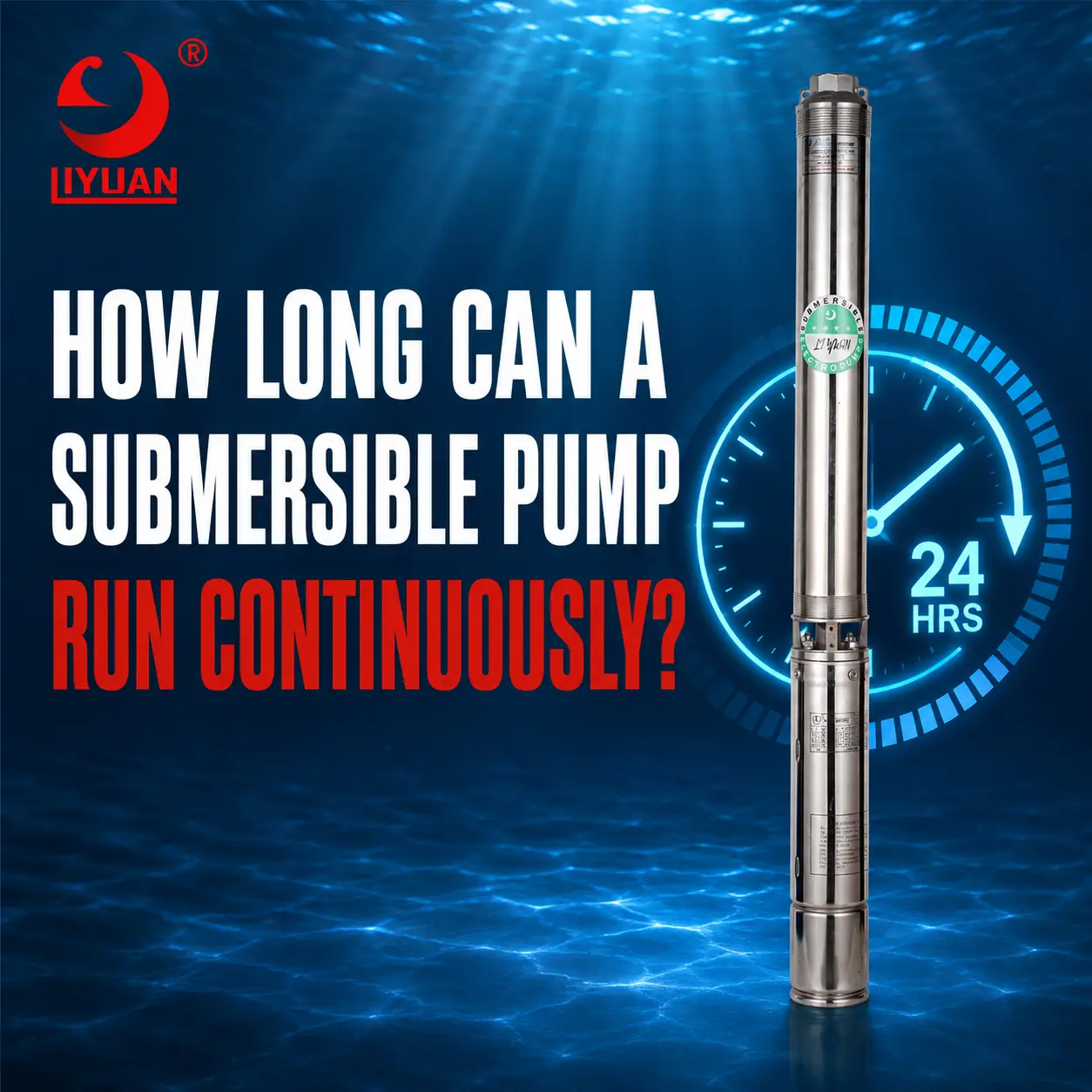
Can A Submersible Pump Run Continuously?
A Properly Selected Continuous-Duty Submersible Pump Can Run 24 Hours A Day If It Remains Submerged, Receives Adequate Cooling Flow, Operates Within Its Approved Flow Range, And Receives Stable Electrical Power.
Continuous Operation Is Not Automatically Harmful. In Many Cases, Frequent Starting And Stopping Creates More Motor Stress Than One Long, Stable Running Period.
However, A Pump Should Not Run Continuously When The Well Cannot Recover Fast Enough, The Water Level Approaches The Inlet, Motor Current Exceeds Its Rating, Or The Pump Cannot Reach The Required Pressure.
The Manufacturer’s Duty Rating, Pump Curve, Motor Data, Water Temperature, Well Yield, And Protection Settings Determine The Safe Runtime.
What Does Continuous Duty Mean?
Continuous Duty Means The Motor Can Operate At A Defined Load Long Enough To Reach A Stable Temperature Without Exceeding Its Design limits.
Many Motor Nameplates Identify Continuous Duty As:
S1 Duty
An S1 Motor Can Operate Continuously At Its Rated Conditions.
However, The S1 Marking Does Not Mean The Pump Can Operate Safely Under Every Hydraulic condition.
The Complete Pumping System Must Still Provide:
- Correct Voltage
- Balanced Current
- Required Cooling Flow
- Proper Submergence
- Acceptable Water Temperature
- Suitable Hydraulic Load
- Stable Well Yield
- Clean Water Conditions
Some Motors Use Short-Time Or Intermittent duty ratings. Always Confirm The Motor And Pump documentation Before Planning Extended operation.
What Is A Pump Duty Cycle?
Duty Cycle Describes The Percentage Of Time A Pump Operates During A Complete run-and-rest cycle.
Use This Formula:
Duty Cycle (%) = Running Time ÷ Total Cycle Time × 100
For Example, A Pump Runs For 15 Minutes And Stops For 5 Minutes.
The Total Cycle Time Is:
15 + 5 = 20 Minutes
The Duty Cycle Is:
15 ÷ 20 × 100 = 75%
A 100% Duty Cycle Means Continuous operation.
However, Duty-Cycle Percentage Alone Does Not Confirm Safe use. The Motor temperature, starting frequency, hydraulic operating point, And cooling conditions Also Matter.
How Long Can A Deep Well Pump Run?
There Is No Universal Maximum Number Of Hours.
A Continuous-Duty Deep Well Pump May Run For:
- Several Hours During Tank Filling
- An Entire Irrigation Cycle
- A Full Working Shift
- Multiple Days During Dewatering
- Twenty-Four Hours Per Day In Municipal Service
Safe Runtime Depends On Operating conditions Rather Than A Fixed Clock limit.
A Pump Running For Ten Hours At Its Correct duty point May Experience Less Stress Than A Pump Starting Every Two Minutes Throughout The same period.
Can A Well Pump Run 24 Hours A Day?
Yes, A Suitable Well Pump Can Run 24 Hours A Day.
Before Allowing Continuous operation, confirm That:
- The Pump Has A Continuous-Duty Rating
- The Motor Remains Fully Submerged
- The Well Produces Enough Water
- Dynamic Water Level Remains Stable
- Water Flows Across The Motor
- Motor Current Remains Acceptable
- Voltage Remains Within Manufacturer Limits
- Flow Stays Inside The Recommended Range
- Water Temperature Remains Acceptable
- Dry-Run Protection Is Active
- Overload Protection Is Correctly Set
Franklin Water Lists Continuous-Duty Operation For Certain Submersible Well Pump Models. However, The Final Runtime Still Depends On The Complete installation.
Does A Submersible Pump Need Time To Rest?
A Continuous-Duty Pump Does Not Require Scheduled Rest Periods When It Operates Under Approved conditions.
Stopping The Pump Every Hour Does Not Automatically Extend Its life.
In Fact, Each Restart Creates:
- Starting Current
- Winding Heat
- Shaft Acceleration
- Thrust-Bearing Loading
- Check-Valve Movement
- Pipe Pressure Changes
- Contactor Wear
An Intermittent-Duty Pump May Require Off-Time. Follow Its Nameplate And Manufacturer instructions.
If A Continuous-Duty Pump overheats, trips, or loses performance, the Solution Is Not Simply Adding Rest time. The Operator Must Identify The Cooling, electrical, hydraulic, or Mechanical cause.
Why Is A Longer Run Often Better Than Short Cycling?
A Motor Produces Additional heat During startup.
Frequent Starts Also accelerate Wear In The Pressure Switch, contactor, check valve, coupling, and Thrust bearing.
A Correctly sized pressure tank Allows A Conventional well pump To Run Long Enough During Each cycle.
A Waterlogged Or Undersized tank Can Make The Pump Start And stop Every Few seconds.
Use The Submersible Pump Pressure Tank: Complete Sizing Guide To Calculate Required tank drawdown.
The Pump Manufacturer Also Specifies A Maximum Number Of Starts Within A Defined period. This Limit Changes With Motor size And Design.
What Determines Safe Continuous Runtime?
Motor Duty Rating
Check Whether The Nameplate Identifies The Motor For Continuous, short-time, or Intermittent service.
Do Not Assume That Every Submersible motor Has The Same rating.
Dynamic Water Level
Dynamic Water Level Means The Water level While The Pump operates.
If The Level continues falling, the Well Is Not Matching Pump demand.
The Pump May eventually experience:
- Low Submergence
- Air Entrainment
- Cavitation
- Dry Running
- Motor Overheating
- Loss Of Water Flow
Measure The Level After The Well reaches stable operation.
Well Recovery Rate
Well Recovery Rate Describes How Quickly Groundwater re-enters The Well.
The Pump flow Should Not Exceed The Sustainable well yield During Long operation.
A Short pumping test May Not Represent drought conditions Or Peak seasonal demand.
Use A Professional well test When Continuous pumping Is Required.
Motor Cooling Flow
The Motor Needs Water movement Across Its housing.
The Required cooling flow Depends On Motor diameter, well diameter, water temperature, and Manufacturer design.
Grundfos States That An Uninterrupted minimum flow Is Required To Cool A Submersible pump And Motor, With Exact Requirements Depending On The Installation. See The Grundfos Minimum Flow Explanation.
The Submersible Motor Cooling System: Complete Guide Explains Flow sleeves And Motor cooling conditions.
Pump Operating Point
The Pump Should Operate Within The Approved region Of Its Performance curve.
Very Low Flow Can Cause:
- Internal Water Heating
- Excessive Downthrust
- Hydraulic Recirculation
- Bearing Stress
- Vibration
- Reduced Cooling
Excessive Flow Can Cause:
- Higher Power Demand
- Upthrust
- Cavitation
- Excessive Drawdown
- Motor Overload
- Rapid Component Wear
Use The Submersible Pump Flow Rate: Complete Sizing Guide To Match Flow With System demand.
Water Temperature
Warm Water Removes Less heat From The Motor.
A Pump Designed For Normal groundwater May Not Support Continuous operation In Geothermal Or Process-water conditions.
Confirm The Maximum fluid temperature And Required motor derating.
Voltage Quality
Low Voltage Can Increase Motor current And reduce starting torque.
High Voltage Can Increase Magnetic losses And insulation stress.
Three-Phase voltage imbalance Can Create Large current imbalance And uneven winding temperature.
Use The Submersible Pump Voltage Protection: Complete Guide To Evaluate Under-Voltage, overvoltage, and Phase conditions.
Motor Current
Measure Motor current During Normal continuous operation.
For Three-Phase motors, record Current On Every phase.
Current Must Remain Within The Approved motor limit.
A Rising current trend Can Indicate:
- Sand Accumulation
- Worn Bearings
- Impeller Contact
- Low Voltage
- Excessive Flow
- Mechanical Damage
- Winding Problems
Water Quality
Sand, silt, scale, corrosive chemicals, and Minerals Can Accelerate wear During Long runtime.
Continuous operation Moves More Total water Through The Pump. Therefore, Even A Low sand concentration Can Produce Significant long-term erosion.
Cable Size
Long Drop cables Create Voltage loss.
The Cable Must Match Motor current, voltage, depth, and Starting method.
A Cable That Works During A Short test May still create Excessive heat During Extended operation.
Protection System
Continuous-Duty Pumps Need Reliable protection For:
- Overload
- Phase Loss
- Voltage Imbalance
- Under-Voltage
- Overvoltage
- Dry Running
- Motor Temperature
- Ground Fault
- Excessive Starts
- Locked Rotor
The Submersible Pump Overload Protection: Complete Guide Explains How To Select Motor protection.
Safe Runtime By Application
| Application | Typical Operating Pattern | Main Limiting Factor |
|---|---|---|
| Residential Water Supply | Intermittent Pressure-Controlled Cycles | Tank Size And Starting Frequency |
| Agricultural Irrigation | Several Continuous Hours | Well Yield, Flow, And Motor Cooling |
| Municipal Water Supply | Long Or Continuous Duty | Redundancy, Monitoring, And Maintenance |
| Storage Tank Filling | Continuous Until High-Level Stop | Tank Capacity And Well Recovery |
| Industrial Water Supply | Continuous Or Process-Controlled | Duty Point And Water Temperature |
| Groundwater Dewatering | Continuous 24-Hour Operation | Water Level And Sediment |
| Livestock Watering | Intermittent Or Tank-Controlled | Demand Variation And Tank Size |
| Solar Water Pumping | Daylight-Dependent Variable Runtime | Solar Power, Water Level, And Controller |
| Fountain Or Pond System | Long Daily Runtime | Cooling, Debris, And Pump Duty Rating |
These Patterns Are Examples, Not Universal runtime limits.
Can An Irrigation Pump Run All Day?
Yes, A Properly selected irrigation pump Can Run All Day.
Verify:
- Irrigation Flow Demand
- Total Dynamic Head
- Well Yield
- Dynamic Water Level
- Pump Efficiency
- Motor Cooling
- Supply Voltage
- Sand Content
- Pipe Size
- Zone Configuration
Changing Irrigation zones Can Move The Pump To A Different operating point.
A Small drip zone May Produce Very Low flow. A Large sprinkler zone May Create Excessive flow.
Measure Each Zone Instead Of Assuming That Every configuration Is Safe.
Can A Residential Well Pump Run For Hours?
A Residential pump May Run For An Extended period When Filling A Swimming pool, irrigating A Garden, Or Supplying High demand.
This Can Be Normal If Flow, current, voltage, and Water level Remain Stable.
However, A Pump That Runs For Hours With All outlets closed Has A Problem.
Possible Causes Include:
- Pipe Leakage
- Failed Check Valve
- Incorrect Pressure-Switch Setting
- Worn Pump Stages
- Falling Water Level
- Low Voltage
- Pump Cannot Reach Cut-Out Pressure
- Open Bypass
- Broken Riser Pipe
The Submersible Pump Pressure Switch: Complete Guide Explains Why A Pump May Fail To Stop.
Why Does My Well Pump Run Continuously?
A Continuously running pump Is Normal Only When Water demand Requires It Or The Control system Intentionally Commands It.
Continuous operation Is Abnormal When:
- No Water Is Being Used
- Pressure Never Reaches Cut-Out
- Flow Has Declined
- Water Level Keeps Falling
- Motor Current Is Increasing
- The Pump Cannot Fill The Tank
- A Protection Alarm Appears
Check Pressure, flow, current, voltage, water level, and Pipe leakage.
Do Not Increase The Pressure-switch cut-out value Until You Confirm That The Pump Can Reach The New pressure.
Can A Pump Overheat During Continuous Operation?
Yes.
Common Causes Include:
- Insufficient Cooling Flow
- High Water Temperature
- Low Or High Voltage
- Current Imbalance
- Excessive Pump Load
- Very Low Flow
- Frequent Starting Before Continuous Operation
- Scale On The Motor
- Damaged Bearings
- Incorrect VFD Settings
Motor temperature should Stabilize During Safe continuous operation.
A Continually rising temperature Indicates That Heat generation Exceeds Heat removal.
Can A Pump Run Continuously In A Large Well?
A Large Well casing Can Reduce Water velocity Around The Motor.
The Motor May Remain submerged While Water moves Too Slowly To Remove heat.
A Flow sleeve Can Direct Water Over The Motor surface.
Confirm The Required velocity With The Motor manufacturer.
Can A Pump Run Continuously In A Tank Or Lake?
Yes, But Open-water installations Often Need A Cooling sleeve.
Without Well casing walls, water Can Enter The Pump without Flowing Along The Motor.
The Cooling sleeve Should Force Water To Enter Near The Motor end And Move Across The housing.
Keep The Sleeve inlet Above Sediment And Away From debris.
Can A Solar Submersible Pump Run All Day?
A Solar pump Can Operate Throughout Available daylight If The Pump, motor, controller, well, and Solar array Support The duty.
Solar output Changes With Irradiance.
The Controller May adjust Pump speed, stop At Low power, And restart When sunlight improves.
Frequent low-light starts Should Be Controlled.
Water-level And dry-run protection Remain Necessary.
How Does A VFD Affect Continuous Runtime?
A Variable Frequency Drive Can Match Pump speed To Demand.
This Control Can Reduce Pressure surges, starting stress, and Energy use.
However, Low speed Can Reduce Water flow Across The motor. High speed Can Increase Motor power And Well drawdown.
Review:
- Minimum Frequency
- Maximum Frequency
- Motor Current Limit
- Cooling Flow
- Pressure Setpoint
- Dry-Run Detection
- Sleep Mode
- Restart Delay
- Acceleration Time
Use The Variable Frequency Drive For Submersible Pump: Complete Guide Before Programming Continuous service.
How Can You Confirm That Continuous Operation Is Safe?
Check The Nameplate
Confirm Duty rating, voltage, phase, frequency, current, temperature, and Power.
Record Baseline Data
Record Data After The Pump reaches Stable operation:
- Flow Rate
- Discharge Pressure
- Dynamic Water Level
- Motor Voltage
- Motor Current
- Input Power
- Water Temperature
- Vibration
- Alarm Status
Monitor The First Extended Run
Check The System At Increasing intervals.
Confirm That Water level, current, flow, and Pressure stabilize.
Check Motor Cooling
Verify Water movement Past The Motor.
Use A Flow sleeve When Natural flow Is Inadequate.
Review Protection Logs
Examine Overload, voltage, temperature, underload, and Restart events.
A Pump That Remains Running But Repeatedly approaches Trip limits Is Not Operating safely.
When Should You Stop A Continuously Running Pump?
Stop The Pump When:
- Water Flow Falls Suddenly
- Dynamic Water Level Approaches The Inlet
- Motor Current Exceeds Its Limit
- Phase Current Becomes Unbalanced
- Voltage Leaves The Approved Range
- Motor Temperature Continues Rising
- Grinding Or Scraping Begins
- Vibration Increases
- Sand Production Increases
- Dry-Run Protection Activates
- Pressure Surges Occur
- A Ground-Fault Alarm Appears
- Water Temperature Exceeds The Rating
- The Pump Cannot Maintain Required Pressure
Do Not Wait For Complete failure.
How Can You Extend Continuous Pump Life?
Select The Correct Duty Point
Match The Pump To Required flow And total dynamic head.
Avoid Selecting From Maximum head Or Maximum flow Alone.
Maintain Stable Cooling
Keep The Motor submerged And Provide The Required water velocity.
Control Sand
Position The Pump Above The Well bottom And Maintain The Well screen.
Monitor Electrical Conditions
Track Voltage, current, phase balance, input power, and Insulation resistance.
Use Correct Protection
Protect Against Both Electrical faults And Hydraulic conditions.
Avoid Unnecessary Starts
Use A Correctly sized pressure tank Or Properly programmed variable-speed control.
Follow A Maintenance Schedule
Compare Current Performance With Commissioning data.
The Electric Submersible Pump Maintenance Guide Explains Inspection And Performance monitoring.
Information To Send A Pump Manufacturer
For A Continuous-Duty Recommendation, Provide:
- Pump Model
- Motor Model
- Duty Rating
- Required Flow
- Total Dynamic Head
- Well Diameter
- Well Depth
- Static Water Level
- Dynamic Water Level
- Well Yield
- Water Temperature
- Sand Content
- Supply Voltage
- Cable Length
- Daily Runtime
- Starting Frequency
- Control Method
- Installation Orientation
These Values Allow The Manufacturer To Evaluate Thermal, hydraulic, electrical, and Well conditions Together.
Frequently Asked Questions
How Many Hours Can A Submersible Pump Run?
A Continuous-Duty pump Can Run For Many Hours Or 24 Hours Per day When Operating conditions Remain Within Manufacturer limits.
Can A Well Pump Run Nonstop?
Yes, If Demand Requires It And The Well, motor, cooling, voltage, and Pump selection Support Continuous duty.
Is It Bad For A Well Pump To Run For Two Hours?
Not Necessarily.
A Stable Two-Hour run May Be Easier On The Motor Than Frequent short cycles.
Does A Submersible Pump Need A Break Every Hour?
A Continuous-Duty pump Does Not Require An Hourly break.
Intermittent-duty equipment Must Follow Its Specified cycle.
Why Does My Pump Never Shut Off?
The Pump May Be Meeting Continuous demand, or It May Have A Leak, pressure-control problem, worn hydraulics, or Insufficient head.
Will Continuous Operation Burn Out The Motor?
Not When Cooling, voltage, current, load, and Water temperature Remain Within approved limits.
Can A Pump Run Continuously With A Closed Valve?
No. Zero Or Very Low flow Can Heat The Pump And Damage bearings, seals, and Hydraulic components.
Is Frequent Starting Worse Than Continuous Running?
Often, Yes. Frequent starts Add heat And Mechanical stress.
Both operating patterns Must Still Remain Within Manufacturer limits.
Can A Pressure Tank Reduce Pump Runtime?
A Pressure tank Stores Water Between cycles And Reduces Starting frequency.
It Does Not Limit An Intentional continuous run During High demand.
How Do I Know If The Well Can Support Continuous Pumping?
Perform A Well yield And recovery test While Monitoring Dynamic Water level At The Required pump flow.
Conclusion
How Long Can A Submersible Pump Run Continuously? A Continuous-Duty Pump Can Operate 24 Hours Per Day When It Remains Properly Submerged, cooled, electrically protected, and Matched To The Required duty point.
Runtime Alone Does Not Determine Pump life.
Well yield, dynamic water level, cooling flow, water temperature, motor current, voltage quality, sand content, and Starting frequency Have Greater importance.
Liyuan Pump Can Review Your Pump duty, well conditions, motor data, daily runtime, and Control requirements To Determine Whether Continuous Operation Is Suitable For Your Application.
Email:Liyuan@liyuan-pump.com
WhatsApp:+86 181-2828-2767