Submersible Pump Horizontal Installation: Is It Allowed?
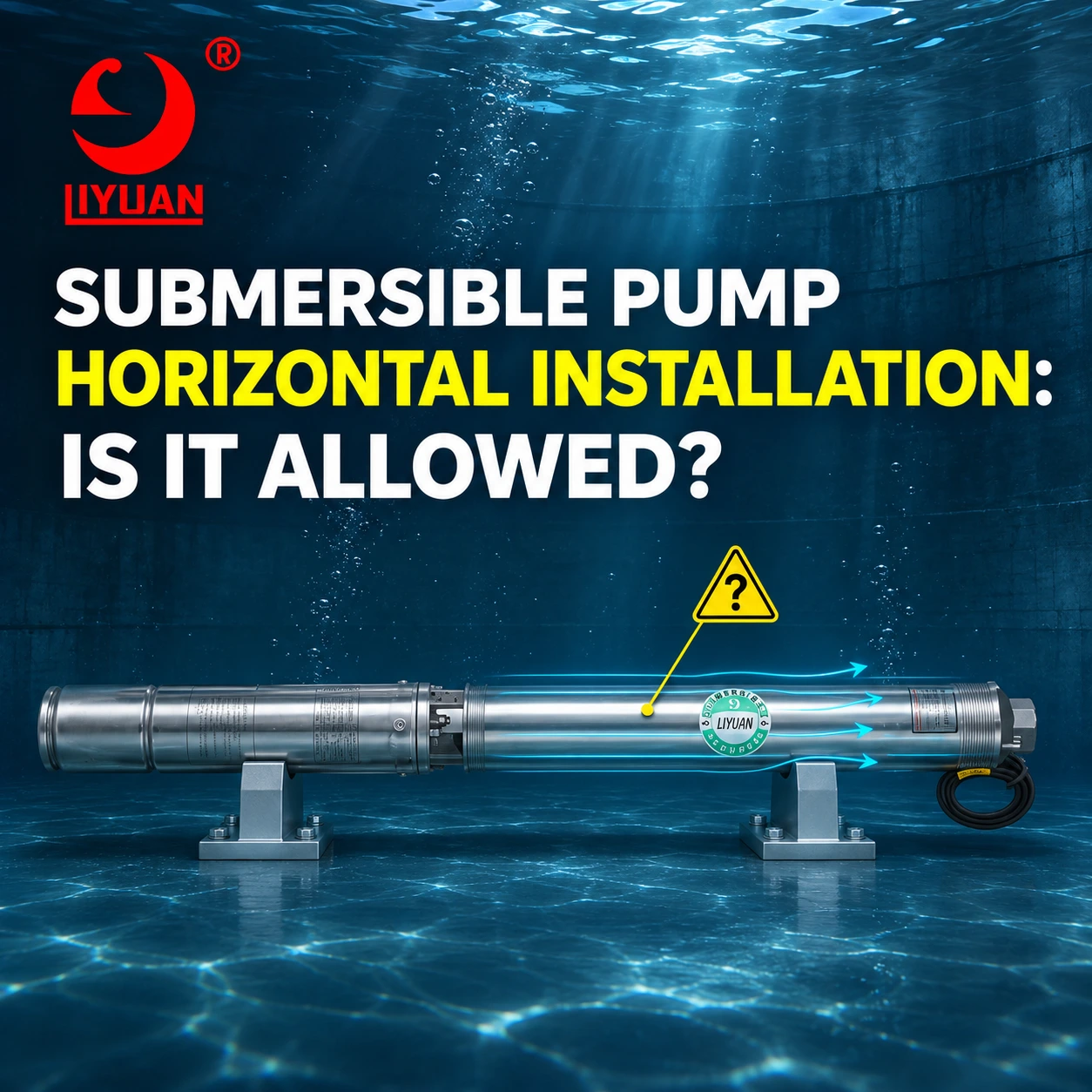
Submersible Pump Horizontal Installation Is Acceptable Only When The Exact Pump And Motor Combination Is Approved For That Orientation And Its Cooling, Support, Water-Level, And Operating Requirements Are Met. Adding A Flow Sleeve Does Not Make A Vertical-Only Pump Suitable For Horizontal Use.
This Article Covers Multistage Borehole Pumps Used In Tanks, Cisterns, And Similar Clean-Water Applications. It Does Not Establish Installation Rules For Drainage Or Sewage Pumps.
The Real Buying Question Is Often: “I Already Own A Long Well Pump. Can I Lay It Down In A Shallow Tank Instead Of Buying Another Pump?”
Can I Lay My Existing Well Pump On Its Side?
Check The Instructions For Both The Pump End And The Motor Before Designing The Mounting Arrangement.
In A Small Cabin Forum Discussion, An Owner Wanted To Reuse An Existing Pump In A Cistern. Horizontal Installation Would Have Been Easier, But The Manufacturer Had Advised Against It. The Owner Was Also Unsure About Cooling-Sleeve Clearance And Low-Water Shutdown.
That Is A Useful Buyer Scenario, Not Evidence That Every Pump Can Be Adapted.
If Your Model Is Vertical-Only, Consider An Approved Vertical Arrangement, A Different Pump Assembly, Or A Purpose-Designed Tank Pump. The Submersible Pump For Water Tank Selection Article Helps Compare These Options Against The Required Pressure, Available Space, And Controls.
Is Horizontal Installation Approval The Same For Every Submersible Pump?
No. Approval Can Differ By Pump Family, Motor Design, Power Rating, And Configuration.
Grundfos’s SP Orientation FAQ Describes Horizontal-To-Vertical Operation For SP Assemblies And Notes That A Cooling Jacket Is Generally Required. Use The Applicable Model Instructions To Confirm The Actual Arrangement.
Restrictions Can Also Exist Within One Motor Range. Franklin’s 10-Inch Rewindable Motor Specifications List Vertical And Horizontal Installation But Exclude The 185 kW / 250 HP Models From That General Statement.
This Large-Motor Example Is Not A Rule For Small Residential Pumps. It Demonstrates Why A Family Name Or Seller’s General “Horizontal Installation Available” Statement Is Insufficient.
Ask For Approval Tied To The Complete Pump Code, Motor Code, And Proposed Duty.
Does “Horizontal” Mean The Assembly Must Be Perfectly Level?
Not Necessarily. Confirm The Required Slope And Which End Must Be Higher.
For Example, Franklin’s 6-Inch Encapsulated MagForce Motor Page Describes Horizontal Orientation With The Shaft End Raised. That Qualification Matters When Preparing A Support Drawing.
Do Not Apply A Generic Five-Degree Tilt Or Copy Another Installation’s Angle. Ask The Supplier To Mark The Permitted Orientation, Reference Points, And Any Tolerance On The Drawing.
A Photograph Of A Pump Lying On A Floor May Show Storage Or Assembly, Not An Approved Operating Position.
Why Does Submersible Pump Horizontal Installation Often Need A Sleeve?
Full Submersion And Adequate Motor Cooling Are Separate Conditions.
In A Wide Tank, Water Can Reach The Pump Intake Without Sweeping Along The Motor. A Properly Designed Flow Sleeve Directs The Intake Flow Across The Motor Surface.
Grundfos’s Cooling-Jacket Explanation Identifies The Missing Well-Wall Flow Path As The Reason Open-Water Installations Need A Cooling Jacket.
Ask The Supplier To Show The Sleeve Inlet, Flow Direction, Pump Intake, And Measures Preventing Bypass. Random Openings Near The Intake Can Defeat The Intended Cooling Path.
The Submersible Motor Cooling System Overview Explains The Relationship Between Flow, Motor Diameter, Water Temperature, And Cooling Velocity. Use The Manufacturer’s Approved Drawing For Actual Sleeve Construction.
Check Cooling At The Lowest Expected Running Flow, Including Reduced-Speed Operation. Maximum Pump Flow Is Not A Reliable Basis For The Whole Operating Range.
What Must The Horizontal Mounting Arrangement Show?
Request A Dimensioned Assembly Drawing Before Fabricating A Cradle Or Altering The Tank.
| Drawing Item | Question It Must Answer |
|---|---|
| Pump And Motor Identification | Does The Approval Cover This Exact Combination? |
| Orientation | Which End Is Higher, And What Position Is Permitted? |
| Supports And Restraints | Where May The Assembly Be Supported Without Distortion Or Misalignment? |
| Cooling Sleeve | Where Does Water Enter, And How Is It Directed Past The Motor? |
| Intake And Sediment Clearance | Will The Inlet Remain Clear Under Expected Tank Conditions? |
| Water-Level References | Where Are Minimum Operating, Stop, And Restart Levels Measured? |
| Service Access | Can The Assembly And Sleeve Be Removed Through The Available Opening? |
Franklin’s 50 Hz AIM Manual, In Its Non-Vertical Booster Guidance, Addresses Support Locations, Alignment, And Avoiding Shell Deformation Or Restricted Heat Transfer. These Are Application-Specific Requirements, Not A Universal Bracket Pattern.
Ask For Separate Confirmation Of Pipe Support And Cable Routing. The Final Arrangement Should Not Depend On An Electrical Cable As A Lifting Or Structural Member.
Can A Deep-Well Pump Be Too Powerful For A Shallow Cistern?
Yes. A Pump That Fits Horizontally May Still Be Hydraulically Unsuitable.
Moving A Pump From A Deep Well Into A Cistern Changes The System Head. The Original Well-Pump Selection Does Not Automatically Remain Valid.
Franklin’s Mounting Guidance Also Connects Non-Vertical Use With Appropriate Thrust Loading. Review Submersible Motor Thrust Bearing Requirements When Confirming The Pump-Motor Match.
Then Plot The New Duty On The Submersible Pump Performance Curve. Check Both High And Low Tank Levels, Delivery Pressure, And Pipe Losses.
For Example, Supplying Upstairs Showers Is A Different Duty From Transferring Water Into A Nearby Open Tank. The Same Cistern Does Not Make Those Two Applications Equivalent.
How Low Can The Tank Water Level Fall?
Do Not Set The Stop Level By Checking Whether The Motor Is Barely Covered.
Request A Minimum Operating Level That Accounts For The Complete Arrangement: Intake Position, Air-Entry Risk, Cooling Path, And The Manufacturer’s Submergence Requirements.
Have The Supplier State The Measurement Reference. A Dimension Above The Tank Floor Is Not The Same As A Dimension Above The Intake Or Sleeve Opening.
Specify A Low-Water Stop And A Suitable Restart Level Or Recovery Condition. The Submersible Pump Dry-Running Protection Article Helps Distinguish Water-Loss Protection From Ordinary Motor Overload Protection.
This Matters Commercially: A Tank’s Nominal Capacity Is Not Necessarily Its Usable Supply Volume. Compare Pump Arrangements Using Their Approved Stop Levels, Not Tank Capacity Alone.
Do Horizontal Well Pumps Need Different Controls?
The Required Controls Depend On The Approved Pump-Motor Arrangement And The Job It Performs.
A Cistern Pump Supplying A House Needs Demand Control As Well As Low-Water Protection. A Transfer Pump May Instead Need Receiving-Tank Level Control Plus Source-Tank Protection.
Ask Whether Non-Vertical Operation Changes Permitted Starting Frequency, Minimum Runtime, Or Variable-Speed Settings. Franklin’s Mounting Guidance Includes Additional Starting And Thrust Considerations For Non-Vertical Use.
If Small Water Draws Cause Repeated Starts, Review Submersible Pump Short-Cycling Checks Before Assuming That Changing The Mounting Position Will Solve The Problem.
Have Electrical Installation And Protection Settings Completed By Qualified Personnel. Do Not Bypass A Low-Water Or Overload Trip To Keep The System Running.
What Should I Send A Supplier For Horizontal Installation Approval?
Send One Sketch And One Operating Schedule.
The Sketch Should Show Tank Dimensions, Access Opening, Available Assembly Length, Proposed Orientation, Water Levels, Pipe Exit, And The Planned Removal Route.
The Operating Schedule Should State Required Flow And Pressure, Pipe Details, Water Temperature And Quality, Supply Voltage And Frequency, Daily Runtime, And Control Method. Include Existing Pump And Motor Nameplates If You Want To Reuse Equipment.
Request A Written Response Covering:
- The Approved Pump And Motor Combination.
- Permitted Orientation And Support Drawing.
- Cooling-Sleeve Design And Minimum Running Flow.
- Lowest Operating Level, Stop Level, And Restart Conditions.
- Acceptable Hydraulic And Motor Operating Range.
- Required Controls And Any Installation-Related Warranty Conditions.
A Reply Saying Only “It Works Underwater” Does Not Resolve These Questions.
Final Decision: Is Submersible Pump Horizontal Installation Suitable?
Proceed Only When The Complete Arrangement Is Approved, Fits The Tank And Removal Route, And Meets Its Hydraulic, Cooling, And Protection Requirements.
For A Liyuan Submersible Pump System Assessment, Send The Installation Sketch And Duty Information Above. Ask For Model-Specific Confirmation Rather Than Treating General Borehole-Pump Specifications As Blanket Permission For Horizontal Use.
Email:Liyuan@liyuan-pump.com
WhatsApp:+86 181-2828-2767