What Causes Submersible Pump Overheating?
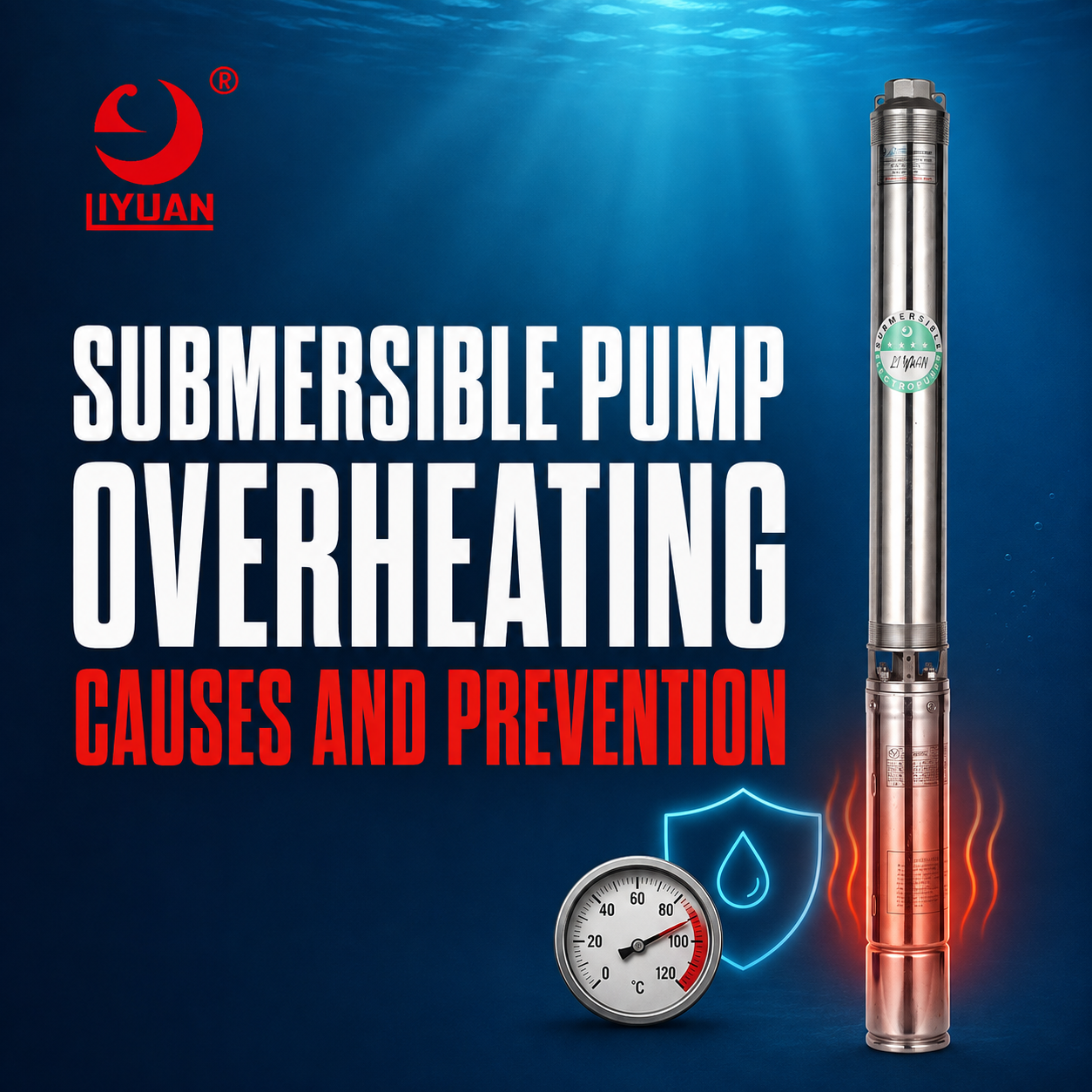
Submersible Pump Overheating Usually Results From Insufficient Water Flow Around The Motor, High Water Temperature, Voltage Problems, Excessive Current, Frequent Starting, Incorrect Pump Selection, Or Mechanical Friction.
A Motor Can Overheat Even When It Remains Completely Submerged.
Submergence Places The Motor In Water. However, Effective Cooling Requires Enough Water To Move Across The Motor housing.
The Best Prevention Method Combines Correct Pump sizing, sufficient motor cooling flow, stable voltage, suitable overload protection, And Regular monitoring.
Operators Should Stop The Pump And Investigate Repeated thermal trips. Resetting The Protection Without Correcting The Cause Can Damage The Winding insulation, bearings, seals, And Cable.
How A Submersible Motor Removes Heat
A Submersible Motor Converts Electrical Energy Into Mechanical power.
Electrical resistance, magnetic losses, bearings, And Mechanical loading Create heat.
Water Moving Across The Motor housing Absorbs This heat And Carries It Away.
In A Typical Deep Well installation, The Motor Sits Below The Pump inlet. Water Flows Along The Motor Before Entering The Pump.
The Well casing Helps Guide This flow.
However, A Large casing, open tank, lake, reservoir, Or Unusual Well inflow Can Allow Water To Bypass The Motor.
When Water Does Not Move Across The housing, heat accumulates Inside The Motor.
Is A Hot Submersible Motor Always Faulty?
Not Every High Temperature Indicates Immediate failure.
Motor Design, insulation class, water temperature, load, And Manufacturer limits Determine Normal operating temperature.
The Motor’s Internal temperature Matters More Than A Casual Surface measurement.
Operators Should Compare Current Data With:
- Manufacturer Temperature Limits
- Original Commissioning Data
- Motor Nameplate
- Sensor Readings
- Historical Trends
- Water Temperature
- Actual Motor Load
According To Grundfos, Electrical Problems, Mechanical Loading, Frequent Cycling, Flow Outside The Approved Range, And Insufficient Fluid Flow Past A Submersible Motor Can All Cause Excessive temperature.
Common Signs Of Pump Overheating
Thermal Protection Trips
A Motor Temperature sensor Or Thermal protector May Stop The Pump.
The Motor May Restart Automatically After cooling.
Repeated shutdown And restart Cycles Strongly Indicate An Unresolved thermal condition.
Overload Relay Trips
Excessive current Produces Additional winding heat.
An Overload relay May Stop The Motor Before Temperature Causes Permanent damage.
However, Poor External cooling Can Overheat A Motor Even When Current Remains Near Its normal value.
Pump Stops After Running For Several Minutes
A Pump That Starts Normally But Stops After A Predictable period May Be Accumulating heat.
Possible Causes Include:
- Low Cooling Flow
- High Water Temperature
- Excessive Current
- Mechanical Friction
- Frequent Starts
- Motor Winding Damage
- Control Panel Overheating
Pump Restarts After Cooling
Some Motors Or Protection devices Reset Automatically.
The Pump May Start Again After Several minutes Or hours.
Do Not Treat Automatic restart As A Repair.
Rising Motor Current
A Gradual current increase Can Indicate Bearing wear, impeller rubbing, sand accumulation, or Increasing mechanical load.
Compare All Current readings Under Similar flow And Head conditions.
Current Imbalance
Unequal Three-Phase currents Create Uneven winding temperatures.
One Winding Can overheat While The Average current Appears Acceptable.
Reduced Insulation Resistance
Repeated overheating Ages The Motor winding insulation.
Insulation-resistance readings May decline Over Time.
Temperature, moisture, cable length, And Test voltage Affect The Result. Therefore, Compare Measurements Under Similar conditions And Follow Manufacturer instructions.
Reduced Pump Performance
Mechanical friction, bearing wear, blocked stages, And Motor damage Can Reduce speed Or hydraulic efficiency.
The Pump May Produce Less flow And pressure While Consuming More power.
Unusual Noise Or Vibration
Worn bearings, rubbing impellers, cavitation, And Mechanical misalignment Can Create Noise And vibration.
These Conditions Also Increase heat generation.
Main Causes Of Submersible Pump Overheating
Insufficient Cooling Flow Past The Motor
Insufficient External flow Is One Of The Most Important Causes.
The Motor Requires A Minimum water velocity Along Its surface.
The Required value Depends On:
- Motor Diameter
- Motor Power
- Well Diameter
- Water Temperature
- Motor Design
- Pump Position
- Installation Orientation
- Manufacturer Requirements
Do Not Apply One Minimum cooling velocity To Every motor.
The Submersible Motor Cooling System: Complete Guide Explains Motor flow And Cooling sleeves.
Oversized Well Casing
A Large Space Between The Motor And casing Reduces Water velocity.
Water May Move Through The well Without Passing closely Over The Motor surface.
A Properly designed flow sleeve Can Direct Water Across The housing.
Open Tank Or Reservoir Installation
Open water Does Not Naturally guide flow Along The motor.
Water Can Enter The Pump From Different directions While Remaining Nearly stationary Around The Motor body.
This Condition Often Requires A Cooling sleeve.
Water Enters The Well Above The Pump
If The Main water-producing zones Sit Above The Pump inlet, water Can Move Directly Into The pump Without Passing The Motor.
A Flow sleeve Can Force Water To Enter Near The Bottom Of The motor And Travel Along The housing.
Incorrect Horizontal Installation
Some Pump And Motor assemblies Allow Horizontal operation Only Under Specific conditions.
Air pockets, bearing loading, cooling flow, And Thrust behavior Can Change With orientation.
Confirm Horizontal operation With The Pump And Motor manufacturers.
Pump Operates At Very Low Flow
A Closed Or Nearly closed valve Can Move The Pump Far To The Left Of Its curve.
Low Flow Can Reduce Cooling And Cause Internal water temperature To rise.
The Pump May also Experience:
- Excessive Downthrust
- Internal Recirculation
- Vibration
- Bearing Stress
- Seal Damage
- Hydraulic Instability
Grundfos Explains That Operation Too Far Left On The Curve Can Increase Internal pressure And Cause Pump And Motor Damage.
Pump Operates At Excessive Flow
High Flow Can Move The Pump Too Far To The Right Of Its curve.
Depending On Pump design, the Required power May Increase Beyond The Motor rating.
Excessive flow Can Result From:
- Low System Head
- Open Bypass
- Oversized Pump
- Incorrect Valve Position
- Excessive VFD Speed
- Wrong Impeller Configuration
Use The Submersible Pump Flow Rate: Complete Sizing Guide To Keep The Operating Point Within The Recommended range.
High Water Temperature
Warm Water Reduces The Difference Between Motor And coolant temperature.
Therefore, The Water Removes Less Heat From The Motor.
High Temperature Can Also Reduce Bearing lubrication performance And Increase Seal stress.
Select A Hot Water Submersible Pump For Geothermal Wells, industrial process water, And Elevated-temperature applications.
Scale On The Motor Housing
Mineral scale, iron deposits, biological growth, And sediment Can Cover The Motor surface.
The Deposit Layer Acts As Thermal insulation.
Even With Adequate water flow, heat transfer Can decline.
Inspect And Clean The Motor According To Water quality And Maintenance requirements.
Sediment Around The Motor
Sediment Can Accumulate Around A Pump Installed Near The Well bottom.
This Material Can Block Cooling passages And Reduce circulation.
Maintain Suitable clearance Above The well bottom.
Low Water Level
A Falling Dynamic water level Can Expose Part Of The Pump Or Motor.
Even Before Complete Exposure, Low submergence Can Create:
- Poor Cooling
- Vortex Formation
- Air Entrainment
- Cavitation
- Dry Running
- Unstable Motor Load
Install Low-level protection And Measure Dynamic water level During Peak operation.
Dry Running
Water lubricates And cools Many Pump And Motor components.
Dry Running Can Raise Temperature rapidly.
A Dedicated dry-run system Should Detect Low water level, undercurrent, underpower, low flow, Or Abnormal pressure.
Low Supply Voltage
Low Voltage Can Reduce Motor torque And Increase current.
The Additional current Generates More winding heat.
Voltage drop Often Results From:
- Undersized Cable
- Excessive Cable Length
- Loose Connections
- Weak Transformer
- Small Generator
- Damaged Contactor
- High-Resistance Splice
Measure Voltage During Actual operation.
High Supply Voltage
Excessive Voltage Can Increase Magnetic losses And Motor temperature.
It Can Also Stress Winding insulation And Control components.
Install Protection For Both Under-Voltage And overvoltage.
Voltage Imbalance
Three-Phase voltage imbalance Creates Much Larger current imbalance.
One winding Can overheat Even When Average current remains Within The motor rating.
Calculate Voltage Imbalance With:
Voltage Imbalance (%) = Maximum Deviation From Average Voltage ÷ Average Voltage × 100
Compare The Result With The Motor Manufacturer’s limit.
The Submersible Pump Voltage Protection: Complete Guide Explains Voltage And Phase monitoring.
Phase Loss
A Three-Phase Motor Can Overheat Quickly When One phase opens.
Phase Loss Can Result From A Blown fuse, damaged contactor, loose terminal, broken cable, Or Utility problem.
Use Phase-loss protection That Stops The Motor rapidly.
Current Imbalance
Unequal currents Can Result From:
- Voltage Imbalance
- Winding Damage
- Unequal Cable Resistance
- Poor Connections
- Contactor Problems
- Transformer Faults
Measure All Three Motor conductors.
Undersized Drop Cable
An Undersized Cable Creates Excessive voltage drop And heat.
The Motor receives less voltage And May draw more current.
The Cable itself Can Also overheat.
Use The Submersible Pump Cable: Complete Selection Guide To Select Cable From Motor current, voltage, length, And Starting method.
Loose Electrical Connections
Loose terminals Create High resistance.
High Resistance Generates Local heat And Voltage drop.
Inspect The Control panel, pressure switch, contactor, overload relay, cable splice, And wellhead connections.
Tighten Connections To The Manufacturer’s specified torque.
Frequent Starting And Stopping
Every Motor start Produces High current And Additional heat.
Insufficient time Between starts Can Prevent The Motor From cooling.
Common Causes Include:
- Waterlogged Pressure Tank
- Ruptured Tank Bladder
- Incorrect Tank Precharge
- Leaking Check Valve
- Pipe Leakage
- Narrow Pressure Differential
- Incorrect VFD Sleep Settings
- Faulty Pressure Sensor
Track Daily start counts.
Incorrect Overload Setting
A Setting That Is Too High May Allow Excessive current To Continue.
A Setting That Is Too Low Creates Nuisance trips But Does Not Cause The Motor itself To Overheat.
Never Raise The Setting Above The Manufacturer’s approved current.
Read The Submersible Pump Overload Protection: Complete Guide For Proper Protection selection.
Pump Is Mechanically Overloaded
Mechanical damage Increases Required torque And motor current.
Possible Causes Include:
- Worn Bearings
- Bent Shaft
- Tight Coupling
- Jammed Impeller
- Sand Accumulation
- Corroded Stages
- Damaged Diffuser
- Incorrect Clearances
- Foreign Material
Stop The Pump If Current continues rising.
Worn Radial Bearings
Excessive bearing clearance Allows Shaft movement.
The Impeller Can rub Against Stationary surfaces.
Friction Then Increases Motor load And temperature.
Damaged Thrust Bearing
The Thrust Bearing carries Axial hydraulic load.
Excessive flow, very low flow, rapid starts, water hammer, And Improper operating points Can Damage It.
A Damaged Bearing Can Increase vibration, friction, And heat.
Blocked Pump Inlet
A Blocked inlet Reduces Water flow Through The Pump And Across The Motor.
Sand, debris, scale, and biological material Can Restrict The screen.
Clean The inlet And Check The well condition.
High-Density Or High-Viscosity Liquid
A Motor Selected For Clean water May overload When Pumping A Heavier Or More Viscous liquid.
Density Affects Hydraulic power.
Viscosity Can Reduce pump efficiency And Increase losses.
Confirm The Actual fluid properties During pump selection.
Incorrect Motor Size
An Undersized Motor May operate Near Or Above Its Rated power.
The Motor Can overheat Even When The Pump delivers The Required flow.
Match Motor power To The Complete pump curve, not Only One duty point.
Incorrect Frequency
Operating At The Wrong frequency Changes Pump speed, flow, head, And power.
A 50 Hz Motor And Pump Should Not Be Operated At 60 Hz Unless The Manufacturer Approves The combination.
Incorrect VFD Settings
A VFD Can Contribute To Overheating Through:
- Excessive Maximum Speed
- Very Low Continuous Speed
- Incorrect Motor Data
- High Carrier Frequency
- Long Motor Cable
- Inadequate Output Filtering
- Excessive Acceleration
- Poor Current Limits
The Drive Must Protect The Motor Across The Complete speed range.
Review The Variable Frequency Drive For Submersible Pump: Complete Guide Before Changing Parameters.
When Does A Submersible Motor Need A Cooling Sleeve?
A Cooling Sleeve Surrounds The Pump And Motor assembly.
It Forces Water To Enter Near The Motor end, move Along The Motor surface, And Reach The Pump inlet.
Consider A Cooling Sleeve When:
- The Pump Operates In A Tank
- The Pump Operates In A Lake
- The Pump Operates In A Reservoir
- The Well Casing Is Much Larger Than The Motor
- Water Enters Above The Pump
- The Pump Operates Horizontally
- Water Temperature Is High
- Natural Flow Direction Bypasses The Motor
- Continuous Duty Increases Cooling Demand
Grundfos Explains That A Cooling Jacket Directs Water Across The Motor surface When The Installation Cannot Provide Natural cooling flow.
Cooling Sleeve Design Considerations
A Cooling Sleeve Must Match:
- Motor Diameter
- Pump Diameter
- Required Flow Velocity
- Pump Flow Rate
- Inlet Position
- Installation Orientation
- Water Temperature
- Solids Content
- Material Requirements
- Mounting Method
A Sleeve That Is Too Large May Not Create Enough velocity.
A Sleeve That Is Too Small May Cause Excessive friction Or Become blocked.
The Sleeve inlet Should Remain Clear Of Sediment And debris.
Overheating Symptom And Likely Cause
| Observed Symptom | Likely Cause |
|---|---|
| Motor Trips After A Fixed Run Time | Cooling Problem, Overload, Or High Water Temperature |
| Motor Current Is High On Every Phase | Excessive Load, Low Voltage, Or Pump Operating Point |
| One Phase Current Is High | Voltage Imbalance, Phase Fault, Or Winding Problem |
| Current Is Normal But Temperature Rises | Insufficient Cooling Flow Or High Water Temperature |
| Temperature Rises At Low Flow | Closed Valve, Low-Speed Operation, Or Minimum-Flow Problem |
| Temperature Rises At High Flow | Excessive Pump Load Or Motor Undersizing |
| Temperature Rises After Frequent Starts | Pressure Tank, Check Valve, Or Control Problem |
| Pump Is Hot In An Open Reservoir | Missing Or Incorrect Cooling Sleeve |
| Motor Overheats After Scaling Develops | Insulated Housing Or Restricted Cooling Passage |
| VFD Reports Motor Temperature | Speed, Load, Cooling, Cable, Or Parameter Problem |
How To Diagnose Pump Overheating
Step 1: Record The Protection Alarm
Identify Whether The Motor stopped Because Of:
- Overload
- Temperature
- Phase Loss
- Voltage
- Ground Fault
- VFD Overcurrent
- VFD Overtemperature
- Dry Running
Record The Alarm Before Resetting The controller.
Step 2: Measure Water Temperature
Measure Water temperature Near The Motor under Normal operation.
Use The Maximum Expected temperature For Pump And Motor selection.
Step 3: Measure Dynamic Water Level
Confirm That The Pump And Motor remain Properly submerged.
Measure The Level After The Well reaches Stable drawdown.
Step 4: Verify Cooling Flow Direction
Determine Where Water enters The well, tank, Or reservoir.
Confirm That It moves Along The Motor Before Entering The pump.
Install Or Correct A Flow sleeve When Water bypasses The Motor.
Step 5: Measure Flow And Pressure
Record Actual flow rate And discharge pressure.
Calculate Total Dynamic Head And Compare The duty point With The Pump curve.
Step 6: Measure Voltage
Measure Voltage During startup And steady operation.
For Three-Phase motors, record All Three line-to-line values.
Step 7: Measure Current
Measure Every Motor conductor.
Compare Results With The Motor nameplate And Manufacturer data.
Step 8: Check Starting Frequency
Record Starts Per hour And Per day.
Inspect The Pressure tank, pressure switch, check valve, And system For leaks.
Step 9: Check VFD Data
Review:
- Output Frequency
- Motor Current
- Motor Speed
- Motor Temperature
- Torque
- Acceleration Time
- Minimum Speed
- Maximum Speed
- Fault History
Step 10: Test Motor Insulation
Disconnect The Motor cable From Drives And Electronic devices.
Measure Insulation resistance According To Motor Manufacturer instructions.
Track Changes Over time.
Step 11: Inspect The Pump And Motor
Pull The Assembly When Data Indicates Mechanical wear, cable damage, blocked stages, Or Internal motor problems.
Inspect:
- Inlet Screen
- Impellers
- Diffusers
- Shaft
- Coupling
- Radial Bearings
- Thrust Bearing
- Motor Housing
- Scale Buildup
- Cable And Splice
How To Prevent Submersible Pump Overheating
Select The Correct Pump And Motor
Choose A Duty point Within The Recommended operating range.
Check Motor power Across The Complete Pump curve.
Maintain Minimum Cooling Flow
Provide The Manufacturer’s required water velocity Around The Motor.
Use A Cooling sleeve When The Installation Cannot Guide Flow naturally.
Protect Against High Water Temperature
Use Temperature-rated windings, seals, cables, bearings, And Motor filling fluid.
Do Not Use A Standard motor In A Hot-water application Without Manufacturer approval.
Install Complete Electrical Protection
Use Monitoring For:
- Overload
- Phase Loss
- Voltage Imbalance
- Under-Voltage
- Overvoltage
- Motor Temperature
- Dry Running
- Locked Rotor
- Excessive Starts
Control Starting Frequency
Size The Pressure tank Correctly.
Repair leaking check valves And pipes.
Program Minimum run And stop times.
Keep The Pump Within Its Flow Range
Avoid Nearly closed discharge valves And Uncontrolled high flow.
Do Not Operate Below Minimum flow Unless The Manufacturer approves A Bypass arrangement.
Maintain The Pump
Inspect Hydraulic parts, bearings, cable, connections, inlet screens, And Motor surfaces.
Follow The Electric Submersible Pump Maintenance Guide To Establish A Preventive Maintenance program.
Frequently Asked Questions
Can A Submersible Pump Overheat While Underwater?
Yes. Water must Move Across The Motor surface To remove heat.
Still Water May Not Provide Enough cooling.
How Can I Tell If The Motor Is Overheating?
Check Temperature alarms, thermal trips, overload events, motor current, voltage, insulation resistance, And Restart behavior.
Will Low Voltage Make A Pump Hot?
Yes. Low Voltage Can reduce torque And increase current.
This Additional current Raises winding temperature.
Can A Closed Valve Cause Overheating?
Yes. Very Low Or Zero Flow Can Reduce Cooling And Heat The Water Inside The Pump.
It Can Also Increase Hydraulic And Bearing stress.
Can Excessive Flow Cause Overheating?
Yes. High Flow Can Move The Pump Outside Its operating range And Increase Motor power demand.
Does A Bigger Well Improve Cooling?
Not Always. A Larger casing Can Reduce water velocity Around The Motor.
A Cooling sleeve May Be Necessary.
Can A VFD Cause Motor Overheating?
Yes. Incorrect Speed limits, motor data, carrier frequency, cable configuration, Or Cooling conditions Can Increase temperature.
Can Frequent Cycling Overheat The Motor?
Yes. Every Start Adds electrical heat.
The Motor May Not cool Adequately Between starts.
Can Scale Make The Motor Overheat?
Yes. Scale Acts As Thermal insulation And Can Reduce heat transfer To The Water.
Should I Keep Resetting A Thermal Trip?
No. Repeated Trips Indicate A Cooling, electrical, mechanical, Or control problem.
Conclusion
Submersible Pump Overheating Can Develop Even When The Pump And Motor Remain Fully submerged.
The Motor Needs Sufficient water movement Across Its housing, stable voltage, balanced current, correct hydraulic loading, And Suitable starting frequency.
Operators Should Measure Water temperature, dynamic water level, flow, pressure, voltage, current, And Start counts Before Replacing The motor.
A Cooling sleeve Often Solves Heat-transfer problems In Large wells, tanks, lakes, reservoirs, And Open-water installations.
Liyuan Pump Can Evaluate Well diameter, motor size, water temperature, pump flow, installation orientation, voltage, cable length, And Control requirements To Develop A Reliable Deep Well Pumping System.
Email:Liyuan@liyuan-pump.com
WhatsApp:+86 181-2828-2767