Submersible Motor Mechanical Seal: Complete Guide
A Submersible Motor Mechanical Seal Is A Critical Protective Component That Prevents External Water, Sand, And Contaminants From Entering The Motor. It Also Helps Retain The Internal Cooling Or Lubricating Fluid.
Selecting The Correct Seal Materials And Operating The Motor Under Suitable Conditions Can Significantly Reduce Leakage, Bearing Damage, Electrical Failure, And Unexpected Downtime.
For Deep Wells, Boreholes, Agricultural Irrigation, Industrial Water Supply, And Municipal Pumping Systems, Mechanical Seal Reliability Directly Affects Motor Performance And Service Life.
What Is A Submersible Motor Mechanical Seal?
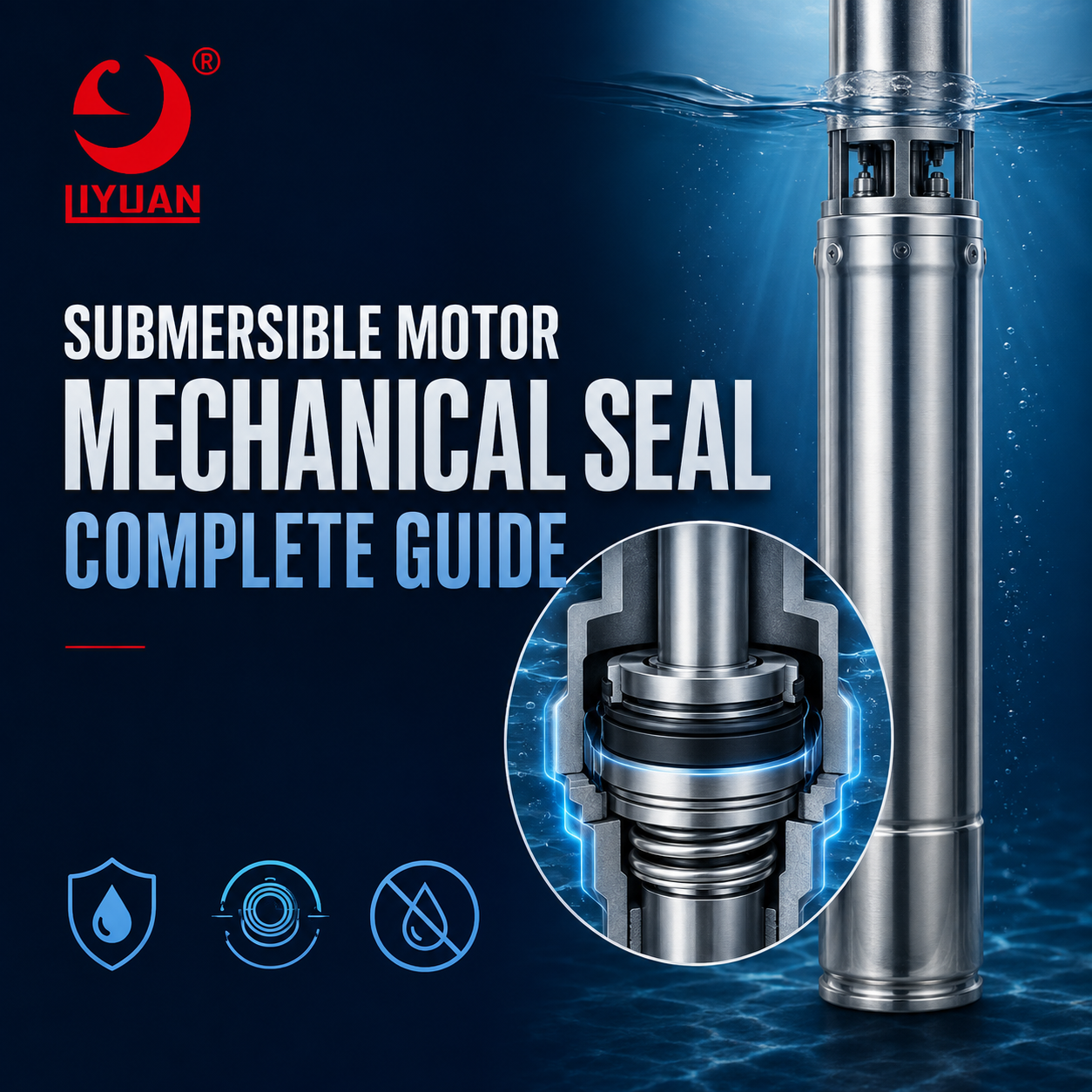
A Submersible Motor Mechanical Seal Is Installed Around The Motor Shaft, Usually Near The Shaft Extension At The Top Of The Motor. It Creates A Controlled Sealing Interface Between The Rotating Shaft And The Stationary Motor Housing.
Unlike A Simple Rubber Seal, A Mechanical Seal Uses Two Precision-Finished Faces. One Face Rotates With The Shaft, While The Other Remains Stationary.
A Spring Or Flexible Element Keeps These Faces In Contact. A Microscopic Fluid Film Between Them Provides Lubrication And Controls Heat.
The Mechanical Seal Performs Three Important Functions:
- It Prevents Well Water From Entering The Motor.
- It Retains The Motor’s Internal Cooling Or Lubricating Fluid.
- It Protects Internal Bearings, Windings, And Electrical Components From Contamination.
The Exact Seal Structure Can Vary According To Motor Diameter, Power, Speed, Installation Depth, Water Quality, And Manufacturer.
Why Is Mechanical Sealing Important?
A Submersible Motor Operates Completely Underwater. Therefore, Its Sealing System Must Continuously Withstand External Pressure, Shaft Rotation, Temperature Changes, Sand, Minerals, And Possible Chemical Contamination.
If The Mechanical Seal Fails, External Water May Enter The Motor. This Can Contaminate The Internal Fluid And Reduce Electrical Insulation.
Seal Failure May Eventually Cause:
- Reduced Insulation Resistance
- Winding Short Circuits
- Bearing Corrosion
- Lubrication Failure
- Shaft Damage
- Motor Overheating
- Unexpected Pump Shutdown
- Expensive Motor Replacement
A Reliable Seal Is Especially Important For High-Head Systems, Deep Installations, Hot Water Applications, And Wells Containing Sand.
Main Components Of A Mechanical Seal
Although Designs Differ, A Typical Submersible Motor Mechanical Seal Includes Several Essential Components.
Rotating Seal Face
The Rotating Face Is Connected To The Motor Shaft. It Rotates At The Same Speed As The Shaft.
This Component Must Have A Flat, Smooth Surface To Maintain Stable Contact With The Stationary Face.
Stationary Seal Face
The Stationary Face Is Fixed Inside The Motor Housing. It Does Not Rotate.
Together, The Rotating And Stationary Faces Create The Primary Sealing Interface.
Secondary Seals
O-Rings, Rubber Bellows, Gaskets, Or Other Elastomer Components Form The Secondary Sealing Points.
They Prevent Water From Bypassing The Main Seal Faces Through Gaps Between The Seal Assembly, Shaft, And Housing.
Spring System
The Spring Maintains Contact Between The Two Seal Faces. It Compensates For Minor Wear, Movement, And Dimensional Changes During Operation.
Metal Retainer
The Retainer Holds The Seal Components In Position. Stainless Steel Is Commonly Used Because It Provides Strength And Corrosion Resistance.
Shaft Sleeve
Some Motor Designs Use A Replaceable Shaft Sleeve. It Protects The Main Shaft From Wear And Corrosion.
Replacing A Worn Sleeve Is Usually More Economical Than Replacing The Complete Motor Shaft.
Sand Slinger Or Sand Guard
A Sand Slinger Helps Deflect Sand And Abrasive particles Away From The Primary Seal Area.
It Does Not Replace The Mechanical Seal. Instead, It Provides An Additional Protective Barrier.
How Does A Submersible Motor Mechanical Seal Work?
The Rotating And Stationary Seal Faces Are Pressed Together. However, They Should Not Operate With Completely Dry Contact.
A Very Thin Fluid Film Normally Forms Between The Faces. This Film Provides Lubrication, Controls Friction, And Helps Remove Heat.
The Seal Must Maintain The Correct Balance:
- Excessive Separation Can Cause Leakage.
- Insufficient Lubrication Can Cause Heat And Surface Damage.
- Uneven Contact Can Cause Rapid Wear.
- Excessive Pressure Can Distort The Seal Faces.
This Is Why Mechanical Seal Performance Depends On More Than The Seal Material. Shaft Alignment, Surface Finish, Pressure Balance, Cooling, Installation, And Water Quality Are Also Important.
Mechanical Seal Vs Lip Seal
Mechanical Seals And Lip Seals Can Both Be Used In Submersible Motor Sealing Systems, But They Work Differently.
A Lip Seal Uses A Flexible Sealing Edge That Presses Directly Against The Shaft. It Is Compact And Economical, But Abrasive Particles Can Wear The Lip Or Create Grooves In The Shaft.
A Mechanical Seal Uses Two Precision Faces. It Usually Provides Better Performance For Continuous Operation, Higher Pressure, And More Demanding Water conditions.
Some Motor Designs Combine Multiple Protective elements, Including:
- A Sand Slinger
- A Labyrinth Passage
- One Or More Lip Seals
- A Mechanical Face Seal
- An Internal Pressure-Compensation Diaphragm
This Multi-Layer Design Helps Improve Reliability In Deep-Well Applications.
Common Mechanical Seal Face Materials
Seal Face Material Must Match The Water Quality, Temperature, Pressure, Shaft Speed, And Expected Operating Life.
Carbon And Ceramic
Carbon And Ceramic Is A Common Combination For Clean-Water Applications.
It Offers Smooth Operation, Moderate Cost, And Good General Sealing Performance. However, Highly Abrasive Water Can Wear The Carbon Face.
This Combination Is Commonly Suitable For:
- Clean Groundwater
- Residential Wells
- Light Agricultural Irrigation
- Normal-Temperature Water
Silicon Carbide
Silicon Carbide Provides Excellent Hardness, Heat Resistance, And Abrasion Resistance.
A Silicon-Carbide-To-Silicon-Carbide Seal Can Be Suitable For Water Containing Fine Sand Or Minerals. However, Correct Lubrication And Installation Remain Essential.
The Franklin Electric 10-Inch Rewindable Motor Is One Example Of A Motor Using A Silicon Carbide Mechanical Seal As Part Of Its Sand-Protection System.
Tungsten Carbide
Tungsten Carbide Provides High Strength And Good Wear Resistance. It Can Be Used In Demanding Industrial Environments.
However, It May Cost More Than Standard Carbon And Ceramic Combinations. The Complete Fluid Conditions Should Be Evaluated Before Selection.
Ceramic
Ceramic Offers Good Corrosion Resistance And Dimensional Stability. It Is Frequently Paired With Carbon In Standard Clean-Water Seals.
However, Ceramic Can Be Brittle. Careful Handling During Installation Is Important.
Common Elastomer Materials
Secondary Seal Materials Are Just As Important As The Main Seal Faces.
NBR
Nitrile Rubber, Also Called NBR, Is Widely Used For Standard Water And Oil Applications.
It Offers Good Mechanical Strength And Competitive Cost. However, Its Temperature And Chemical Resistance Are Limited Compared With Some Specialized Elastomers.
EPDM
EPDM Offers Good Resistance To Water, Steam, And Certain Hot-Water Conditions.
However, It Is Generally Not Suitable For Contact With Petroleum-Based Oils. Therefore, It Must Be Matched With The Motor’s Internal Fluid.
FKM
FKM Provides Strong Resistance To Heat And Many Chemicals.
It May Be Suitable For Higher-Temperature Or Chemically Demanding Applications. However, It Is Not Universally Compatible With Every Fluid.
PTFE
PTFE Offers Excellent Chemical Resistance And Low Friction. It Can Be Used In Specialized Sealing components.
However, Seal Design And Installation Tolerances Must Account For Its Mechanical properties.
Always Verify Elastomer Compatibility With The Pump Manufacturer Before Final Selection.
Mechanical Seals For Sandy Water
Sand Is One Of The Most Common Causes Of Premature Seal Failure.
Abrasive Particles Can Enter The Seal Area And Damage The Polished Faces. Sand Can Also Wear The Shaft Sleeve, Elastomer Components, And External Seal protection.
Common Symptoms Include:
- Visible Leakage
- Grooves On The Seal Faces
- Scratched Shaft Surfaces
- Contaminated Internal Motor Fluid
- Rapid Insulation Deterioration
- Repeated Seal Replacement
A Sand-Resistant System May Use Silicon Carbide Faces, A Sand Slinger, Replaceable Shaft Sleeves, And Abrasion-Resistant Pump Components.
However, No Mechanical Seal Can Completely Compensate For Excessive Sand Production. The Well Should Be Properly Developed, And The Pump Should Be Installed Above The Sediment Zone.
For More Selection Information, Read The Sand Resistant Submersible Pump: Complete Guide.
Mechanical Seals For Hot Water
High Water Temperature Can Accelerate Elastomer Aging, Reduce Lubrication, And Increase Thermal Distortion.
A Standard Seal Designed For Cold Groundwater May Not Be Suitable For Hot-Water Operation.
A Hot-Water Mechanical Seal May Require:
- Heat-Resistant Elastomers
- Suitable Seal Face Materials
- High-Temperature Internal Motor Fluid
- Adequate Water Flow Around The Motor
- Reduced Motor Load
- Specialized Cable And Winding Insulation
Franklin Electric’s 6-Inch High-Temperature Motor Demonstrates How High-Temperature Motor Designs Combine Specialized Sealing, Coolant, Bearings, And Internal Materials.
For Complete Pump Selection Considerations, See The Hot Water Submersible Pump: Complete Selection Guide.
Corrosion Resistance And Stainless Steel Components
Corrosion Can Damage The Seal Retainer, Spring, Shaft, Sleeve, And Motor housing.
Standard Stainless Steel May Perform Well In Clean Groundwater. However, Chlorides, Saltwater, Acids, And Industrial Chemicals Can require more resistant materials.
Possible Material Options Include:
- AISI 304 Stainless Steel
- AISI 316 Stainless Steel
- Duplex Stainless Steel
- Specialized Alloys
- Engineered Polymer Components
Material Selection Should Be Based On A Water Analysis. Temperature, Chloride Concentration, PH, And Chemical Exposure Should All Be Considered.
The Stainless Steel Deep Well Pump: Complete Guide Explains How Stainless Steel Grades Affect Corrosion Resistance And Pump Life.
Mechanical Seals In Water-Filled And Oil-Filled Motors
Both Water-Filled And Oil-Filled Motors Require Reliable Shaft Sealing. However, The Internal Fluid And Lubrication Conditions Are Different.
A Water-Filled Motor Uses A Water-Based Internal Fluid For Cooling And Lubrication. The Seal Must Prevent External Contaminants From Entering While Retaining The Clean Internal Fluid.
An Oil-Filled Motor Uses A Dielectric Oil Or Similar Lubricating Fluid. Seal Compatibility With The Oil Is Essential.
The Wrong Elastomer Can Swell, Harden, Shrink, Or Lose Its Sealing ability.
When Comparing Motor Designs, Consider:
- Internal Fluid Type
- Environmental Requirements
- Seal Material Compatibility
- Repair Requirements
- Operating Temperature
- Installation Depth
- Local Regulations
Read Water Filled Submersible Motor Vs Oil Filled Motor For A Detailed Comparison.
Pressure Compensation In Deep Wells
External Water Pressure Increases With Installation Depth. Without Pressure Compensation, The Difference Between Internal And External Pressure Can Place Excessive Stress On The Mechanical Seal.
Many Submersible Motors Use A Flexible Diaphragm Or Expansion System. This Component Allows The Internal Motor Fluid To Expand And Contract While Helping Equalize Pressure.
A Proper Pressure-Compensation System Can:
- Reduce Seal Pressure Differential
- Accommodate Thermal Expansion
- Prevent Excessive Internal Pressure
- Protect Bearings And Windings
- Improve Deep-Well Reliability
The Mechanical Seal And Pressure-Compensation System Should Be Evaluated Together.
Relationship Between The Seal And Thrust Bearing
The Mechanical Seal Does Not Carry The Main Pump Thrust Load. That Function Belongs To The Motor’s Thrust-Bearing System.
However, Excessive Shaft Movement Can Affect Seal-face alignment.
A Damaged Or Overloaded Thrust Bearing May Cause:
- Axial Shaft Movement
- Vibration
- Uneven Seal Contact
- Excessive Face Wear
- Heat Generation
- Repeated Seal Leakage
Therefore, Repeated Mechanical Seal Failure May Indicate A Deeper Motor Or Pump Problem.
Learn More In The Submersible Motor Thrust Bearing: Complete Guide.
Common Causes Of Mechanical Seal Failure
Dry Running
Mechanical Seal Faces Require Cooling And Lubrication. Operating Without Sufficient Water Can Generate Excessive Heat.
Excessive Sand
Sand Can Scratch The Seal Faces And Wear The Shaft Sleeve.
Incorrect Material Selection
Standard Seal Materials May Fail In Hot Water, Saltwater, Chemicals, Or Abrasive Water.
Shaft Misalignment
A Bent Shaft Or Incorrect Pump-To-Motor Coupling Can Produce Uneven Seal loading.
Excessive Vibration
Pump Imbalance, Worn Bearings, Cavitation, Or Improper Installation Can Damage The Seal.
Incorrect Installation
Touching Polished Faces, Installing Components Backward, Or Using Incorrect Lubricants Can Cause Immediate Leakage.
Pressure Overload
Very Deep Installation Or A Blocked Pressure-Compensation System Can Expose The Seal To Excessive Differential Pressure.
Frequent Starting
Repeated Starts Create Mechanical And Thermal stress. Excessive Cycling Can Accelerate Wear.
Overheating
Poor Cooling Flow, An Oversized Pump, Low Voltage, Phase Imbalance, Or High Water Temperature Can Damage Elastomers And Seal Faces.
Signs Of A Failing Mechanical Seal
A Developing Seal Problem May Not Be Visible While The Motor Is Installed In The Well.
Possible Warning Signs Include:
- Falling Insulation Resistance
- Contaminated Motor Fluid
- Rust Or Corrosion Near The Shaft
- Water Or Oil Leakage During Inspection
- Increased Motor Current
- Abnormal Vibration
- Unusual Noise
- Repeated Overload Trips
- Reduced Motor Performance
- Moisture Inside Electrical Components
These Symptoms Can Also Have Other Causes. Therefore, A Complete Motor Inspection Is Necessary.
How To Inspect A Mechanical Seal
Mechanical Seal Inspection Should Be Completed By A Qualified Technician.
A Typical Inspection Process May Include:
- Clean The Motor Exterior Before Disassembly.
- Record The Motor Model, Power, Voltage, And Serial Information.
- Check Shaft Rotation And Axial Movement.
- Measure Insulation Resistance With Suitable Test Equipment.
- Inspect The Internal Motor Fluid For Sand, Rust, Or Discoloration.
- Examine The Seal Faces For Cracks, Grooves, Heat Marks, Or Uneven Wear.
- Inspect The Shaft Sleeve And Seal Seat.
- Check O-Rings And Elastomers For Swelling, Hardening, Or Damage.
- Verify The Pressure-Compensation Diaphragm.
- Replace Complete Seal Components When Required.
- Refill The Motor With The Manufacturer-Approved Fluid.
- Perform Leakage, Pressure, And Electrical Tests Before Reinstallation.
The Electric Submersible Pump Maintenance Guide Provides Additional Maintenance Recommendations.
Can A Mechanical Seal Be Repaired?
Mechanical Seal Faces Are Precision Components. Deep Scratches, Cracks, Distortion, Or Severe Wear Usually Require Replacement.
Reusing Damaged Seal Faces Can Lead To Immediate Leakage.
A Complete Seal Kit Should Normally Include Matching Faces, O-Rings, Springs, And Other Required Components. Mixing Used And New Parts May Produce Uneven Contact.
A Rewindable Motor Can Often Be Opened, Inspected, Refilled, And Repaired By A Qualified Service Center. This Can Reduce Long-Term Ownership Cost For Larger Motors.
Read The Rewindable Submersible Motors: Complete Guide To Understand The Repair And Maintenance Benefits.
How To Select The Correct Mechanical Seal
Provide Complete Operating Information Before Selecting A Seal.
Important Information Includes:
- Motor Brand And Model
- Motor Diameter
- Motor Power
- Shaft Diameter
- Rotation Speed
- Installation Depth
- Static Water Level
- Dynamic Water Level
- Water Temperature
- Sand Concentration
- Water PH
- Chloride Concentration
- Chemical Composition
- Internal Motor Fluid
- Expected Daily Operating Time
- Number Of Starts Per Hour
- Required Service Life
A Seal Selected Only By Shaft Diameter May Not Provide Reliable Performance. Pressure, temperature, fluid compatibility, and installation conditions must also match.
How To Extend Mechanical Seal Service Life
Follow These Practices To Improve Seal Reliability:
- Select Materials According To Water Quality.
- Avoid Dry Running.
- Maintain Adequate Cooling Flow Around The Motor.
- Install The Pump Above The Well Sediment Zone.
- Prevent Excessive Starting And Stopping.
- Use Correct Voltage And Motor Protection.
- Inspect The Pump And Motor After Abnormal Operation.
- Replace Worn Bearings And Shaft Sleeves.
- Use Manufacturer-Approved Motor Fluid.
- Keep Seal Faces Clean During Assembly.
- Test The Motor Before Returning It To Service.
- Follow The Recommended Maintenance Schedule.
Correct Pump Sizing Also Matters. An Incorrectly Selected Pump Can Overload The Motor, Increase Heat, And Shorten Seal Life.
Why Choose Liyuan Pump?
Liyuan Pump Has Manufactured Deep-Well Submersible Pumps And Motors Since 1992.
Our Product Range Includes 3-Inch To 10-Inch Submersible Pumps, Submersible Motors, Solar Pumping Systems, Control Equipment, And Customized Water-Pumping Solutions.
Liyuan Pump Can Help Customers Evaluate:
- Seal Face Materials
- Elastomer Compatibility
- Sand Protection
- Corrosion Resistance
- Motor Cooling
- Installation Depth
- Voltage And Phase
- Pump And Motor Matching
- Customized Operating Conditions
Our Products Serve Residential, Agricultural, Industrial, And Municipal Water-Supply Applications.
For Project Support And Motor Selection, Contact A Professional Submersible Motor Manufacturer In China.
Frequently Asked Questions
Does Every Submersible Motor Have A Mechanical Seal?
Not Every Motor Uses The Same Sealing Structure. Some Designs Use Mechanical Face Seals, Lip Seals, Sand Slingers, Labyrinth Systems, Or A Combination Of Multiple Sealing Components.
Which Mechanical Seal Material Is Best For Sandy Water?
Silicon Carbide Is Commonly Selected For Abrasive Conditions Because Of Its Hardness And Wear Resistance. However, The Complete Seal Design And Sand-Protection System Are Equally Important.
Can A Mechanical Seal Operate Dry?
A Mechanical Seal Should Not Operate Without The Required Lubrication And Cooling. Dry Running Can Rapidly Overheat And Damage The Seal Faces.
How Often Should A Mechanical Seal Be Replaced?
There Is No Universal Replacement Interval. Service Life Depends On Water Quality, Temperature, Pressure, Operating Hours, Shaft Condition, And Installation Quality.
Can A Damaged Seal Cause Motor Burnout?
Yes. Seal Leakage Can Allow Water And Contaminants To Enter The Motor. This May Reduce Insulation Resistance, Damage Bearings, And Eventually Cause Winding Failure.
Can I Replace Only One Seal Face?
Replacing Only One Face Is Usually Not Recommended. Matched Seal Faces And Secondary Sealing Components Should Be Replaced Together When Wear Or Damage Is Present.
Why Does A New Mechanical Seal Leak?
Possible Causes Include Incorrect Installation, Dirty Seal Faces, Damaged O-Rings, Shaft Runout, Incorrect Materials, Excessive Pressure, Or Dry Operation.
Is A Mechanical Seal Enough For Sandy Water?
A Mechanical Seal Alone May Not Be Sufficient. A Complete Sand-Resistant Design Can Include A Sand Slinger, Hard Seal Faces, Replaceable Shaft Sleeves, Suitable Bearings, And Abrasion-Resistant Pump Components.
Conclusion
A Submersible Motor Mechanical Seal Protects The Motor From Water Entry, Sand Contamination, Internal Fluid Loss, And Premature Electrical Failure.
Reliable Performance Depends On Correct Seal Face Materials, Compatible Elastomers, Stable Shaft Alignment, Effective Pressure Compensation, Adequate Cooling, And Proper Installation.
For Clean Groundwater, A Standard Carbon And Ceramic Seal May Be Suitable. For Sandy, Hot, Corrosive, Or High-Pressure Applications, More Specialized Materials And Protective Structures May Be Required.
Selecting The Mechanical Seal As Part Of The Complete Pump And Motor System Helps Reduce Downtime, Extend Service Life, And Improve Long-Term Water-Pumping Reliability.
OEM Production, And Custom Engineering Support, Contact Liyuan Pump Through
Email:Liyuan@liyuan-pump.com
WhatsApp:+86 181-2828-2767