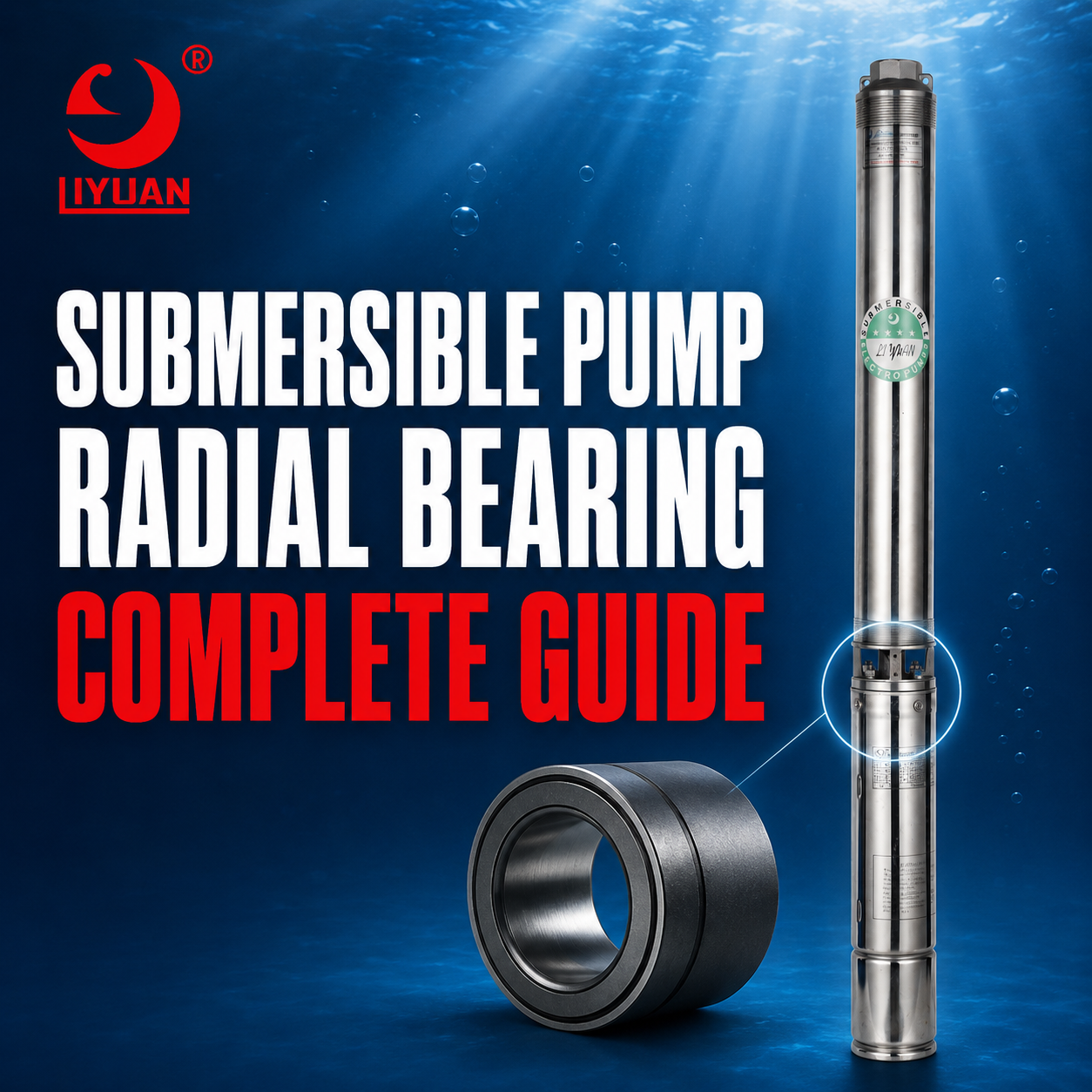
Submersible Pump Radial Bearing: Complete Guide
A Submersible Pump Radial Bearing Supports The Rotating Shaft And Limits Side-To-Side Movement. Correct Bearing Material, Clearance, Alignment, Water Lubrication, And Sand Resistance Help Prevent Vibration, Shaft Wear, Impeller Rubbing, And Motor Overload.
Deep-Well Pumps Can Use Several Radial Bearings Along The Pump Shaft. The Submersible Motor Also Contains Radial Bearings That Support The Rotor And Motor shaft.
Radial Bearings Do Not Replace The Thrust Bearing. Radial Bearings Control Side Loads, While The Thrust Bearing Supports Axial Pump forces.
What Is A Submersible Pump Radial Bearing?
A Submersible Pump Radial Bearing Is A Supporting Component Installed Around The Rotating shaft.
It Keeps The Shaft Centered Inside The Pump Or motor housing.
Its Main Functions Include:
- Supporting The Pump Shaft
- Supporting The Motor Shaft
- Limiting Radial Movement
- Maintaining Impeller Alignment
- Preventing Rotating And Stationary Contact
- Reducing Shaft Deflection
- Controlling Vibration
- Protecting Mechanical Seals
In Deep-Well Pumps, Radial Bearings Are Commonly Designed As Plain Bearings, Bushings, Or sleeve bearings.
What Is Radial Load?
Radial Load Acts Perpendicular To The shaft centerline.
It Can Result From:
- Hydraulic Pressure Imbalance
- Impeller Imbalance
- Shaft Misalignment
- Incorrect Pump Assembly
- Worn Diffusers
- Bent Shaft
- Coupling Misalignment
- Cavitation
- Sand Accumulation
- Horizontal Installation
The Radial Bearing Prevents These Forces From Moving The Shaft Beyond Its designed clearance.
Radial Bearing Vs Thrust Bearing
1.Radial And Thrust Bearings Support Different loads.
Radial Bearing
A Radial Bearing Controls:
- Side-To-Side Shaft Movement
- Shaft Centering
- Radial Load
- Vibration
- Impeller Alignment
Thrust Bearing
A Thrust Bearing Controls:
- Upthrust
- Downthrust
- Axial Shaft Movement
- Pump Hydraulic Thrust
- Stage-Stack Axial Load
A Damaged Radial Bearing Can Create Additional Load On The thrust bearing. Likewise, Excessive Axial Movement Can Damage Radial bearing surfaces.
Read The Submersible Motor Thrust Bearing: Complete Guide For Detailed Axial-Load information.
Pump Radial Bearing Vs Motor Radial Bearing
A Deep-Well Pump System Can Have Radial Bearings In Both The Hydraulic Section And motor.
Pump Radial Bearing
Pump Radial Bearings Support The Pump shaft between hydraulic stages.
They Are Usually Lubricated By The Pumped water.
Motor Radial Bearing
Motor Radial Bearings Support The Rotor And motor shaft.
Their Lubrication Depends On Motor design.
A Water-Filled Motor Uses A Clean Water-Based Internal fluid. An Oil-Filled Motor Uses A Dielectric Lubricating fluid.
The Water Filled Submersible Motor Vs Oil Filled Motor Guide Explains These Motor constructions.
How Does A Submersible Pump Radial Bearing Work?
The Shaft Rotates Inside The Bearing bore.
A Controlled Clearance Separates The Shaft From The bearing surface. Water Or Internal Motor Fluid Enters This gap.
The Fluid Provides:
- Lubrication
- Cooling
- Particle Flushing
- Friction Reduction
- Surface Separation
As The Shaft Rotates, The Fluid Can Form A Thin Lubricating film between the shaft and bearing.
Correct Operation Depends On:
- Suitable Clearance
- Clean Fluid
- Smooth Shaft Surface
- Proper Alignment
- Correct Rotational Speed
- Compatible Bearing Material
Too Little Clearance Can Cause contact and heat. Too Much Clearance Allows Vibration And misalignment.
What Is A Water-Lubricated Bearing?
A Water-Lubricated Bearing Uses Water Instead Of Grease Or conventional oil.
In A Pump Hydraulic Section, The Pumped Water Usually Lubricates The bearing.
In A Water-Filled Motor, A Special Internal Fluid Lubricates The motor bearings.
Franklin Electric States That Certain Four-Inch Submersible Motors Use Water-Lubricated Radial And Thrust bearings.
Water-Lubricated Bearings Require Clean Fluid And Correct clearances. They Should Not Be Operated Dry Unless The Manufacturer Specifically permits it.
What Is A Plain Bearing?
A Plain Bearing Supports The Shaft Without Balls Or rollers.
The Shaft Rotates Directly Inside A Smooth bearing surface.
Plain Bearings Offer:
- Compact Construction
- Quiet Operation
- Good Underwater Performance
- Simple Design
- Resistance To Shock
- Compatibility With Water Lubrication
They Are Common In Deep-Well Pumps Because They Fit Inside narrow hydraulic stages.
Plain Bearing Vs Ball Bearing
Plain Bearing
A Plain Bearing:
- Uses A Sliding Surface.
- Has No Rolling Elements.
- Can Use Water Lubrication.
- Fits Compact Pump Designs.
- Can Handle Submerged Operation.
Ball Bearing
A Ball Bearing:
- Uses Rolling Balls.
- Usually Requires Grease Or Oil.
- Provides Low Rolling Resistance.
- Needs Protection From Water And Contamination.
- Requires A More Complex Sealing System.
Pump Hydraulic Sections Commonly Use Plain Bearings. Dry Motor Designs And Surface Pumps May Use sealed rolling bearings.
Common Radial Bearing Materials
Bearing Material Must Match The Shaft, Lubricating Fluid, Temperature, Speed, Sand Content, And water chemistry.
Rubber Bearing
Rubber Bearings Can Provide:
- Good Water Lubrication
- Quiet Operation
- Resistance To Minor Particles
- Vibration Damping
The Rubber Compound Must Match Temperature And chemical conditions.
Engineering Polymer
Engineering-Polymer Bearings Provide:
- Low Friction
- Corrosion Resistance
- Low Weight
- Consistent Dimensions
- Good Water Compatibility
However, They Can Deform Under Excessive Heat Or load.
Carbon Bearing
1.Carbon Bearings Provide:
- Low Friction
- Good Dimensional Stability
- Corrosion Resistance
- High-Temperature Capability
Carbon Can Be Brittle. Impact And Incorrect Assembly Can Crack The component.
Graphite-Composite Bearing
Graphite Composites Can Provide Self-Lubricating characteristics during brief boundary-lubrication conditions.
The Exact Grade Must Match Water And mechanical load.
Bronze Bearing
Bronze Provides:
- Good Mechanical Strength
- Stable Dimensions
- Good Wear Performance
- Compatibility With Many Water Applications
Water Chemistry And Galvanic Corrosion Must Be considered.
Ceramic Bearing
Ceramic Materials Offer High Hardness And wear resistance.
Possible Materials Include:
- Silicon Carbide
- Aluminum Oxide
- Other Engineering Ceramics
Ceramics Can Perform Well In Abrasive Or Corrosive environments. However, They Require Accurate Alignment And careful installation.
Silicon Carbide Bearing
Silicon Carbide Provides:
- High Hardness
- Strong Wear Resistance
- Corrosion Resistance
- Temperature Stability
KSB Uses Product-Lubricated Carbon And Silicon-Carbide Bearing combinations in certain demanding pump designs. The Correct Material Pair Depends On Fluid And operating conditions.
Bearing Material Pairing
The Shaft And Bearing Materials Must Work As A compatible pair.
Important Factors Include:
- Relative Hardness
- Friction Coefficient
- Corrosion Compatibility
- Thermal Expansion
- Surface Finish
- Water Lubrication
- Sand Resistance
- Risk Of Galling
Two Very Hard Materials May Resist Wear But Become Sensitive To misalignment. A Soft Bearing May Protect The Shaft But require more frequent replacement.
The Complete Pairing Should Be Selected By The pump manufacturer.
What Is Bearing Clearance?
Bearing Clearance Is The Gap Between The Shaft Surface And bearing bore.
This Gap Allows:
- Shaft Rotation
- Lubricating Water Entry
- Thermal Expansion
- Minor Shaft Movement
- Particle Flushing
Clearance Must Remain Within Manufacturer limits.
It Depends On:
- Shaft Diameter
- Bearing Material
- Speed
- Temperature
- Fluid Viscosity
- Pump Orientation
- Expected Wear
What Happens If Bearing Clearance Is Too Small?
Insufficient Clearance Can Cause:
- Shaft Rubbing
- High Friction
- Heat Generation
- Difficult Starting
- Increased Motor Current
- Bearing Seizure
- Shaft Scoring
- Impeller Contact
- Pump Locking
Thermal Expansion Can Further Reduce clearance during hot-water operation.
What Happens If Bearing Clearance Is Too Large?
Excessive Clearance Allows More shaft movement.
Possible Results Include:
- Vibration
- Shaft Deflection
- Impeller Rubbing
- Diffuser Wear
- Seal Leakage
- Coupling Wear
- Unstable Motor Current
- Reduced Pump Efficiency
Replacing Only The Bearing May Not Correct The Problem If The Shaft Is Also worn.
How Many Radial Bearings Does A Pump Need?
The Number Depends On:
- Pump Length
- Shaft Diameter
- Number Of Stages
- Motor Power
- Impeller Mass
- Pump Speed
- Installation Orientation
- Hydraulic Load
- Manufacturer Design
A Long Multistage Pump Usually Requires Several shaft-support points.
A High Head Submersible Pump Can Require Additional Bearing Support Because It Uses A Longer hydraulic stage stack.
Radial Bearings In High-Flow Pumps
High-Flow Pumps Use Larger Impellers And wider hydraulic passages.
This Can Increase:
- Radial Hydraulic Load
- Shaft Torque
- Impeller Mass
- Bearing Load
- Vibration Risk
- Starting Stress
A High Flow Deep Well Pump Requires Bearings, Shafts, And Couplings Suitable For The Complete operating point.
How Sand Damages Radial Bearings
Sand Can Enter The Clearance Between The Shaft And bearing.
The Moving Shaft Then Pulls Abrasive particles through the bearing surface.
This Can Cause:
- Enlarged Bearing Bore
- Grooved Shaft
- Rough Surfaces
- Increased Clearance
- Loss Of Alignment
- Vibration
- Bearing Seizure
- Impeller Rubbing
Fine Sand Can Cause Gradual wear. Coarse Sand Or High Concentrations Can Cause rapid damage.
A Sand Resistant Submersible Pump Uses Suitable Bearing Materials, Sealing Structures, And hydraulic components to improve wear resistance.
Can A Bearing Flush Out Sand?
Water Flow Through Bearing Grooves Can Help Move Small particles away from the contact area.
However, Flushing Cannot Fully Protect The Bearing From Excessive sand.
Bearing Grooves Must Be Designed To:
- Supply Lubricating Water
- Remove Heat
- Carry Away Fine Particles
- Avoid Trapping Debris
Large Or Irregular Particles Can Still Jam The bearing.
Dry Running And Radial Bearing Failure
Dry Running Removes The Water Required For lubrication and cooling.
Without Water:
- Friction Increases.
- Bearing Temperature Rises.
- Polymer Bearings Can Deform.
- Rubber Bearings Can Burn.
- Carbon Bearings Can Crack.
- Shaft Surfaces Can Score.
- Pump Components Can Seize.
Dry Running Can Damage A Bearing Within A Short period. Install Suitable Dry-Run Protection When The Well Level can fall.
Low Water Level And Bearing Lubrication
A Pump Must Remain Below The Dynamic Water level.
If Water Falls Below The Pump Intake:
- Air Can Enter The Pump.
- Bearing Lubrication Becomes Unstable.
- Pump Output Fluctuates.
- Vibration Increases.
- Motor Cooling Decreases.
- Hydraulic Components Overheat.
A Water-Level Sensor, Current-Based Protection, Or flow monitoring system can help protect the pump.
Starting And Boundary Lubrication
Before A Full Lubricating Film Forms, The Shaft And bearing may operate under boundary lubrication.
Frequent Starting Increases The Number Of These transition cycles.
Excessive Starting Can Accelerate:
- Bearing Wear
- Shaft Wear
- Coupling Wear
- Motor Heating
- Contactor Wear
Follow The Motor Manufacturer’s Maximum starts-per-hour requirement.
How Hot Water Affects Radial Bearings
Hot Water Can Change:
- Bearing Dimensions
- Shaft Dimensions
- Material Strength
- Fluid Viscosity
- Lubricating-Film Performance
- Elastomer Hardness
- Polymer Stability
High Temperature Can Reduce Clearance Or Cause plastic deformation.
A High-Temperature Bearing System May Require:
- Carbon
- Silicon Carbide
- Suitable Bronze
- Heat-Resistant Polymer
- Correct Expansion Clearance
- High-Temperature Motor Fluid
Read The Hot Water Submersible Pump: Complete Selection Guide Before Selecting Components For Geothermal Or industrial hot water.
Mineral Scale And Bearing Wear
Mineral Deposits Can Form Inside Bearing Grooves And clearances.
Common Deposits Include:
- Calcium Carbonate
- Iron Compounds
- Manganese Compounds
- Silica
Scale Can Restrict Lubricating Water And increase friction.
Possible Results Include:
- Bearing Heat
- Shaft Scoring
- Difficult Starting
- Pump Seizure
- Reduced Flow
Chemical Cleaning Must Be Compatible With The Pump’s Materials And potable-water requirements.
Corrosion And Bearing Performance
1.Corrosion Can Damage:
- Shaft Surfaces
- Bronze Bearings
- Bearing Housings
- Retaining Components
- Motor End Bells
Corrosion Pits Can Cut Or Abrade A softer bearing surface.
A Water Analysis Should Evaluate:
- PH
- Chlorides
- Salinity
- Dissolved Oxygen
- Temperature
- Industrial Chemicals
Material Selection Should Cover The Shaft, Bearing, Housing, And coupling as one system.
Bearing Lubrication In Water-Filled Motors
A Water-Filled Motor Uses A Clean Internal Fluid For cooling and bearing lubrication.
The Fluid May Include Water And Manufacturer-Approved additives.
These Additives Can Provide:
- Freeze Protection
- Corrosion Protection
- Lubrication Support
- Material Compatibility
Never Fill A Motor With Untreated Well Water Unless The Manufacturer specifically allows it.
Incorrect Fluid Can Damage Bearings, windings, seals, and internal components.
Bearing Lubrication In Oil-Filled Motors
An Oil-Filled Motor Uses A Dielectric Fluid For cooling and lubrication.
The Fluid Must Remain Compatible With:
- Bearing Materials
- Winding Insulation
- Mechanical Seals
- Elastomers
- Diaphragm
Mixing Incompatible Fluids Can Change Lubrication And cause seal failure.
Radial Bearings In Rewindable Motors
A Rewindable Motor Can Usually Be Opened For Inspection, Rewinding, Bearing Replacement, And fluid service.
During Repair, The Technician Should Inspect:
- Motor Shaft
- Radial Bearings
- Thrust Bearing
- Seal System
- Internal Fluid
- Rotor Alignment
- End Bells
The Rewindable Submersible Motors: Complete Guide Explains The Service Benefits Of repairable motor designs.
Horizontal Installation And Bearing Load
A Vertical Pump Distributes Rotor And Shaft Weight Along The pump centerline.
A Horizontal Installation Places More Static Radial Load On The bearings.
Possible Effects Include:
- Uneven Bearing Wear
- Shaft Deflection
- Impeller Contact
- Higher Starting Friction
- Increased Vibration
- Reduced Bearing Life
Horizontal Installation Should Only Be Used When The Pump And Motor manufacturer approve it.
Additional Cooling And Bearing Requirements May apply.
VFD Operation And Radial Bearings
A Variable-Frequency Drive Changes Pump speed.
At Low Speed:
- Lubricating-Film Formation May Change.
- Pump Flow Decreases.
- Bearing Flushing May Decrease.
- Motor Cooling May Decrease.
At High Speed:
- Bearing Surface Speed Increases.
- Hydraulic Load Increases.
- Vibration Risk Increases.
- Heat Generation May Increase.
The VFD Speed Range Must Match The Pump, Motor, Bearings, And cooling requirements.
Bearing Wear And Shaft Vibration
As Bearing Clearance Increases, The Shaft Can Move Farther from its centerline.
This Movement Can Create:
- Rotating Imbalance
- Impeller-To-Diffuser Contact
- Coupling Misalignment
- Seal Runout
- Motor Current Fluctuation
- Noise
- Fatigue Stress
A Worn Bearing Can Damage Multiple components before the pump completely fails.
Bearing Wear And Mechanical Seals
The Mechanical Seal Requires A Stable Rotating shaft.
Excessive Radial Movement Can Cause:
- Uneven Seal-Face Contact
- Seal-Face Opening
- Heat Generation
- O-Ring Wear
- Water Entry
- Motor Fluid Leakage
Repeated Mechanical-Seal Failure May Indicate A radial-bearing or shaft problem.
Bearing Wear And Pump Efficiency
A Worn Bearing Does Not Only Create noise.
It Can Reduce Hydraulic Efficiency By Allowing Impellers To Move Away From Their designed position.
Possible Results Include:
- Larger Internal Clearances
- Increased Leakage
- Reduced Head
- Reduced Flow
- Higher Energy Consumption
- Longer Pump Operating Time
An Energy Efficient Submersible Pump Requires Correct Bearing Clearances To Maintain Long-Term performance.
Common Causes Of Radial Bearing Failure
Sand And Abrasive Particles
Particles Wear The Bearing And shaft.
Dry Running
Loss Of Water Removes Lubrication And cooling.
Incorrect Clearance
Improper Fit Causes Rubbing Or excessive movement.
Shaft Misalignment
A Bent Or Misaligned Shaft Creates uneven bearing load.
Incorrect Material
The Bearing Material Cannot Handle The Water, Temperature, Or sand content.
Excessive Speed
High Speed Increases Friction And vibration.
Frequent Starting
Repeated Boundary-Lubrication Cycles Accelerate wear.
Cavitation
Cavitation Creates Vibration And unstable hydraulic forces.
Chemical Attack
Aggressive Water Damages Bearing materials.
Incorrect Assembly
Reversed, Cracked, Or Improperly Seated Bearings Cause early failure.
Signs Of A Worn Radial Bearing
Common Warning Signs Include:
- Increased Vibration
- Scraping Or Rubbing Noise
- Shaft Movement
- Reduced Pump Head
- Reduced Water Flow
- Unstable Motor Current
- Increased Motor Current
- Repeated Seal Leakage
- Coupling Wear
- Impeller And Diffuser Contact
- Metal, Rubber, Or Plastic Particles
- Difficulty Rotating The Shaft
These Symptoms Can Also Result From Impeller Damage, Cavitation, Low Water Level, Or shaft problems.
How To Inspect A Radial Bearing
A Qualified Technician Should Inspect The Bearings During pump or motor service.
A Typical Process Includes:
- Disconnect And Lock Out The Power Supply.
- Remove The Pump From The Well.
- Clean The Pump Exterior.
- Record Pump And Motor Information.
- Disassemble Components In Order.
- Inspect Every Bearing Surface.
- Measure The Bearing Bore.
- Measure The Shaft Diameter.
- Calculate Bearing Clearance.
- Check Shaft Runout.
- Inspect Lubrication Grooves.
- Check For Sand And Scale.
- Inspect Bearing Housings.
- Replace Damaged Components.
- Reassemble In The Correct Direction.
- Verify Smooth Shaft Rotation.
- Complete Electrical And Hydraulic Tests.
Compare All Measurements With Manufacturer limits.
What Does Bearing Wear Look Like?
Possible Wear Patterns Include:
Uniform Wear
Uniform Wear May Result From Long operating hours.
One-Sided Wear
One-Sided Wear Can Indicate:
- Shaft Misalignment
- Bent Shaft
- Horizontal Load
- Incorrect Assembly
Deep Grooves
Deep Grooves Often Indicate Sand Or hard-particle abrasion.
Heat Discoloration
Discoloration Can Indicate Dry Running Or insufficient clearance.
Cracks
Cracks Can Result From Impact, Incorrect Pressing, Thermal Stress, Or brittle material failure.
Polished Areas
Localized Polishing Can Show Repeated shaft contact.
Wear Patterns Help Identify The Root cause before replacement.
Can A Radial Bearing Be Repaired?
Small Pump Bushings And Plain Bearings Are Usually replaced rather than repaired.
Reaming, Grinding, Or Coating Can Change:
- Bearing Clearance
- Roundness
- Surface Finish
- Alignment
- Material Properties
Large Industrial Bearings May Be Restored By A specialist. However, Final Dimensions Must Meet Manufacturer requirements.
When Should A Bearing Be Replaced?
Replace The Bearing When It Has:
- Excessive Bore Wear
- Cracks
- Heat Damage
- Deformation
- Deep Grooves
- Chemical Attack
- Blocked Lubrication Passages
- Loose Housing Fit
- Severe One-Sided Wear
- Manufacturer-Limit Clearance
Inspect The Shaft Before Installing A New bearing.
Should The Shaft Be Replaced With The Bearing?
Not Always. However, The Shaft Must Be measured.
Replace Or Repair The Shaft When It Has:
- Deep Grooves
- Reduced Diameter
- Excessive Runout
- Corrosion Pits
- Heat Damage
- Cracks
A New Bearing Around A Worn Shaft Will Still Have excessive clearance.
How To Install A Radial Bearing
A Typical Installation Process Includes:
- Confirm The Correct Bearing Model.
- Verify Material And Dimensions.
- Clean The Bearing Housing.
- Inspect The Shaft.
- Use The Approved Installation Tool.
- Press The Bearing Evenly.
- Avoid Direct Hammering.
- Align Lubrication Grooves Correctly.
- Confirm The Bearing Is Fully Seated.
- Measure Final Clearance.
- Rotate The Shaft By Hand.
- Check For Binding.
- Reassemble The Pump In Order.
- Complete A Performance Test.
Incorrect Installation Can Crack Carbon Or ceramic bearings.
How To Extend Radial Bearing Service Life
Use The Following Practices:
- Avoid Dry Running.
- Maintain Adequate Water Level.
- Develop New Wells Before Installation.
- Control Sand Concentration.
- Use Suitable Bearing Materials.
- Maintain Correct Clearances.
- Replace Worn Shafts.
- Verify Shaft Alignment.
- Limit Starts Per Hour.
- Operate Within The Approved VFD Range.
- Maintain Motor Cooling.
- Use The Correct Internal Motor Fluid.
- Monitor Vibration, Flow, And Current.
- Inspect Bearings During Pump Service.
The Electric Submersible Pump Maintenance Guide Provides Additional Maintenance recommendations.
Information Required For Bearing Selection
Provide The Manufacturer With:
- Pump Brand And Model
- Motor Brand And Model
- Bearing Location
- Shaft Diameter
- Bearing Bore
- Bearing Length
- Rotational Speed
- Motor Power
- Pump Flow And Head
- Water Temperature
- Sand Content
- Water Chemistry
- Installation Orientation
- VFD Frequency Range
- Required Bearing Material
Do Not Select A Bearing Only By Its External diameter.
Why Choose Liyuan Pump?
Liyuan Pump Has Manufactured Deep-Well Submersible Pumps And Motors Since 1992.
Our Product Range Includes 3-Inch To 10-Inch Submersible Pumps, Submersible Motors, Solar Pump Systems, Control Equipment, And Customized Water-Pumping solutions.
Liyuan Pump Can Help Customers Evaluate:
- Radial Bearing Materials
- Bearing Clearance
- Shaft And Bearing Matching
- Water-Lubricated Designs
- Sand-Resistant Components
- High-Temperature Applications
- Horizontal Installation
- Pump And Motor Matching
- Rewindable Motor Service
- OEM And Customized Production
Our Products Serve Residential, Agricultural, Industrial, And Municipal water-supply projects.
Frequently Asked Questions
What Does A Submersible Pump Radial Bearing Do?
It Supports The Shaft And Limits Side-To-Side movement.
Is A Radial Bearing The Same As A Thrust Bearing?
No. A Radial Bearing Supports Side Loads. A Thrust Bearing Supports axial loads.
Are Submersible Pump Bearings Water Lubricated?
Many Pump Hydraulic Bearings And Water-Filled Motor Bearings Use Water Or approved water-based fluid for lubrication.
Can A Submersible Bearing Run Dry?
Generally, No. Dry Running Can Rapidly Increase Friction And temperature.
Which Bearing Material Is Best For Sandy Water?
Silicon Carbide, Suitable Ceramics, Carbon Composites, And specialized polymers can provide abrasion resistance. Final Selection Depends On Pump Design.
Can Sand Damage A Water-Lubricated Bearing?
Yes. Sand Can Enter The Bearing Clearance And wear both the bearing and shaft.
How Do I Know If A Radial Bearing Is Worn?
Common Signs Include Vibration, Shaft Movement, Rubbing Noise, Seal Leakage, And reduced pump performance.
Can A Worn Bearing Cause Motor Overload?
Yes. Shaft Rubbing, Misalignment, And increased friction can raise motor current.
Can A Worn Bearing Damage The Mechanical Seal?
Yes. Excessive Radial Shaft Movement Can Disrupt seal-face alignment.
Should I Replace The Shaft With The Bearing?
Replace The Shaft Only If Measurements Show Excessive Wear, Grooves, Corrosion, Or runout.
How Often Should Radial Bearings Be Replaced?
There Is No Fixed Interval. Service Life Depends On Sand, Water Quality, Temperature, Operating Hours, Alignment, And lubrication.
Can I Use A Standard Ball Bearing In A Deep-Well Pump?
Only If The Pump Was Specifically Designed For It. Most Hydraulic Sections Use water-lubricated plain bearings or bushings.
Conclusion
A Submersible Pump Radial Bearing Keeps The Shaft Centered And Protects Impellers, Diffusers, Couplings, Seals, And Motor components.
Correct Bearing Material, Clearance, Lubrication, Alignment, And sand resistance are essential for reliable operation.
Preventing Dry Running, Monitoring Vibration, And Replacing Worn Shafts And Bearings Together When Necessary Can Extend The Service Life Of The Complete deep-well pump system.
Email:Liyuan@liyuan-pump.com
WhatsApp:+86 181-2828-2767